Recommended children's booklists sorted by age or topic

Topic: Science, Maths and Computing

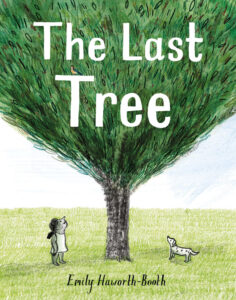
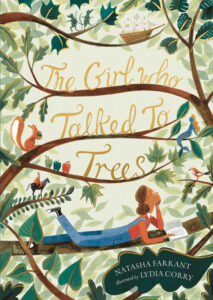
Magical interlinked stories about what one girl learns from talking to trees throughout Time and from around the world. Olive’s best friend is a four-hundred-year-old oak tree, and it is in danger. As she tumbles into its magic world, she makes it a promise. From deep roots to high branches, a Persian garden to an underwater forest, from tulip trees to wild apple to vengeful box, she listens to the trees telling stories for all time. And she keeps her promise. With a conservation message and facts about tree science alongside the magicand wonder of seven beautifully imagined original stories, this full-colour book enchants and reminds us of the importance of trees in our lives.

Picturebook

A simple story to introduce the idea of seed dispersal and life cycles. It tells the story of ten seeds, only one of which survives to grow into a lovely sunflower and produces new seeds to start the cycle again. The illustrations are full of detail and the text is an accessible introduction to seed science for young children.

This non-fiction book introduces the parts of a plant for KS1 readers. Learn all about common wild and garden plants, including flowering plants, vegetables and trees. Investigate the basic structure of plants (including roots, stems, trunks, branches, leaves, flowers, petals and fruit). This series covers theNational Curriculum programme of study for science at Key Stage 1.

This popular picture book tells the story of fussy eater Oliver, who will not eat anything but chips. One day Grandpa sets him a challenge that helps him to learn to try new foods from the vegetable patch and Oliver is surprised by what he finds out.

This hilarious retelling of the classic Russian tale about a farmer whose turnip is impossible to pull from the ground uses simple vocabulary and is ideal for reading aloud. Its cumulative theme will soon have young readers gleefully joining in, and Irish artist Niamh Sharkey’s wonderfully quirky illustrations will delight and fascinate all ages.

Learn how to identify different wild flowers and find out more about what is growing in your local area. The informative guide is accompanied by watercolour illustrations and is a good choice of book if you want to get out and about to do some plant-spotting.

There was once a beautiful flower and a little girl who loved it. She talked to it every morning on her way to school. The owner of the flower shouted at her. The next day, the flower did not open. The angry man didn’t understand. He tried watering it. He tried giving it shade and he tried talking to it. He told it how wonderful he was, how important his job was and how lonely he felt. But it still refused to open. So, he asked the little girl. “Why don’t you tell it how wonderful it is and how much you love it?” she said. As he did so, his own heart filled with love. And the flower bloomed.

A beautifully illustrated story about a very tiny boy who works hard to tend to a struggling garden. The garden is wild and unruly and the boy works with persistence to try and make something beautiful grow there.

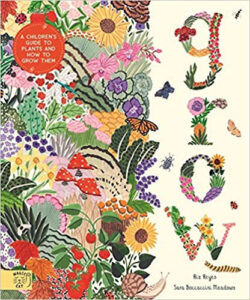
This beautifully illustrated non-fiction text showcases how amazing seeds are. Each page shows how different types of seeds are perfectly adapted to survive, spread and grow into amazing plants. The text is poetic and the botanical illustrations are beautiful and detailed. If it never occurred to you to appreciate how amazing seeds can be, it will after reading this!

This is an award-winning children’s novel with a positive message about looking after the natural world. Toby is miniature at just 1.5mm tall and he lives in the Great Oak Tree. Toby and his family find themselves cast out of the Oak Tree society when Toby’s father attempts to protect the energy source at the heart of the tree from powerful people who wish to use up natural resources for their own gains, even if doing so will eventually destroy their environment.

Subscribe to our newsletter

Your Review

Stone Girl Bone Girl

review

Year group(s) the book is most suitable for:

Year group(s) the book is most suitable for:

Does the book contain anything that teachers would wish to know about before recommending in class (strong language, sensitive topics etc.)?

Does the book contain anything that teachers would wish to know about before recommending in class (strong language, sensitive topics etc.)?

Would you recommend the book for use in primary schools?

yes

Curriculum links (if relevant)

Curriculum links (if relevant)

Any other comments

Any other comments