
Recommended children's booklists sorted by age or topic

Y6 Transition

icon transition y6
Year 6 Transition Booklist
All year round, Year 6 pupils across the country are thinking about the big move to their next school. On this booklist, we have picked a selection of recommended books for children in Year 6 preparing for the transition to secondary school, high school or college. The books cover topics of transition, friendship groups, adjusting to change and dealing with the big emotions associated with settling into a new school. Special thanks to @TheBookWhisper2 for helping us to collate this Y6-7 transition booklist.

Add to Favourites
Please login to bookmark Close

Visit our booklists on Amazon

Support independent bookshops

SAVE 20% with Peters

Non-fiction books about moving up to secondary school

Non-fiction

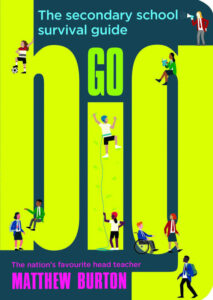
Written by head teacher and star of Educating Yorkshire, Mr Matthew Burton, this is the ultimate secondary school survival guide. Secondary school can seem scary. Corridors are wide, older students look terrifying and there’s homework, messy friendships and stressful exams to deal with. But, whether you’re about to land at secondary school or you’re still settling in, Mr Burton is here to guide you through your journey – worry-free. From your first day to your final exams, this handbook will have you achieving, succeeding and being the best you can be!

Non-fiction
This positive and empowering guide, by bestselling mindset author Matthew Syed, will help boys and girls build resilience, fulfil their potential and become successful, happy, awesome adults.I'm no good at sport ... I can't do maths ... I really struggle with exams ... Sound familiar?If you believe you can't do something, the chances are you won't try. But what if you really could get better at maths, or sport or exams? In fact, what if you could excel at anything you put your mind to?You Are Awesome can help you do just that, inspiring and empowering young readers to find the confidence to realise their potential. The first children's book from Times journalist, two-time Olympian and best-selling mindset author Matthew Syed, it uses examples of successful people from Mozart to Serena Williams to demonstrate that success really is earned rather than given, and that talent can be acquired. With hard work and determination, practice and self-belief, and, most importantly, a Growth Mindset, there's no reason why anyone can't achieve anything.Practical, insightful and positive, this is the book to help children build resilience, embrace their mistakes and grow into successful, happy adults.
Non-fiction
THE title to have for kids transitioning from primary to secondary school. Moving up from primary to secondary school can be scary. Going from being the bosses of the benches, to the youngest in a massive playground is hard.The classrooms are bigger, older students look like adults and don't even start on the piles of homework, stressful exams and complicated friendships.Whether you're heading to secondary school next year, or you've just started and still adjusting, Moving Up is here to help you on your journey.From choosing your new school and your first day all the way up to your final exams and your leaving party or prom, this handy guide book will be the perfect companion for transitioning to secondary, and get you feeling confident, building strong friendships, achieving great things and generally being the greatest that you can be.

Chapter book stories about Y6 transition

Chapter book

This is a thought-provoking story about school friendships, bullying and the transition to secondary school.

The story follows the trials and tribulations of Sam in Year 6, who overhears his friends Fin, Cal and Jay saying that they won’t be putting his name on their ‘friends list’ for the Year 7 tutor group in their new secondary school.

When Fin, Cal, Jay and their families go to Barcelona without him during half-term, Sam strikes up a rather one-sided friendship with Zak Monroe – a new boy in the year group who has already been dubbed ‘weird’ by his peers. As Sam increasingly tries to disassociate himself from anything and anyone that his old friends make fun of, he realises that he is trying to change to please them and that there are more important issues at stake.

There are many different threads to this story that children struggling with change and friendships might empathise with. Transition to a new school is a big part, but also self-belief, resilience, anxieties, acceptance of differences and challenging stereotypes.

Chapter book

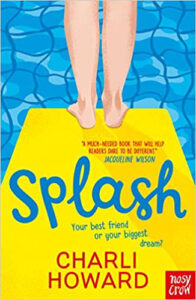
Splash is an enjoyable story that captures the stage of dawning adolescence and the awakening of self-consciousness that often arrives around that time. Written by Charli Howard, a body positive campaigner and model, this story explores the important theme of body image among young people.
Molly is in Year 6 and the biggest thing on the minds of her classmates is the transition to secondary school and how to fit in well there. Molly’s best friend Chloe, who is strategically thinking about how to protect the popularity status of their friendship group ready for their new school, becomes increasingly unkind and demanding…

Chapter book
With diary entries written by eleven-year-old Libby Scott, based on her own experiences of autism, this pioneering book, written in collaboration with esteemed author Rebecca Westcott, has been widely praised for its realistic portrayal of autism.Tally is eleven years old and she's just like her friends. Well, sometimes she is. If she tries really hard to be. Because there's something that makes Tally not the same as her friends. Something she can't cover up, no matter how hard she tries: Tally is autistic.Tally's autism means there are things that bother her even though she wishes they didn't. It means that some people misunderstand, her and feel frustrated by her.People think that because Tally's autistic, she doesn't realise what they're thinking, but Tally sees and hears - and notices - all of it.And, honestly? That's not the easiest thing to live with.
Chapter book

The Lottie Brooks books by Katie Kirby are hugely popular with preteen readers. This hilarious illustrated series explores the daily ups and downs of growing up, including facing puberty, navigating friendships, dealing with first crushes and all of the embarrassing moments that come with handling school and family life.

Many readers of the Lottie Brooks series enjoy the laugh-out-humour, the funny doodle-style illustrations and the true-to-life themes covered in the story. Lottie is a relatable character who resonates particularly well with girls in the 9-12 age bracket.

For more similar books, check out our list of books for fans of Lottie Brooks.

Chapter book
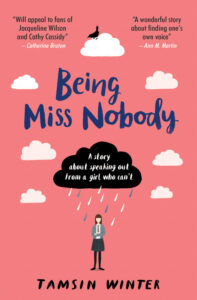
Rosalind hates her new secondary school. She's the weird girl who doesn't talk. The Mute-ant. And it's easy to pick on someone who can't fight back. So Rosalind starts a blog - Miss Nobody; a place to speak up, a place where she has a voice. But there's a problem...Is Miss Nobody becoming a bully herself?

Chapter book stories about secondary school life

Chapter book

Sometimes you meet a character in a book who you not only like a lot, but also think that if you met them in real life you would want to be friends with them. So it is with Effie in ‘Vote for Effie’, a very real twelve year old girl, starting at a new school part of the way through Year 8. Most children have anxieties about starting secondary school or any new school and this book explores this fear in a lively and fast paced story. But Vote for Effie is more than just a story about starting a new school, as it covers injustice and women’s rights as well and is immensely readable.

Effie ends up, almost by accident, running for School Council and the story takes the reader through her campaign, against a seemingly unpleasant adversary. Effie is at first friendless, but then joined by a group of entertaining and interesting individuals as she challenges the status quo. The book is full of humour and delightfully illustrated by Mirelle Ortega.

I particularly liked that the central character is of Greek origin, as, living and working in an area where there are a significant number of Greek Cypriot children, I feel they are underrepresented in books.

I’d never read anything by this author before, but this book was so enjoyable I want to read more. As a reader you find yourself cheering Effie on and living the ups and downs with both Effie and her companions. I would vote for Effie!

 
Chapter book

An absorbing story about bullying and friendship crafted with the right balance of warmth and tension to engage readers in upper KS2. The narrative alternates between the viewpoints of teenagers Alex and Dan. Daily life is a struggle for Alex, plagued by worries caused by his OCD and living in fear of the awful bullying at school. Dan’s life is not straightforward either. Since his older brother left home, everything in Dan’s world feels different. Dan plays out his frustrations at school, messing around in class and finding easy targets at school to bully with his friends. As time goes by, the boys end up working together on a raft-building project and a new empathy begins to develop as their relationship grows. A highly recommended story for KS2 and lower KS3.

Some books you read a few pages or some chapters and park it for the day. Other books, you get so into the story that you just keep turning the pages and lose track of time. This book is the latter. It’s so well written that both bully and his victim got under my skin.

Chapter book stories about resilience, big emotions and managing change

Chapter book

Ella on the Outside is a superbly honest debut from Cath Howe, with authentic characters and important themes of friendship, loyalty, self-acceptance and parental responsibility – all told with appropriate warmth and humour. 

The narrative voice is hugely relatable and the theme of friendship is addressed with due recognition that sometimes there are no easy answers when it comes to human relationships, but that loyalty, integrity and time investment are important foundations on which good friendships are built. Cath Howe has set this story in an honest reflection of a world in which children and adults alike are flawed and struggle deeply with life’s ups and downs.

As well as the themes of friendship and loyalty, the book also addresses issues of parental responsibility, childhood eczema, mental health and the impact of having an absent parent. This is a gripping and emotive read filled with warmth.

Chapter book

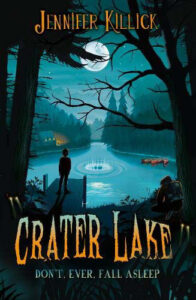
The Year Six class at Lance’s school are heading off for a residential trip that is supposed to create memories that will stay with them forever. Lance is happy to be alongside his friends Chet, Maksym and Katja and remains optimistic that they can ignore the mean taunts nemesis Trent. Excitement bubbles during the journey, but as soon as the coach draws near to Crater Lake, something feels amiss.

It’s never a good sign to run into a blood-stained figure who looks like a zombie just outside the gates of your destination. Nor does it bode well to find the activity centre spookily low on staff or to discover that despite the sweltering heat the only meal on offer is tomato soup, which appears disconcertingly similar to the blood covering the man at the entrance. Matters quickly spiral from bad to worse when a number of classmates and teachers transform into bug-eyed zombies and seem as though they have been hypnotised into working on a secret project out in the woods. Lance and the few remaining classmates must pull together to save the day, but their only chance of success relies on one catch; they must not fall asleep!

The horror-humour balance in the narrative is skilfully manufactured to give the chill factor without leaving anybody traumatised; it has just the right amount of scare to quicken your heartbeat and make you double-check under the bed before you climb in but is not likely to give you nightmares (unless you happen to be reading it while you are on a Year 6 residential).

Crater Lake is a super-fast read that will satisfy fans of Goosebumps or Point Horror as well as being likely to please Killick’s already loyal fanbase who expect easy humour, sharp dialogue, relatable themes and a turbo-paced plot.

Chapter book

This is a must-read for children who love funny books – or in fact for anyone who loves to laugh. Mates on a mission, mistaken identities, raw onion eating contests, taxi-driving-criminals-busting-through-the-rolling-Welsh-landscape and sheep aplenty are all thrown into a melting pot of gaff-a-minute adventuring and stirred through a warm-hearted narrative that focuses on themes of friendship, identity, family and experiencing grief.

Eleven-year-old Fred is heartbroken when his grandmother dies. When he finds a letter from her that reveals details of his own biological father, Alan Froggley (who abandoned his mother before Fred was born), Fred ups and leaves on a mission to seek out Alan for himself. With his two best friends in tow (both of whom have their own reasons for wanting to escape home for a few days), Fred heads to Wales on an adventure of a lifetime.

It’s not clear what Fred is expecting to happen when – or if – he finds his dad. Perhaps he wants an explanation, or simply a connection. Maybe it’s curiosity – or maybe his answer to the sense of loss he feels over his grandmother is to complete this particular part of his family puzzle. Either way, Fred is certain of one thing; he absolutely must find Alan Froggley. What follows is a slapstick romp across Wales, where a wild goose chase powered by a series of incredible co-incidences leads Fred and his friends to re-assess the things that really matter in life.

The narrative is full of fun – from humorous insights into the quirky characters (including the aspects of family life that drive them nuts) to the endless run of blunders by the trio of friends, like accidentally cooking their clothes and ending up on the news wearing superhero costumes. Jenny Pearson’s brand of observational humour is perfectly pitched for the 8-11 readership. But what gives the story a real edge for me is its heartfelt warmth – shown through the authenticity of the boys’ relationship and the value the story places on family life.

A frolic-filled laugh-a-minute tale that will no doubt be in high demand among KS2 readers.

Poetry about Y6 transition and secondary school

Poetry
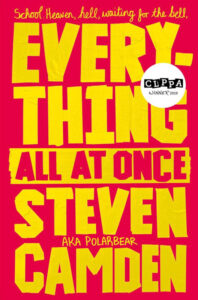
An achingly beautiful collection of poems about one week in a secondary school where everything happens all at once. Zooming in across our cast of characters, we share moments that span everything from hoping to make it to the end of the week, facing it, fitting in, finding friends and falling out, to loving lessons, losing it, and worrying, wearing it well and worshipping from afar.In Everything All At Once, Steven Camden's poems speak to the kaleidoscope of teen experience and life at secondary school.
Poetry Verse novel

This is an extraordinary verse novel about the final year of primary school, told through poetry. The verse captures the character of Year 6 pupil Nate as he navigates issues of school, family illness, emotions, change and friendships. Year 6 is a difficult year for many children, and whilst they are unlikely to have it quite as difficult as Nate, the book still captures some of that flavour, including the run-up to SATs, friendship issues and anxiety during a time when a sense of big changes is in the air.

Through his powerful verses, ex-primary school teacher Matt Goodfellow pays testament to the impact of a great teacher in supporting pupils through this time as well as the power of words and writing to help manage big emotions.

This is a very emotional and immersive story. A mature child will be able to ‘read between the lines’ and understand the text at a deeper level, even in Year 6. A great Y6  transition read!

Poetry Verse novel

The First Year by Matt Goodfellow is the highly anticipated sequel to the emotionally powerful The Final Year. The previous book has made a profound impact on readers and significantly boosted the popularity of verse novels for Key Stage 2. The First Year follows into KS3, on as Nate navigates the ups and downs of his first year of secondary.

Matt Goodfellow explores the themes of family bonds, resilience, finding one’s voice, the power of language and the influence of supportive (and unsupportive) adults in school. This sequel is just as emotive – perhaps even more – as Nate is torn away from the familiar comfort and safety of primary school and finds himself thrown into the stark environment of secondary. The story also celebrates the joy of new friendships and the strong sense of belonging Nate shares with his brothers and friends.

This is a verse novel where the story unfolds through poetry. Some of the shortest and most sparse poems are the ones that evoke the greatest depth of emotion, with the white space on the page providing the reader with a moment to reflect and process – but only a moment, as this is really a page-turner that makes you greedy to read on.

Graphic novels about Y6 transition and secondary school

Graphic novel

A gripping graphic novel. For those who like true-to-life drama in their graphic novels rather than fantasy or whacky humour, this is a superb read that really packs a punch.

The story follows twelve-year-old Jordan as he tries to fit in at a new school. The challenges of blending in at an elite, non-diverse private school become quickly apparent. This insightful story is poignantly told through words and pictures, and explores themes of racism, fitting in, prejudice, moving schools and confidence.

A perfect choice for reflective Year 6 children who like to think about wider social themes and are getting ready to move schools for themselves.

Graphic novel
Raina wakes up one night with a terrible upset stomach. Her mom has one, too, so it's probably just a bug. Raina eventually returns to school, where she's dealing with the usual highs and lows: friends, not-friends, and classmates who think the school year is just one long gross-out session. It soon becomes clear that Raina's tummy trouble isn't going away... and it coincides with her worries about food, school, and changing friendships. What's going on?Raina Telgemeier once again brings us a thoughtful, charming, and funny true story about growing up and gathering the courage to face - and conquer - her fears.

SAVE 20% with Peters

Visit our booklists on Amazon

Support independent bookshops

Booklists you might also like...

Subscribe to our newsletter

Your Review

Stone Girl Bone Girl

review

Year group(s) the book is most suitable for:

Year group(s) the book is most suitable for:

Does the book contain anything that teachers would wish to know about before recommending in class (strong language, sensitive topics etc.)?

Does the book contain anything that teachers would wish to know about before recommending in class (strong language, sensitive topics etc.)?

Would you recommend the book for use in primary schools?

yes

Curriculum links (if relevant)

Curriculum links (if relevant)

Any other comments

Any other comments