
Recommended children's booklists sorted by age or topic

Houses and Homes Topic

icon house

Houses and Homes Topic Booklist

There’s no place like home! Houses and homes come in all shapes and sizes, from caravans and houseboats to apartments and cabins. Whether you are looking at cities, towns or villages, our selection of recommended children’s books about houses and homes will help primary school children to build the best foundations for understanding the topic.


Add to Favourites
Please login to bookmark Close

Visit our booklists on Amazon

Support independent bookshops

SAVE 20% with Peters

Books about building houses

Non-fiction

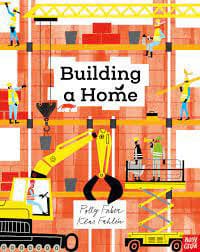
A beautifully illustrated book with real design qualities that even children who are not already interested in cranes or diggers will be fascinated by. Those who do love cranes and diggers will be in raptures as the details of a large-scale building project are explored with real authority.

The lively illustrations are beautifully created, and the small details, such as the bird’s nest on top of the crane and the mysterious cat (or is it a fox?) watching from afar, mean that multiple readings will reveal new things each time. 

The book also has a glossary and a list of tools at the back, which means teachers can use these to teach useful non-fiction reading skills and develop vocabulary. However, this is also a book to be read, enjoyed, talked about and shared by children. I can see it becoming one of the favourite books during reading time, and I daresay it will be included on many children’s present lists.

Chapter book

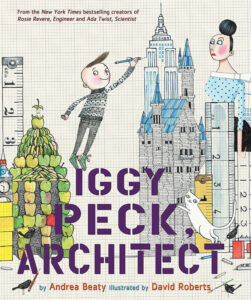
Iggy Peck is a young boy with a passion for building. No matter what materials he has to hand (from apples to nappies), he manages to use them to construct another new amazing creation. When Iggy’s new teacher bans building, Iggy will have to find a way to convince her that his architecture skills are very useful indeed. There is also an accompanying STEM activity book.

Picturebook

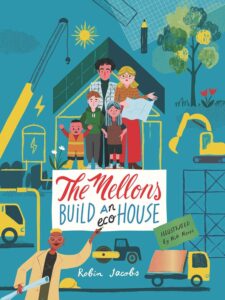
The Mellons are a family of five who live in a small flat and have had enough of not having enough space so decide that they need a bigger family home. They look around some different houses but none of them are quite right so they decide to build their own house. Each family member has a request for something that the new home should have: a study, a big kitchen and even a pool. With the help of architect Masha, they set off creating their dream home, but with a bigger picture in mind – their impact on the environment.

This book follows the journey of designing and building a new house and how this can be done in a more ecological way thinking about each step and its impact on the environment – making it stand out from the array of books about more traditional houses and homes. A range of tradespeople are introduced, who are represented by a range of men and women. At each step, the green way is discussed and how this is better for the environment than the traditional building method – for example using solar panels and a green roof. Every aspect of the building process is examined and made more friendly for the planet.

The book was enjoyable to discover and included interesting facts and lots of technical vocabulary – with enough science to capture older children as well as younger primary pupils who will enjoy the visual information and narrative frame. New topic words are either explained in the text or included in the glossary at the back.

Non-fiction

In the world of children’s non-fiction, it’s a rare delight to stumble upon a book that not only educates but also inspires and entertains. “Little Experts: How to Build a Home,” authored by renowned architect and television presenter George Clarke, with vibrant illustrations by Robert Sae-Heng, is one such gem that promises to engage young minds in the fascinating world of architecture and home construction.

Clarke’s narrative is comprehensive and captivating, from the materials that make up the walls around us to the cutting-edge technology that shapes modern living spaces. This book demystifies designing and building homes through colourful, playful artwork by Robert Sae-Heng, which illustrates concepts in a way that is understandable and appealing to children. The illustrations serve as a visual feast that complements Clarke’s words, making the complex world of architecture accessible to young readers.

This book is an invaluable resource for educators and professionals in children’s education. It offers a unique opportunity to introduce students to STEM concepts through the lens of architecture and home design. The book encourages critical thinking and creativity, urging children to consider not just the how of things but also the why. It’s a springboard for discussions on sustainability, technology, and the environment, increasingly essential topics in today’s educational landscape. For teachers looking to ignite a spark of curiosity and a love for learning, this book is an unmissable addition to their educational toolkit. It stands as a testament to the power of knowledge and the importance of sharing that knowledge with the next generation of little experts.


Books about different kinds of homes

Picturebook

Richard O’Neill’s The Can Caravan is a heartwarming celebration of traveller community spirit, inter-generational bonds and homes of different shapes and sizes.

When young Janie’s elderly friend faces losing her home, empathetic Janie devises a plan to build her a new caravan, with a little help from her friends.

This story wonderfully highlights the joy of working together and the power of community action. It subtly champions sustainability and resourcefulness, making it a lovely tale of unity and kindness for children.

Children learning about houses and homes or community values will enjoy this inclusive and uplifting picturebook.

Picturebook

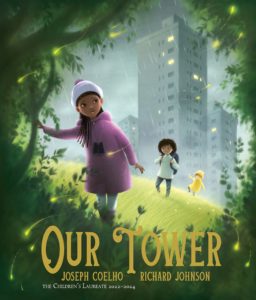
Our Tower tells the story of three children living in a tower block. Viewing their environment as “concrete and grey”, they decide to seek out the glimpse of green they can see high up from their window.

Finding the tree they have longed to see reveals a secret world of magic. Tumbling deep inside, they find “a world deeper than anything Our Tower has ever seen.” But the most significant discovery is the tree-grown man living within, who opens their eyes to the true magic. With his words, the children see that magic is everywhere, including in their tower. A tower full of love and community.

This is a beautiful story inspired by author Joseph Coelho’s own experience of growing up in a tower block. The new Children’s Laureate brilliantly illustrates the diversity and the incredible sense of community that living in a tower block provides, showing how they are more magical than the boring, hard and grey high-rise flats that dominate urban skylines. The tale brings a message about urbanisation, where there’s a perceived distinction between countryside and urban spaces, yet this reminds us that nature is all around us, wherever we live, and everyone should have access to it.

Every page is a feast for the eyes with stunning and sumptuous illustrations by Richard Johnson. The colours perfectly reflect the mood of the poetic narrative, changing from dull greys to magical purples to vibrant, magical technicolour.

As always, the talent of Joseph Coelho’s writing expertly combines writing in verse and poetry with inspiring rich vocabulary.

Non-fiction
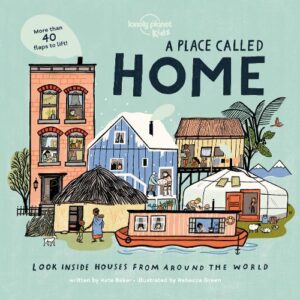
Take a sneak peek inside homes from all around the world with this charming lift-the-flap book, written by Kate Baker and beautifully illustrated by Rebecca Green. From cosy wooden houses in snow-blanketed Greenland to traditional Maasai mud huts in East Africa, young children will discover different ways of living across the globe and get a unique glimpse into diverse cultures and communities.
Picturebook
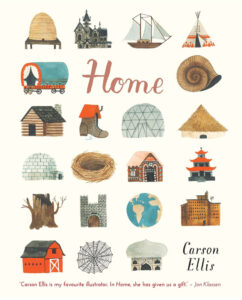
This is a beautifully illustrated picture book that depicts homes of different kinds, both real and imaginative. The book is wonderful for provoking thinking and discussion about what makes something a home and why people might live in different sorts of homes.
Picturebook

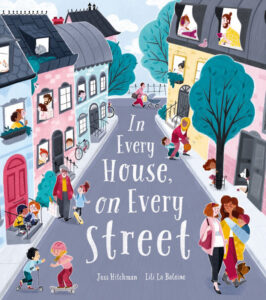
In Every House on Every Street takes us behind the doors and windows of one house in one street. It shows us the family, the community and the love that resides there. As we are shown around the house we learn that the rooms are not just rooms, they are places to play, care and feel together. And we learn that behind every door, there is a family with a story to tell.

This is a lovely rhyming book that takes the reader on a journey. It teaches them that the four walls and wonky bricks you see are just the building, and the home is inside in the people and the stories that live there. In this home, every room has its own story and its own personality but most importantly each room is filled with love.

The cover was the first thing that drew me to this book, with the illustration of a multicultural street, where everyone appears to have a role – whether they are indoors or outdoors they all appear to be connected. Hidden inside the doors of these houses, it felt like each home had its own story to tell. I would probably use this in the classroom to encourage children to write their own story or poem about home. This would be a great book to get children engaged in a topic about what home means to them.

At the end of the book, there is a wonderful fold-out page showing a glimpse into each of the homes which could be used to encourage children to predict what is happening behind the glass. Opening out the page it is possible to see if that prediction is correct. There are lots of opportunities for picture comprehension and inference in the picture.


Books about houses from the past

Non-fiction Picturebook

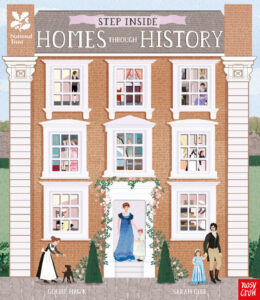
This is a charming laser-cut book designed to explore houses and homes in different periods of British history.

The chronological guide begins in the Late Middle Ages and travels through seven different eras, finishing at present day. Fold-out sections and intricate laser-cut flaps allow little hands to open up the houses, peek through windows and observe different family members engaging in activities in and around the home. Broader topics such as clothes, food and architecture are considered and how priorities and lifestyles change over time is gently drawn out across the different sections.

The houses depict a snapshot of upper-middle-class life, but provide more of a vehicle for considering key changes in attitudes, activities and fashions of each area rather than a close representation of everyday life. The present-day house, for example, is an eco-house complete with flat-pack furniture, triple-glazed windows and smart technology powered by rooftop solar panels. Jump back 100 years in time and you’ll find a 1920s suburban redbrick three-storey house with William Morris wallpaper, jazz on the gramophone and a smartly dressed couple on their way to the pictures to see a silent movie.
Each snippet of information builds on past eras and adds to a picture of societal change over time. The book flows excellently as a start-to-finish read but also has plenty of potential to zoom in to just one particular era or to follow a single thread throughout (learning how bathrooms evolved from a hole in the wall to a chamber pot to modern-day ensuite will always entertain young children). This book will be enjoyed in KS1 classrooms and help pupils explore historical causality and change when covering the Houses and Homes topic.
 
Picturebook

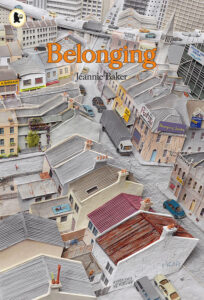
Belonging is a wordless picture book created by Jeannie Baker in her distinctive collage style. The story is told through a series of suburban scenes viewed through a window and starts with the birth of a baby girl following her life up to the birth of her own child. Gradually we watch the re-greening of the landscape and the growth of community spirit as people come together to improve their surroundings. A book to be read on several levels but one that creates a hopeful feel, encouraging readers to think about how they can create a similar improvement in their own environment.

Non-fiction

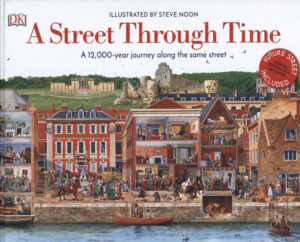
This wow-factor history book takes the reader on a 12,000-year journey to find out the story of a single UK street, showing the street during a different historical period on each page.

Many young readers love any non-fiction books that explore or peek behind closed doors. A Street Through Time does this in the best possible way and over thousands of years. You can see what people’s kitchens and bedrooms (and loos!) looked like from the Romans to the Victorians (Roman toilets I’d avoid….!).

We also love how busy this book is, so many brilliant details to explore again and again and how it shows the change in a single place over a long period. A classic among children’s non-fiction – and for good reason.

Story books about homes and neighbourhoods

Picturebook
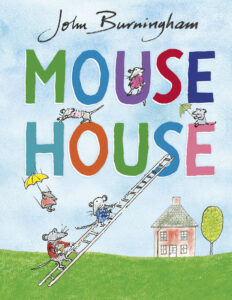
A little boy lives in a house with his family. Unbeknown to the humans, a family of mice secretly shares the house too. But one day the mice are spotted and the mouse catcher is called in. The mice become fugitives and leave their home, which is now too dangerous for them, and they seek solace in the back garden instead. Will it ever be safe for them to return to the house?
Picturebook
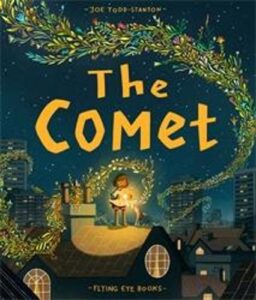
From the award-winning Joe Todd-Stanton, comes an exquisite and heartfelt picture book touching on the bewildering experience of moving house. This beautiful story explores how this can affect a child's sense of belonging, but also how it can open them up to new and wonderful experiences.When Nyla has to leave her home in the countryside to start life again in the city, all she can think about is everything she misses from before. So when a comet comes crashing through the city streets and starts to glow and grow, Nyla can't resist a chance to head somewhere that feels closer to what she had before. But what starts as an escape could be just the thing to make her finally feel at home.
Picturebook

Mia has just moved house and spots a dilapidated doll house on the side of the road in her neighbourhood. As she begins to repair and decorate it on her porch, other children come to join the play, bringing offerings – a lolly pop stick bed, a rug and cotton wool cushions – and all are made to feel welcome. Mia notices a boy watching from his window but is too shy to join in with their play. However, when the Autumn rain batters the house, he appears and helps her to fix it. She generously and cleverly suggests he looks after it over Winter, thus bringing him into the group of friends, that we see playing through the changing seasons.

A sensitively told story, with stunning illustrations, this would make a beautiful book for encouraging class and the whole school community, with the strong central message that every child is welcome and everyone has something to give and share with others.

Picturebook
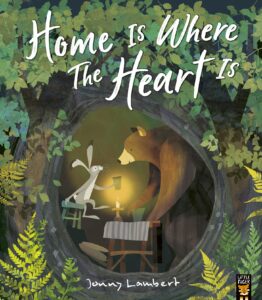
A pitch perfect picture book with breathtakingly beautiful, textured illustrations and a heartwarming story from author-illustrator, Jonny Lambert.When Bear moves into a new home in the woods, his home feels empty, and Bear is a little bit lonely. With a RAT-A-TAT-TAT! on his neighbour's door, Bear quickly finds a warm smile and friendship with Hare. When a storm CRASHES through the wood, destroying Bear's home, the two friends discover that home is more than just a house . . . it's where the heart is.

Picturebook
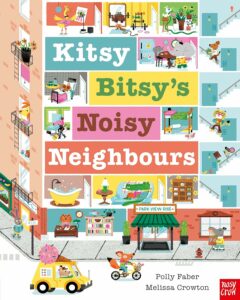
A riotously funny picture book about kindness and community.The animals of Park View Rise all love their high-rise home. It's peaceful, calm and quiet - no one here would cause a riot... But when Honky Tonk sings much too loudly, Smart Alec's DIY goes all wrong and Sugar Plum's freshly baked treats are ruined, well, all hell breaks loose! Luckily, Kitsy Bitsy arrives just in time to teach her neighbours about the importance of kindness... and an enormous cake brings everyone together for a party!Roll-off-the-tongue rhyming text by Polly Faber and bright, lively artwork by Melissa Crowton combine in this comic, timely tale.Readers can make their own Good Neighbour Cake using the recipe at the end of the book!Every Nosy Crow paperback picture book comes with a free 'Stories Aloud' audio recording - just scan the QR code and listen along!
Picturebook

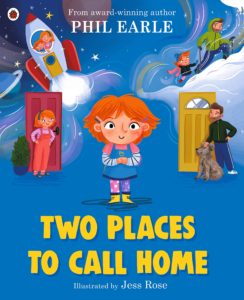
Popular author Phil Earle offers a new picturebook with an authentic representation of a child experiencing parental separation and divorce.

Meet Florrie. Florrie has two of everything…. including two different homes. Her mum’s and her dad’s. When her parents separated, Florrie and her brothers were expected to divide their time between the two homes, and at the beginning of the book, this makes her feel a little uneasy.

This book shows how each parent works separately with her to make her feel comfortable about the situation, giving her coping mechanisms when she misses her other home. The lovely twist at the end is how Florrie is then able to help her father, when she realises that he misses her when she is not with him too.

This uplifting picture book will help children to embrace change, and could be a brilliant starting point for discussion about feelings about separation and divorce as well as about navigating negative thoughts and feelings towards changes outside of own’s own control. Beautifully illustrated by Jess Rose, the details in the pictures really bring the story alive, and provide great talking points when reading this story with your child, whether they have personally experienced separation or not.

SAVE 20% with Peters

Visit our booklists on Amazon

Support independent bookshops

Booklists you might also like...

Subscribe to our newsletter

Your Review

Stone Girl Bone Girl

review

Year group(s) the book is most suitable for:

Year group(s) the book is most suitable for:

Does the book contain anything that teachers would wish to know about before recommending in class (strong language, sensitive topics etc.)?

Does the book contain anything that teachers would wish to know about before recommending in class (strong language, sensitive topics etc.)?

Would you recommend the book for use in primary schools?

yes

Curriculum links (if relevant)

Curriculum links (if relevant)

Any other comments

Any other comments