Recommended children's booklists sorted by age or topic

Space Topic (KS2)

icon space topic booklist

Best space books for children

The topic of space is always a big hit with primary school children, who love to learn facts about the solar system and imagine the infinite possibilities of what lies beyond our galaxy. In KS2 Science, children learn about the Earth, Sun and Moon and how their movement affects our days, nights and seasons. Many children learn about the planets, space exploration and famous astronauts too. Blast off into the topic with our list of the best books for children about space.

This list is aimed at children aged 7-11. For recommended space books for younger children, try our KS1 Space Booklist.


Space Topic (KS2) Quick Links

Add to Favourites
Please login to bookmark Close

Visit our booklists on Amazon

Support independent bookshops

SAVE 20% with Peters

Chapter books about space

Chapter book

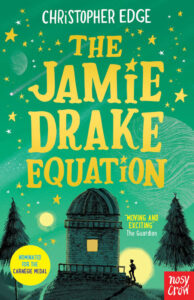
This is a wonderfully compelling sci-fi story about a boy called Jamie whose father is an astronaut. While his father is completing important work aboard the International Space Station, Jamie is left figuring out life at home and one day he stumbles across clues to alien lifeforms for himself. This story is packed with real space science in a way that is accessible to children and set in the familiar world of the modern child.
Chapter book
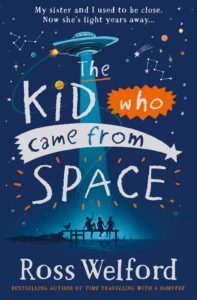
A small village in the wilds of Northumberland is rocked by the disappearance of twelve-year-old Tammy. Only her twin brother, Ethan, knows she is safe – and the extraordinary truth of where she is. It is a secret he must keep, or risk never seeing her again.But that doesn’t mean he’s going to give up.Together with his friend Iggy and the mysterious (and very hairy) Hellyann, Ethan teams up with a spaceship called Philip, and Suzy the trained chicken, for a nail-biting chase to get his sister back… that will take him further than anyone has ever been before.
Chapter book

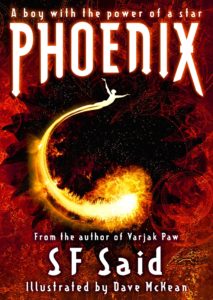
SF Said has created a remarkable and unforgettable novel, which will stay on your mind for days after reading. He has the ability to create epic tension and spectacular euphoria, which makes for a story that is extremely difficult to put down. Science Fiction fans are in for a treat!

The story begins with a dream, where the main character, Lucky, finds himself listening to the stars. They are trying to tell him something, and that something draws Lucky in, enabling him to fly and soar through space. Once the dream ends, he finds himself in burnt sheets, surrounded by ash and smoke. This discovery alarms his mother, which results in a huge turn of events, uncovering hundreds of unanswered questions about Lucky’s identity and existence. From that moment on, Lucky finds himself desperate to escape the world he once knew and enter a new world, where he seeks clarity about his heritage and the growing power rising within him.

To survive, he must trust a troop of aliens, with hooves and flaming eyes, who help him travel through space to escape his home. With the galaxy surrounding him at war, this action-packed story moves from scene to scene with epic fighting scenes of good vs evil, along with many timely escapes.

Phoenix builds up to one of the most spectacular endings I have ever read; this is well worth the commitment of reading for readers aged 10-14.

Chapter book

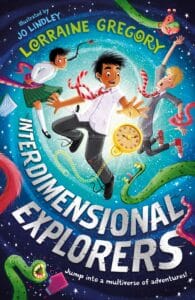
Danny’s grandad has a curious knack for finding list things. Nothing too unusual perhaps, until Danny discovers that Grandad has a very important, top-secret job working in the Interdimensional Lost Property Office (IDLPO). When Grandad falls ill, Danny is given the task of looking after the IDLPO. Entering the Office via a locker, Danny and his side-kick Modge are transported to new worlds and thrown into adventures beyond their imagination.

This is a book full of gags and mildly disgusting humour which children will love. As the boys race through the universe in their quest to return a fascinating array of alien creatures, they realise that they have the enthusiasm, determination and desire to do their best but that they lack the necessary knowledge of the ‘technical bits’. The boys have to resort to asking Danny’s bookish cousin, Inaaya, to join the mission. The trio discover a secret plot designed to bring down the whole universe. Woven into the narrative are engaging characters – Mrs Arbuckle, the lost property office supervisor who also happens to be a purple squid, brother and sister Kaspar and Kaylar and the veterinarian, Dr Triffle Piffle- each with a vivid appearance and quirky cosmic character. The action in the book moves at a fast pace and although there is excitement and peril it is humorous and really engaging.

Lorraine Gregory never fails to please. Children who love narrative-driven action will enjoy this book and will be turning the pages to discover if Danny, Modge and Inaaya can successfully return the lost things to their rightful galactic homes. Readers will, I am sure, await the next book in the series.

Chapter book

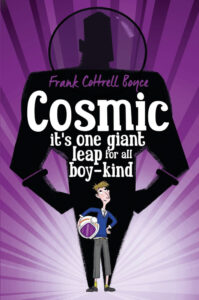
A popular and humorous choice from the award-winning author Frank Cottrell Boyce.

This novel tells the story of Liam, an incredibly tall twelve-year-old who attempts to pass as an adult in order to accompany his friend Florida on a trip to space that she won in a competition.

It has been likened to Charlie and the Chocolate Factory in a space setting, and contains discussion questions and bonus material for use in class.


Chapter book

What a brilliant book! Ten-year-old Matilda has decided to build a rocket to travel to the moon and back. This story is jam-packed with facts about what is needed for each stage. From gravity and orbits to fuel calculations, you find out how previous space missions solved each aspect of space travel and the science behind them. And of course, all the key questions about space missions are answered like how do you poop in space?!

Matilda is a brilliant role model for women in STEM – intelligent, sparky and ambitious. Her narrative voice is strong and entertaining.

The mix of science and the history of the Apollo missions makes this book absolutely fascinating, and the illustrations, font styles and chatty style make it an easy read for Key Stage 2.

With brilliant links to STEM subjects, this would be a particularly good addition as a reading-for-pleasure choice alongside the Earth and Space topic in Science. It also shows ambition, resilience and the ability to research and plan before undertaking a task.

Shorter chapter books about space

Chapter book
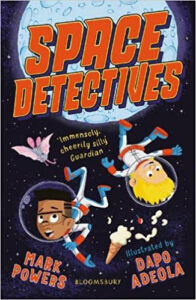
Dog lost in space? Grown an extra head and don't know why? Pocket money stolen by a green blob? You need the Space Detectives!Connor and Ethan are spending their summer holidays aboard the world's first orbiting city, Starville (basically Beverley Hills in space!). The amazing space station is bursting with celebrities and the mega-rich. But Connor and Ethan are too busy selling ice cream to see the sights.However, neither of our heroes can resist a mystery and when they discover the space station is hurtling on a collision course with the moon (eep!) they know they need to step in. This is a case for the SPACE DETECTIVES!Can Connor and Ethan find the culprit and save Starville from its impending doom?
Chapter book

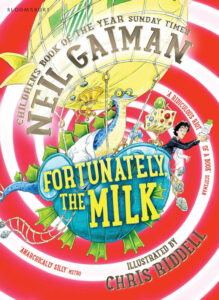
This laugh-out-loud adventure from award-winning children’s author Neil Gaiman is a popular choice with lower KS2. When Dad is left in charge of the very important job of remembering to get milk, he forgets and ends up on a fantastic adventure involving space ships, aliens, time-travelling dinosaurs and saving the universe as he attempts to fetch some milk and get it home on time.

Dyslexia-friendly
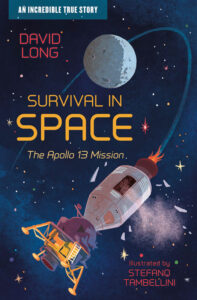
April 1970: Apollo 13 was launched from the Kennedy Space Center in Florida. It should have been the third manned Apollo mission to land on the moon. But when an explosion on board damaged the spacecraft, it became a perilous and near-impossible fight for survival. The crew on board travelled further into space than any other humans before them ... In this gripping retelling of the astonishing Apollo 13 mission, David Long shows how courage, determination and teamwork succeeded in beating all odds to bring the spacecraft home. Particularly suitable for struggling, reluctant or dyslexic readers aged 8+.

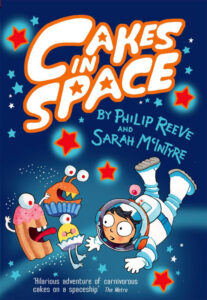
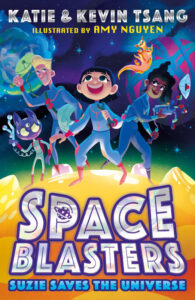
The story of gadget-loving Suzie Wen, who finds herself on a laugh-out-loud adventure exploring space and who is ultimately tasked with saving the universe.

Full of illustrations and reader-friendly, short chapters, this book would be a great addition to a lower key stage 2 classroom as part of a class library. Easy to read and set in space, it is bound to be a popular book with children.

It is lovely to see the representation of a friendship that is not formed quickly or easily, with the characters overcoming jealousy and insecurity to work together. It provides great opportunities for discussion around this topic and the challenges friendships can pose or face.

It is also great to see the inclusion of scientific enquiry approaches – something that isn’t found very often in books for this age level. The book could support discussions in the classroom about fair testing and how to complete a scientific enquiry.


Chapter book Dyslexia-friendly

This book is an action-packed sci-fi survival story where a young reader can step into the shoes of the central character, aptly named Luna.

When events take a turn for the worse, she is the only person left stranded on the moon’s surface. Tension builds as she faces challenges in harsh conditions, and with dwindling supplies, it is a race against time to somehow escape before night draws in. Despite her age, Lunar has many responsibilities while living on the moon with her father (a Moon Miner). She has undertaken intensive training, which comes in handy later in the book! A meteorite warning threatens the safety of the team, and in a rush to evacuate, Luna is separated from everyone. In a mission to reach the far side of the moon, she must use her scientific knowledge to solve a range of problems in the hope that she will be reunited with her father.

The gripping moments and dilemmas, including the risk of running out of oxygen, keep the reader on the edge of their seat as they take the journey with her. The quick-witted comments from Luna are a fun aspect, and many children, including reluctant Upper KS2 readers, will enjoy this humorous aspect of the book, particularly the mention of nappies and exploding eyeballs! Sci-fi enthusiasts and those interested in Earth and Space will enjoy the scientific details mentioned throughout.

Children's books about space exploration and space science

Non-fiction Short story collection
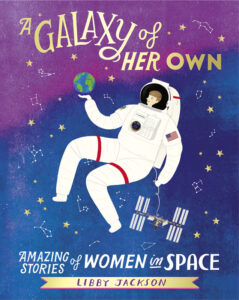
From small steps to giant leaps , A Galaxy of Her Own tells fifty stories of inspirational women who have been fundamental to the story of humans in space, from scientists to astronauts to some surprising roles in between.From Ada Lovelace in the nineteenth century, to the women behind the Apollo missions, from the astronauts breaking records on the International Space Station to those blazing the way in the race to get to Mars, A Galaxy of Her Own reveals extraordinary stories, champions unsung heroes and celebrates remarkable achievements from around the world.Written by Libby Jackson, a leading UK expert in human space flight, and illustrated with bold and beautiful artwork from the students of London College of Communication, this is a book to delight and inspire trailblazers of all ages.Packed full of both amazing female role models and mind-blowing secrets of space travel, A Galaxy of Her Own is guaranteed to make any reader reach for the stars.
Non-fiction
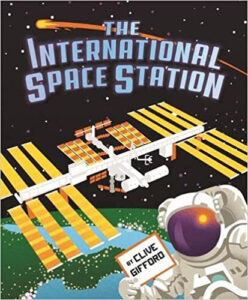
What is the space station and how did it get into space? How do astronauts get there and what do they do once they're there? How do astronauts eat, sleep, or even breathe, in space? What effect does living in space have on the human body, from making you taller to losing your muscles because of zero gravity. If everything floats, then how can you go to the toilet and where does your wee and poo go? Uncover all of the answers and more in this beautifully illustrated and fun book for children. Find out what it takes to become an astronaut and about the essential science experiments that are being carried out there. Written to inspire a new generation of astronauts, Clive's detailed and fact-filled text will make you think you've visited the space station yourself. Fully illustrated by self-confessed space geek illustrator, Dan Schlitzkus, the illustrations are technically accurate and provide true representations of the mechanics, modules and equipment on board the ISS.
Picturebook
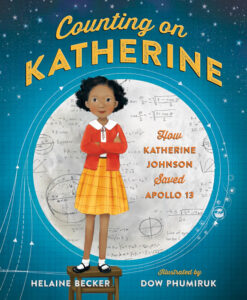
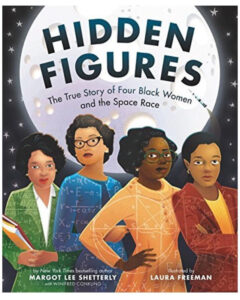
Based on the New York Times bestselling book and the Academy Award-nominated movie, author Margot Lee Shetterly and illustrator Laura Freeman bring the incredibly inspiring true story of four black women who helped NASA launch men into space to picture book readers!Dorothy Vaughan, Mary Jackson, Katherine Johnson, and Christine Darden were good at math...really good.They participated in some of NASA's greatest successes, like providing the calculations for America's first journeys into space. And they did so during a time when being black and a woman limited what they could do. But they worked hard. They persisted. And they used their genius minds to change the world.In this beautifully illustrated picture book edition, we explore the story of four female African American mathematicians at NASA, known as "colored computers," and how they overcame gender and racial barriers to succeed in a highly challenging STEM-based career.
Non-fiction

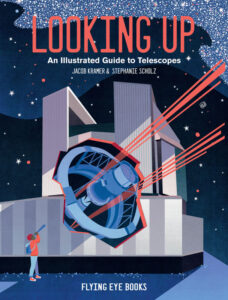
Looking Up from Flying Eye Books is a highly visual non-fiction book exploring the history and science of telescopes. Unique among the myriad of non-fiction titles covering the topic of space, this book has a real STEM focus as it explores the ins and outs of how telescopes have enabled people to learn to magnify objects from a great distance and given insights into human understanding of the universe.

Spanning back through history, Looking Up zooms in on significant people who have contributed to the evolution of telescopes as we know them. Galileo developed ‘a tube with lenses’ that enabled viewers to see the craters of our Moon and the moons of other planets. From there, a series of thinkers and innovators have taken up the baton to develop the technology in incredible ways. International collaboration in scientific discovery is emphasised in the book, as an array of prominent telescopes around the world are celebrated – including the Keck Observatory in Hawaii, the VISTA telescope in Chile, and the James Webb Space Telescope (a collaboration developed by NASA, the European Space Agency and the Canadian Space Agency).

With a vivid and bold design style, this book is perfect for curious minds, science-lovers and those with an emerging interest in all things STEM.

Non-fiction
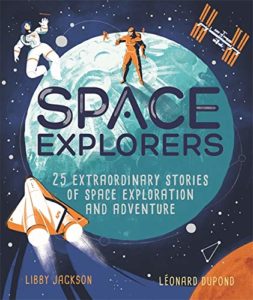
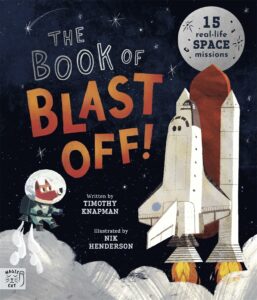
We look out of our window at the dark and twinkling sky.It's full of stars and planets and there's comets whooshing by.We want to go and see them, there's so much to explore.So let's count down and blast off - then we can find out more!Journey through space with 15 of the most iconic missions of all time, including the moon landing, Voyager 1's journey into interstellar space and Perseverance's exploration of Mars.

Non-fiction

This is an incredibly enjoyable science-themed information book.

Packed with scientific facts and fun little experiments, all accompanied by gorgeous illustrations, it’s sure to appeal to readers of all ages. The investigations can be done with household items and are easy for everyone to do, and the scientific facts and funny asides make it a book children will enjoy dipping in and out of.

This book would be a great asset to homes and classrooms.

Children's books about stars, planets and the solar system

Non-fiction
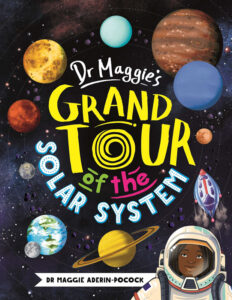
This mind-blowing book invites readers to join BBC presenter and renowned space scientist Dr Maggie Aderin-Pocock (MBE) on an epic journey through the Solar System - visiting planets, moons, asteroids and satellites, and travelling to places where no human has been before.Along the way, kids can discover how we could live on Mars, learn about the hunt for a mysterious super-Earth, have a snowball fight on Mercury, climb the tallest mountain in the Solar System and much, much more. From spotting solar flares on the Sun to exploring objects at the edge of the icy Oort Cloud, this fun, action-packed title leaves no question unanswered and no meteorite unturned.
Non-fiction

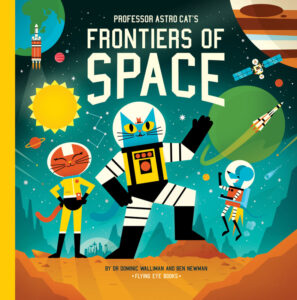
Professor Astro Cat is much loved in schools for non-fiction guides relating to space, atoms, human bodies and deep-sea voyages. Frontiers of Space was first published in 2013 as the starting book in the series and is now back with a new edition featuring eight new spreads and updated details about how rockets work, recent missions to Mars, space junk, black holes, and many more new insights into the ever-developing science of space and the outer reaches of the universe. There’s something new to learn about on every page.

Fictional guide Professor Astro Cat walks his readers through some of the key questions that children might have about the universe, and many more that they’ve probably never even thought about before. Where does our sun go at night? What are stars made of? If the Earth was a cherry tomato, what size would the other planets be (hint: Mars would be a pea and Jupiter a watermelon).

This is a beautifully designed non-fiction book with illustrations by an artist whose use of bold shapes and retro colours draws readers right in to enjoy soaking up the information. Each page has plenty of varied and interesting information to read and – coupled with the quality, durable feel of the book – the purchase of this text is a good investment as readers are likely to get a lot out of each sitting and still be left with plenty to come back and discover.

If you have yet to fall in love with the Astro Cat series, this is a great place to start.

Non-fiction

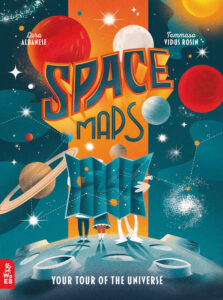
Space Maps is a super-sized visual treat. It will appeal to those already interested in the topic of space and will attract those who are new to the subject. The reader is invited to take a tour of all things space in the company of a diverse crew of space guides. During our space tour, a wealth of facts are covered -each double page focuses on a different aspect and so information is given in speedy, bite-sized fact boxes making this an ideal book for dipping into.

There is a good balance of facts and exciting nuggets from history, science and folklore. The legends behind the science add charm and warmth. Large and detailed illustrations guide the reader through their journey, each page devoted to a thorough, labelled map or diagram. For readers who struggle to visualise the images behind the arrangements of the constellations, this book certainly helps! I was able to ‘see’ Orion in the night sky having studied the beautiful constellation map.

This full-sized feast for the eyes would happily sit amongst a collection of Space books and interesting non-fiction books for readers who love to dive into the detail of a topic.

Non-fiction
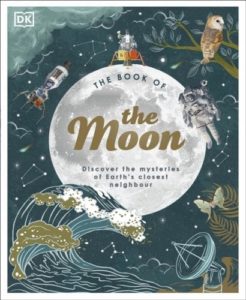
This incredible guide to the Moon takes 7 to 9 year olds through its past, present, and future through stunning illustrations, photographs, and fascinating information.The perfect introduction to the Earth's closest neighbour for young readers, The Book of the Moon covers the entire subject in thrilling detail. It explains the Moon's geography, its phases, NASA's Apollo missions, the Moon's effect on Earth, recent scientific discoveries, and much more. Packed with eye-popping facts, this is the perfect book for space lovers.Beautiful illustrations by artist Dawn Cooper combine with up-to-date images from space agencies to help demystify and explain the wonder of the Moon to young readers.
Non-fiction
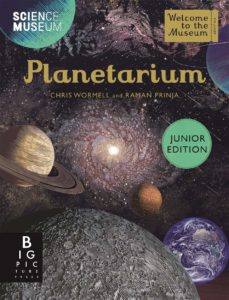
Welcome to Planetarium.This museum is open all hours. It will take you on an incredible journey through the Solar System and beyond, towards the most distant objects in space. So how big is the Universe? How did it start and when will it end? What exactly is a black hole? And are we really alone in the Universe?With specially written text for younger readers, step inside to explore the marvellous wonders of the Universe.

SAVE 20% with Peters

Visit our booklists on Amazon

Support independent bookshops

What are the best space books for KS2?

If you’re looking for some of the best stories about space for older children or good space books for your next KS2 space topic, then this booklist if packed with a galaxy of great ideas!

In KS2, chapter books about space can begin an early love for science-fiction such as the remarkable novel Phoenix by SF Said. Or for reluctant readers our shorter chapter books about space include Fortunately, the Milk… , a hilarious adventure from Neil Gaiman and a popular choice with lower KS2.

For space facts, figures and information, then Planetarium from the Science Museum takes you on an incredible journey through the Solar System, and Space Maps is a super-sized visual treat that will appeal to those already interested in the topic of space and  those new to the subject.

If you’re looking for space stories for younger children, then see our Space Booklist for KS1.

Booklists you might also like...

Subscribe to our newsletter

Your Review

Stone Girl Bone Girl

review

Year group(s) the book is most suitable for:

Year group(s) the book is most suitable for:

Does the book contain anything that teachers would wish to know about before recommending in class (strong language, sensitive topics etc.)?

Does the book contain anything that teachers would wish to know about before recommending in class (strong language, sensitive topics etc.)?

Would you recommend the book for use in primary schools?

yes

Curriculum links (if relevant)

Curriculum links (if relevant)

Any other comments

Any other comments