Recommended children's booklists sorted by age or topic

Topic: Science, Maths and Computing

Project Weather’ is a non-fiction text filled with interactive elements and crammed with colourful fold-out pages, exciting hands-on projects and secret flaps that are cleverly integrated into the photographs. Bursting with interesting facts and ideas for investigative activities, such as exploring how to make fog in a jar, this text delves into the science behind what we experience with different weathers.

Designed to appeal to children with a love of gaming, Ant Clancy: Games Detective is a fast-paced adventure story that could be enjoyed by any reader who likes an action-packed mystery story.

Ant is the only person in Westford Abbey who can’t get into playing Ray-Chay, the new virtual reality game that everyone else is obsessed with. It seems everyone in the town and across the country is playing it apart from him. Billionaire and game creator Kody Crunch is behind this new gaming phenomenon and is a celebrity in the gaming world. Soon something goes very wrong with the game, which somehow spills over into real life, and Ant is the person who will get to the bottom of what’s happening and try to put things right. As the story unfolds, the line between the gaming world and reality is blurred even further in the race to uncover the truth.

The story regularly explores the restrictions Ant has on how much time he can spend gaming and the book includes references to unhealthy gaming habits and the dangers of gaming addiction as well as touching briefly on the topic of online safety. It manages to do this through the storyline without downplaying the benefits of recreational gaming and this aspect is something teachers and parents would appreciate.

A good book for reluctant readers, the story is easy to follow and there will be many children who can identify with the characters. It would also be a good class book to prompt discussions about gaming and online safety.

Flo loves gaming but gets more than she bargains for when she meddles with one of her mum’s technological inventions and finds herself sucked into a video game. Can she use all of her gaming know-how to get herself and her friend Max out in one piece? A great choice of illustrated chapter book that will appeal to reluctant readers in KS2.

Agent Asha is a clever and engaging story that weaves computing knowledge – such as how the internet works and if/then logic – into the story.

Asha is from an Indian family in Brent and her family are delighted when she visits the library – supposedly to study. Little do they know that she is getting involved in a secret spy mission! She triumphs in this secret mission with wit, intelligence and a little dash of disobedience. Asha is a great role model; it is especially welcome to see female representation in computing and STEM-based roles. The point is not laboured, but nor does it need to be, sometimes for children, it is enough just to see themselves reflected in stories. The family tree of Asha’s family at the back covering India, Africa and the UK is useful background as well and adding an extra dimension of interest to readers appreciating Asha’s cultural identity.

I really enjoyed this story and would have no hesitation recommending it to my Year Four class (both boys and girls). It would work best as an independent read rather than a class read-aloud, simply because several features such as diagrams and computer code details are best appreciated close up. I think it would be most suitable for Year Threes to Year Fives. The story is exciting and well set up for sequels – one to watch in the future!

Fred and Ellie are twins who love video games. One day a Mystery Man sends the twins a mysterious-looking video game controller that gives them control of real-life people. Witty and fast-paced, David Baddiel spins a winner of a story for gaming fans.

Shortlisted for the Royal Society Young People’s Book Prize 2019, this is a bright and colourful non-fiction text about computers and coding. 100 fascinating facts are appealingly presented via infographic-style illustrations, short text boxes and diagrams. This is the kind of non-fiction text that children like to choose to read and read again.

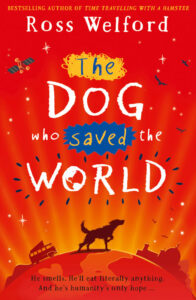
Fans of Ross Welford’s other children’s books have no doubt come to expect from his stories a good dose of time travel, technology-gone-wrong or an otherwise thrilling sci-fi twist, and The Dog Who Saved the World follows suit perfectly.

Georgie Santos loves dogs more than anything in the world. When Dad’s new girlfriend Jessica moves in, Georgie’s beloved dog Mr Mash is forced to move out because of Jessica’s pet allergies. Unimpressed, Georgie volunteers to help out at the dog shelter where Mr Mash is rehoused, but is soon no longer allowed to see him after a deadly and highly contagious disease threatens the life of every dog in the country and to her horror, Mr Mash himself becomes sick.

The only thing distracting Georgie from the pain of not being able to see Mr Mash is her new friendship with Dr Pretorius, an eccentric old scientist who is developing a curious virtual reality project inside a domed room. Georgie knows that trusting Dr Pretorius is a huge risk (in fact I hope that all young readers would know better than to befriend a strange adult in the way that Georgie does), but she is intrigued by the impressive technology and allows herself to become a test subject. As time goes on and the deadly disease becomes even more serious, Georgie begins to wonder whether Dr Pretorius might hold the key to changing the future and, together with her beloved Mr Mash, embarks on a hair-raising adventure to save the world.

Well-pitched for the crossover between Upper KS2 and Lower KS3, The Dog Who Saved The World is an intelligent and absorbing story that raises thought-provoking questions about the responsible use of new or under-tested technologies. As well as the thrilling sci-fi concept and impending sense of global disaster, there is also humour and a great deal of tenderness, especially in Georgie’s relationships with her family and friends.

A highly recommended story for readers who enjoy gaming and those who simply love to expect the unexpected.

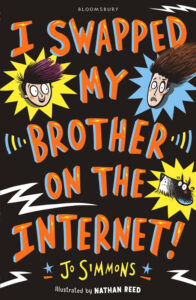
A laugh-out-loud chapter book that will appeal to anyone who has ever wished they could upgrade their sibling for a better model. Johnny is fed up of being picked on by older brother Ted, so when he stumbles across a website called SiblingSwap.com, he turns to the internet to solve his problems. What follows is a hilarious series of not-quite-perfect alternative siblings. There is also an accompanying activity pack available to go with this book.

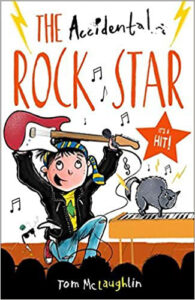
If you’re looking for a good read with lots of laughs, then The Accidental Rock Star fits the bill perfectly.

The story follows Ollie, Hector and their wacky family band on their journey to stardom and back again. Ollie and Hector dream of being rock stars, but unfortunately they have very little musical talent.

One day, as they are making their own music video in Ollie’s room, a twist of fate (in the form of Ollie’s vengeful big sister and a crazy cat) shoots them to overnight success. Before they know it, they become the biggest stars in the world – even though it was actually Ollie’s pet cat Nigel who is responsible for their music going viral.

Will they be able to stay on top, or will the truth come out? Can friendship and family survive in the face of fame and fortune? This is a laugh-a-minute tale by Tom McLaughlin and one that would be much enjoyed as a class read in lower KS2.

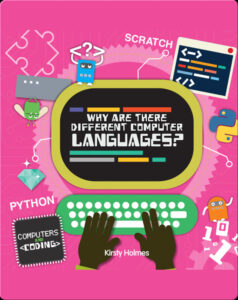
​Part of the ‘Computers and Coding’ non-fiction series designed for ages 5-9, this visually appealing information text looks at the difference between computer languages including Scratch, HTML and Python. You may also like the other books in this recommended series too, such as How Computers Work, Staying Safe Online and What is Coding?.

Subscribe to our newsletter

Your Review

Stone Girl Bone Girl

review

Year group(s) the book is most suitable for:

Year group(s) the book is most suitable for:

Does the book contain anything that teachers would wish to know about before recommending in class (strong language, sensitive topics etc.)?

Does the book contain anything that teachers would wish to know about before recommending in class (strong language, sensitive topics etc.)?

Would you recommend the book for use in primary schools?

yes

Curriculum links (if relevant)

Curriculum links (if relevant)

Any other comments

Any other comments