Recommended children's booklists sorted by age or topic

Topic: Science, Maths and Computing

Plants and Trees Topic Booklist

What makes ‘plants and trees’ such a fascinating science topic at KS2? Perhaps because trees are among the longest-living organisms on Earth and come in so many different shapes and sizes. Or maybe it’s because trees have been found to communicate to each other, or perhaps it’s the way that plants make their own food. Many children are also fascinated by the role plants and trees play in our planet’s ecosystem and are inspired to learn about our ability to step in and protect them. From petals and pollination to bark and branches, there’s plenty to enjoy in our selection of the best children’s books about plants and trees.

NB: This selection of books about plants and trees is aimed at children in KS2 (7-11). For books for younger children, try our Growing Plants KS1 list.

Recommended children’s books about animals

Animal books have always been wildly popular with children, ever since the very first children’s books were printed. In Science at KS2, children learn about animal life cycles, habitats, classification, survival and adaption, looking at different types of animals from around the globe. From marvellous mammals and brilliant birds to interesting invertebrates and clever carnivores, there’s plenty to explore in the animal kingdom. Our list of recommended children’s books about animals will help you to dig your claws right into the very best texts for the topic.

NB: This animal topic booklist is aimed at children in Key Stage 2 (ages 7-11). If you are looking for animal books for younger children, try our All About Animals (KS1) booklist.

Best Children’s Books about Healthy Human Bodies

Learning to look after our bodies is an important part of growing up. As we can’t easily see inside our own bodies, high-quality children’s books about human bodies can play a key part in developing biological understanding in children.

In KS2 science, children learn about the human body, covered through topics about basic anatomy, teeth and bones, digestion, human organs and systems, healthy lifestyles and human growth.

From comprehensive guides to the human body like Kay’s Anatomy and Marvellous Body, to entertaining stories that dive into the topic of human health like Alice Dent and the Incredible Germs or stories about medical ethics like Pig Heart Boy, this list of children’s human body books equips teachers and families to help children aged 7-11 learn all about the science of human biology.

The subject of human bodies often fascinates children. Therefore, we’ve put together a selection of the best children’s books about human bodies, health and growth that will help you to really get to the bones of the topic.

NB: This human body topic booklist is designed to cover Key Stage 2 (ages 7-11). Additionally, for human body books for younger children, try our Human Bodies KS1 Topic Booklist.

Best ‘All About Me’ Books for Children

Celebrate individuality with our list of the best children’s books to support an ‘All About Me’ or ‘Ourselves’ topic for EYFS and KS1 – a popular topic in classrooms as children learn more about themselves and others. 

Each child is unique from the tips of their toes to the end of their nose – with different hobbies, feelings, hairstyles, eye colour, cultural heritages or body shapes.

Whether you want EYFS and KS1 All About Me books celebrating individuality like Super Duper You and Can I Build Another Me or stories about wonderful growing bodies like Measuring Me and Hair Love, we’ve got this All About Me topic covered with this booklist. We’ve also included stories celebrating difference and diversity, including Hats of Faith and All Are Welcome.

Our booklist features recommended All About Me children’s books to help children understand more about their bodies and to positively celebrate the similarities and differences individuals encounter as they find their place within their communities. 

Celebrating Science Booklist

We’ve put together a list of our top recommended children’s books that celebrate science! We have hand-picked the best children’s science books that examine key concepts from biology, chemistry and physics – as well as stories that explore scientific thinking and shine a spotlight on famous (and not-so-famous) scientists.

Primary Science Topic Booklists

We’re here to help you find the best science books for children.

Browse our science topic booklists and brush up on all things STEM, from children’s books about human bodies and health to stories about maths or computer coding and the best space books for children. The experts at BooksForTopics have selected recommended lists of children’s books to bring science, maths and computing topics to life.

Each of our Science topic booklists contains a carefully curated selection of books to support the teaching of the curriculum. When we are assessing the quality of books to consider them for our website, we take into account a number of factors – including age suitability, quality of text, visual appeal, readability, level of interest for children, underlying values, curriculum relevance and print production quality. Our review panel of teachers and education experts is invaluable in providing information about which books support the curriculum effectively, as well as writing detailed reviews for some of the books that we feature too.

In addition to our Review Panel feedback, we work with a team of booksellers to make sure that the books on our lists are readily available from publishers in order to supply them to schools and classrooms. Schools can buy full packs of most of our topic booklists directly from Peters.

So, whatever you are learning about in Science – whether it’s getting the magnifying glass out to go minibeast-hunting, finding out about planting seeds or celebrating famous scientists, our booklists will help you to find the best science books for children. Browse the full list of science topic booklists below.
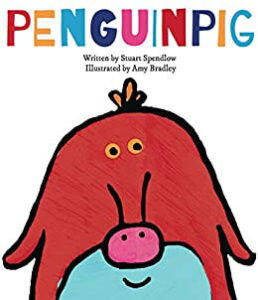
Written by a teacher, PENGUINPIG is designed to teach the concept of e-safety to young children and is a great choice of book for EYFS and KS1. The story features a little girl who becomes intrigued by a penguinpig that she encounters online. When she takes the decision to go out and meet the penguinpig for herself, she finds that things are not always as they seem on the internet and that from now on she must think before she clicks. You may also like MONKEYCOW from the same team, which focuses on keeping passwords safe.

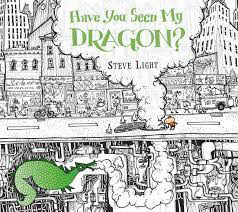
This is a Where’s Wally? style counting book. Follow the boy as he searches for his dragon and see if you can find and count all the objects that he encounters along the way. The simple black and white illustrations are striking against the coloured objects to spot and the map on the endpapers is useful for discussing number sequence. This is an enjoyable book to share and re-share that helps to develop early counting in EYFS and KS1.

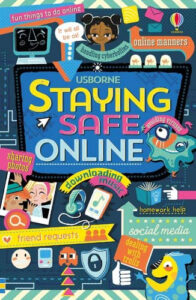
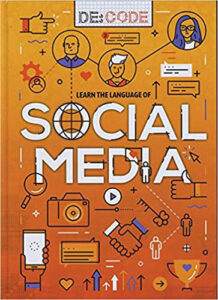
Covering important e-safety topics including cyberbullying and social media messaging, this is an essential book to help older children to know how to protect themselves in the digital world. Find out how online interactions can affect friendships, why cyberbullying is so dangerous and how image-sharing can get out of control. Due to the nature of the topics covered, this is most suitable for upper KS2+ or as a book to dip in and out of at your discretion.

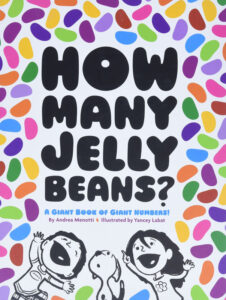
This large book is a showstopper among maths picture books. Emma and Aidan are trying to decide how many jellybeans they need. As they compete, the numbers get larger. The book offers a fantastic visualisation of larger numbers, especially the fold out million jellybean crescendo. Perfect to share 1-on-1 but it would equally enthral an assembly hall full of children!

Subscribe to our newsletter

Your Review

Stone Girl Bone Girl

review

Year group(s) the book is most suitable for:

Year group(s) the book is most suitable for:

Does the book contain anything that teachers would wish to know about before recommending in class (strong language, sensitive topics etc.)?

Does the book contain anything that teachers would wish to know about before recommending in class (strong language, sensitive topics etc.)?

Would you recommend the book for use in primary schools?

yes

Curriculum links (if relevant)

Curriculum links (if relevant)

Any other comments

Any other comments