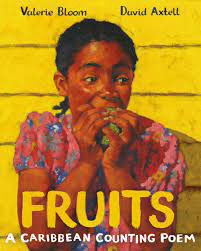
A simple counting story from 1 – 10 that is written in the style of a Caribbean dialect, with stunning illustrations that will quickly grab the attention of young readers. This rhyming book written by much-loved poet Valerie Bloom introduces basic counting as well as showcasing a number of different fruits from the Caribbean. There is a glossary at the end of the book that explains the new words that readers may have encountered in the story.
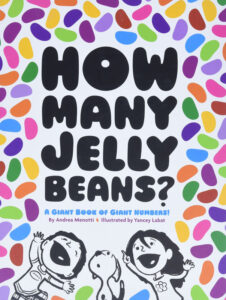
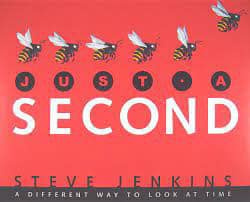
This book is full of mind-blowing facts that readers young and old will find astounding, offering interesting context to the complex topic of time as well as distance and world history. It could be used across KS1 and KS2, either being used as a book to enjoy as a read-aloud and talk about the amazing facts or to delve deeper into each page and work through some of the related calculations.
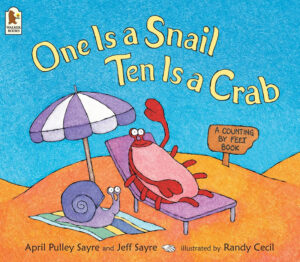
Weight and mass often mean little to children without context. This book is brilliant for offering the context to the topic, with each page building on the last to compare the weight of different animals. It is fascinating to read the comparisons and children will begin to formulate their own questions and hypotheses long after the book is finished.
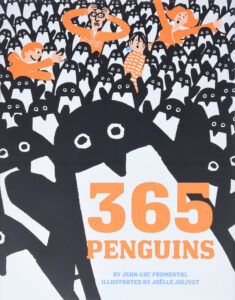
This is a book that helps younger children to visualise the larger numbers that intrigue them so much, through a cute and playful story about a curious penguin who wants to find out more about numbers. The book ends with a pull-out poster with one million stars in the night sky.
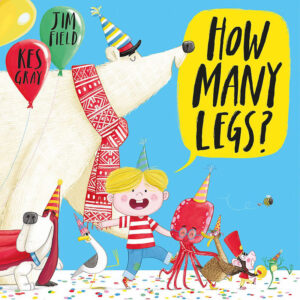
We know that certain animals are large or small, but how big exactly? Each page shows the actual size of an animal. Some easily fit on the page, others only manage an eye or a hand. A much-enjoyed book that leaves children in awe at the actual size of some animals, as it’s not often that we come face to face with the biggest beasts on earth! A high-interest link to topics of measurement or ratio.
A stylishly designed colourful glossary of words relating to social media. Organized alphabetically, the book explains a range of terms from bitmojis and boomerangs to memes and moderators, all in an informative and accessible way. Whether you are a netiquette nerd or you don’t know your YOLO from your YouTube, this a great guide to have to hand as you equip pupils in KS2 to cope with the fast-changing world of social media.
There is so much to love about this book, which would be great to share individually or in small groups. Each page sparks a mathematical discussion about shapes in the context of the natural world. The collaged artwork is beautiful and the text is written in verse, giving the book an enthralling appeal to young readers and adults alike. The ‘Nature Notes’ at the end give extra information about all the animals featured in the book.
Written by a teacher, PENGUINPIG is designed to teach the concept of e-safety to young children and is a great choice of book for EYFS and KS1. The story features a little girl who becomes intrigued by a penguinpig that she encounters online. When she takes the decision to go out and meet the penguinpig for herself, she finds that things are not always as they seem on the internet and that from now on she must think before she clicks. You may also like MONKEYCOW from the same team, which focuses on keeping passwords safe.
This is a Where’s Wally? style counting book. Follow the boy as he searches for his dragon and see if you can find and count all the objects that he encounters along the way. The simple black and white illustrations are striking against the coloured objects to spot and the map on the endpapers is useful for discussing number sequence. This is an enjoyable book to share and re-share that helps to develop early counting in EYFS and KS1.
Covering important e-safety topics including cyberbullying and social media messaging, this is an essential book to help older children to know how to protect themselves in the digital world. Find out how online interactions can affect friendships, why cyberbullying is so dangerous and how image-sharing can get out of control. Due to the nature of the topics covered, this is most suitable for upper KS2+ or as a book to dip in and out of at your discretion.
review
Year group(s) the book is most suitable for:
Does the book contain anything that teachers would wish to know about before recommending in class (strong language, sensitive topics etc.)?
Would you recommend the book for use in primary schools?
yes
Curriculum links (if relevant)
Any other comments
Any other comments