Recommended children's booklists sorted by age or topic

Wordless Picturebooks

icon - book rainbow

The Best Wordless Picturebooks for Primary School Children

Wordless picture books are like portals to imaginative worlds where stories unfold without a single written word. Instead of relying on text, these books let the illustrations do all the talking. There’s a superb variety of wordless picturebooks available for children in KS1, Ks2 and EYFS, and we’ve picked out some of the best wordless picturebooks for primary-aged children.

More and more teachers are discovering that wordless picture books can inspire incredible literacy learning across the primary age range, right up to Year 6. Books that tell stories through pictures alone can help develop visual literacy, expand the imagination, start discussions about interpretation and give children space to add spoken or written narratives of their own.

From EYFS right through to Year 6, the role of wordless picturebooks in literacy development and imaginative enjoyment is hugely valuable. Wordless picturebooks help to break down language barriers and invite readers of all ages to craft their own stories based on the pictures before them. Curious details and intriguing clues in the illustrations enable the narratives of wordless picturebooks to be open to a range of interpretations – levelling the playing field for every reader to be the storyteller.

From whimsical wordless delights like the adventure of flying frogs in David Wiesner’s award-winning Tuesday to deeper discussion-starters like Duncan Annand’s Caged, this booklist features a selection of the best wordless picturebooks for children aged 4-11. 

Add to Favourites
Please login to bookmark Close

Visit our booklists on Amazon

Support independent bookshops

SAVE 20% with Peters

Wordless books with magical adventures or fantasy worlds

Picturebook

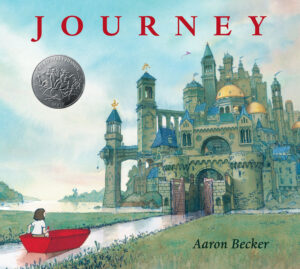
A beautiful, award-winning wordless picture book. It follows the journey of a young girl who draws a magic door in her bedroom and travels through fantasy worlds by boat, balloon and magic carpet. Highly recommended for pupils across the whole primary range.

Picturebook
What's on the other side of the door? There's only one way to find out: You have to go through it. JiHyeon Lee's debut book, Pool , was lauded as a wordless masterpiece. Here she takes readers on another journey into an unexpected world-without words. Delicate, intricate, and whimsical drawings transform from grays to vivid color as a curious child goes through a mysterious door and discovers that open-mindedness is the key to adventure and friendship. Using magical realism, this book reminds us not to fear others.
Picturebook
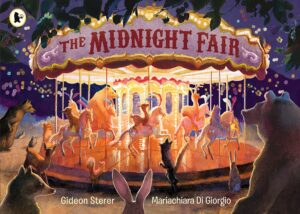
A spectacular, surreal and cinematic wordless picture book about the secret life of animals.Far from the city, but not quite in the countryside, lies a fairground. When night falls, and the fair is empty, something unexpected happens. Wild animals emerge from the trees, a brave raccoon pulls a lever, and the rollercoasters and rides explode back into bright, neon life. Now it’s time for the woodland creatures to have some fun…
Picturebook
Award-winning author David Wiesner has the incredible ability to draw the reader into a world where the strangest and most magical of events take place as if they are completely normal. On this particular Tuesday, a small group of frogs take flight from their lily pads and go on a whimsical adventure that will invite children to let their imaginations run free and complete the fantasy by deciding what unlikely events will occur next Tuesday.

Wordless stories exploring real-world themes and scenarios

Picturebook

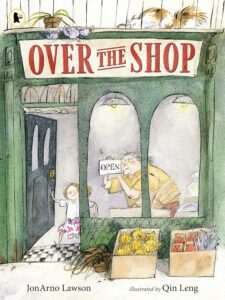
Over The Shop is a wonderfully illustrated and enjoyable wordless picture book that tells the story of the need to find a tenant for the flat above a shop, which has unfortunately fallen into disrepair. The shop itself is run by a grandma and her granddaughter. However much they try, they cannot seem to find a tenant with real vision for the space above the shop, until a couple with big ideas comes along. The fact that this book is wordless means that it would be a great resource to create art, explore through drama and inspire writing opportunities across a whole school or in any individual year group.

There is a theme of kindness, community and acceptance weaved within the story too, which could also be explored and discussed further. The illustrations by Qin Leng are colourful, detailed and symbolise the transformation of not only the accommodation as the story progresses but also the relationships between the characters. They help to bring the characters to life and as a reader, you can infer what the characters are like based on their actions in the drawings, especially that of the young girl. This is a lovely wordless story to share in a primary school setting.

Picturebook
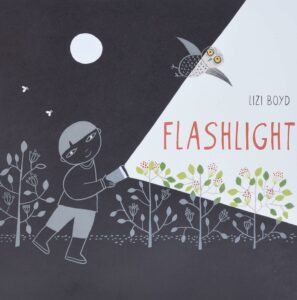
Inside a tent it's cozy. But what is going on outside? Is it dark? Is it scary? Not if you have your trusty flashlight! Told solely through images and using a spare yet dramatic palette, artist Lizi Boyd has crafted a masterful exploration of night, nature, and art. Both lyrical and humorous, this visual poem-like the flashlight beam itself-reveals that there is magic in the darkness. We just have to look for it.

Wordless stories about animals and natural habitats

Picturebook

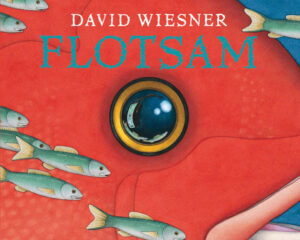
This award-winning wordless picture book offers endless opportunities for discussion and creative writing. A beach-combing young boy finds a washed-up camera on the shore, and when the film is developed it reveals a fantastic new world of creatures from the ocean. Incredible illustrations that speak for themselves. Read our blog for inspiration from one talented teacher who brought a Flotsam literacy unit to life.

Picturebook

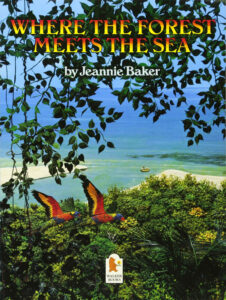
Where the Forest Meets the Sea is a hauntingly beautiful picture book that forces the reader to consider what is really lost when humans build upon previously untouched landscapes. The story follows a boy and his grandad as they explore a largely untouched wet-tropical rainforest that meets the sea. The pictures contain hidden images depicting past inhabitants, teaching the reader how the forest has supported life beyond just the modern snapshot. The question mark that hangs over this beautiful landscape is saved for the very last image. As a reader, this book manages to make me feel innocent and guilty at the same time and, in a very accessible way, forces the reader to consider the natural environment and how it should be protected and not just for the sake of the future, but for the sake of the past.

If you are looking for a book to stimulate discussion and debate about the effects human beings can have on the natural world, this is the one for you. The illustrations are so incredibly detailed (there is also a big book edition available on Amazon that is perfect for detail-spotting) that you might be forgiven for thinking that some of them are photographs. The book has won multiple awards and is sparking deep consideration of the past, present and future of the rainforest.

Picturebook

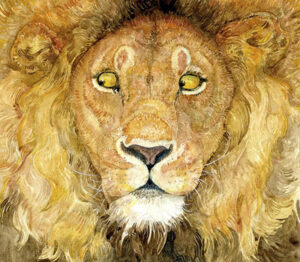
In this stunning picture book, which is wordless except for the odd animal sound, Aesop’s famous fable gets a reworking in an African Serengeti setting. The pictures tells the story of a ferocious lion who is freed from a hunter’s trap by a little mouse, whom the lion had spared from being eaten once before. This is a book that will have children of all ages hooked through its timeless themes of friendship and kindness as well as its incredibly vivid artwork bringing deep human emotions into the world of nature.

Picturebook

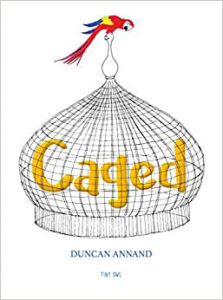
Caged is a wordless picture book in which simple, effective illustrations build up in small steps to the final ‘finished’ pictures. The story begins with a bluebird making a nest in her forest and she appears to be watching the actions of two men interfering there. As her nest is growing, she watches these men destroying this forest, which houses colourful parrots. As the men destroy the parrots’ habitat, they cage each parrot they find and build a palatial structure with the caged parrots.

The slow build-up of the illustrations throughout the book means that there are plenty of clues to spot on each page to show how the story is developing and to predict the next part of the story. Colour is used selectively throughout the book: initially, only the birds in the story are given any colour and the vibrant birds stand out from the colourless humans. This means that the viewpoint automatically shifts to that of the birds, instead of the humans. However, just before the end of the book, there is a slight change in colour use which could indicate the fate of the men.

There are some interesting discussions that can be brought up throughout the text. The value of individual liberty is an obvious link: should these men use their own freedom to cage other animals for their own (and other humans’) entertainment? Should animals have the same rights to freedom as people do? This links to the moral question of caging any animal and the illustrations lead to thinking of this from different perspectives: the onlooker, the imprisoner and the caged. Overall, this is a lovely picture book that can be read on different levels depending on the age and stage of the reader.

Picturebook

This is a delightful and engaging wordless picture book with a meaningful message – it would suit anyone who would like to explore friendship as well as the value of bees to our planet.

The bee is the main character who teaches a little girl what he needs to thrive, after she catches him in a glass and lets him go out of her window. The bee is in the middle of town, getting soaked in a storm and in need of more help. He returns to the window and this time the girl is not so afraid – she takes the bee in and feeds it honey and water. Many readers will identify with the girl up to this point. But then she keeps him and a friendship blossoms which ultimately takes them both out into the countryside and a world of colour:

Readers of The Promise by Nicola Davies will recognise similarities as the bee and the girl take parts of this natural world back into town and improve the lives of those within it. The wordless story is told entirely through images, beautifully drawn by Alison Jay, which allows for individual interpretations of the characters’ thoughts and motives. By the end of the book, readers will question if it was in fact, the bee who rescued the girl and those around her.


SAVE 20% with Peters

Visit our booklists on Amazon

Support independent bookshops

Booklists you might also like...

Subscribe to our newsletter

Your Review

Stone Girl Bone Girl

review

Year group(s) the book is most suitable for:

Year group(s) the book is most suitable for:

Does the book contain anything that teachers would wish to know about before recommending in class (strong language, sensitive topics etc.)?

Does the book contain anything that teachers would wish to know about before recommending in class (strong language, sensitive topics etc.)?

Would you recommend the book for use in primary schools?

yes

Curriculum links (if relevant)

Curriculum links (if relevant)

Any other comments

Any other comments