Recommended children's booklists sorted by age or topic

Africa Topic

icon africa

Africa Topic Booklist

Africa is a large and diverse continent with over a billion people including thousands of different cultural groups and indigenous languages. From stretches of desert and mighty mountains to impressive waterfalls and wonderful wildlife, the geography of Africa offers much to explore, as does the history of its people from ancient times to the rich diversity of its modern population. We’ve put together a list of the best children’s books to help young explorers studying the topic of Africa…


Add to Favourites
Please login to bookmark Close

Visit our booklists on Amazon

Support independent bookshops

SAVE 20% with Peters

Picturebooks set in Africa

Picturebook

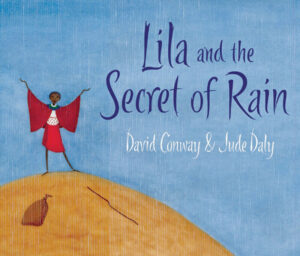
This is a beautiful picture book that depicts a Kenyan village during a drought. Rain has not come down for months and the sun beats hard on the villagers, affecting the people, plants and animals. When a young girl called Lila hears a story from her grandfather about the secret of making the rain come back, she sets about on her own quest to save her village.

Picturebook
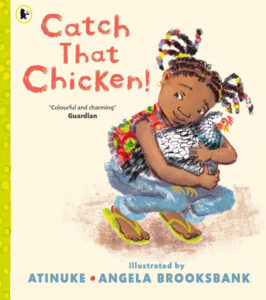
Lami loves chickens. She's the best chicken catcher in the village. She's fast, she's brave and she always catches that chicken. Until the day she chases one up the baobab tree, slips ... and falls. How can she catch chickens with a sore ankle? Could there be another way to catch that chicken? Told with great humour by Nigerian storyteller, Atinuke, this story of the headstrong, impetuous Lami will strike a chord with all children. The gentle message - to use quick thinking not just quick running - gives an incredibly satisfying ending, while Angela Brooksbank's beautiful artwork captures the energy and the beauty of the West African setting perfectly.
Picturebook

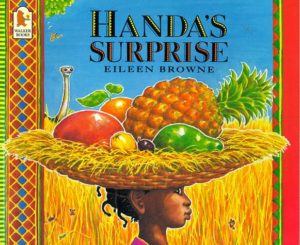
This picturebook charts the journey of a girl called Handa as she carries fruit to her friend in a neighbouring village. Little does Handa realise that along the way there are animals that have also got their eyes on the lovely fruit in her basket. A fun and colourful story that is a hugely popular choice in EYFS.

Picturebook
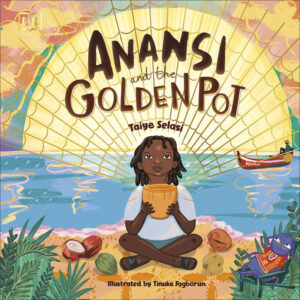
Anansi is a trickster character from traditional West African folklore.This picturebook reimagines the story of Anansi for a new generation. Kweku has grown up hearing stories about the mischievous spider Anansi. He is given the nickname Anansi by his father because of his similarly cheeky ways. On a holiday to visit his beloved Grandma in Ghana, Anansi the spider and Anansi the boy meet, and discover a magical pot that can be filled with whatever they want. Anansi fills it again and again with his favourite red-red stew, and eats so much that he feels sick. Will he learn to share this wonderful gift? This charming retelling of a West African story teaches readers about the dangers of greed, and the importance of being kind. Tinuke Fagborun's colourful illustrations bring the magic and wonder of the tale to life.
Picturebook

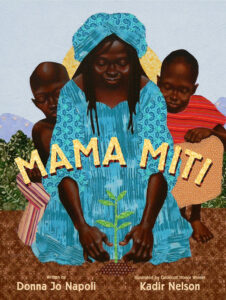
A picturebook telling the true story of Wangari Maathai, who who encouraged Kenyan women to plant trees to improve their lives and their environment. In time, the women used the branches from their trees to fence their animals, the leaves to ripen their bananas and the fruit to feed their families. As the planting movement spread, slowly the deforested Kenyan landscape became green with trees again. Today, more than 30 million trees have been planted throughout Mama Miti’s native Kenya, and in 2004 she became the first African woman to win the Nobel Peace Prize. Wangari Muta Maathai has changed Kenya tree by tree-and with each page turned, children will realize the power of planting trees as well as their own ability to positively impact the future.


Picturebook

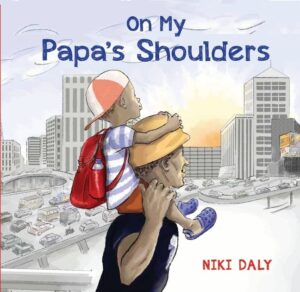
The back cover declares the story to be ‘a celebration of fathers everywhere’. The illustrations reinforce that: they convey a sense of modern Africa, while yet picturing scenes that happen in cities worldwide.

Similarly, the little boy who tells the story is every child; every boy or girl who enjoys the care and attention of different family members, valuing each one – Mama, Tata, Gogo and Papa – in different ways. Mama for helping to tie his shoe laces and her goodbye kiss; Gogo for allowing him to feed the wayside cats, for listening to him and for being gentle; Tata for going slowly and splashing in puddles. But it is from Papa’s shoulders that a small boy’s view of the world is transformed. From there you can see more and further. You feel tall and strong too. This is commuting in style! This is love – supportive, mutual, familial, simple.

Set in South Africa, this story will have wide appeal and may prompt conversations in Early Years and KS1 classrooms about journeys to school and daily routines. The text is concise and clear (which helps when reading aloud); the ink-and-watercolour illustrations lively and sensitive.

Stories about African Animals and Wildlife

Picturebook

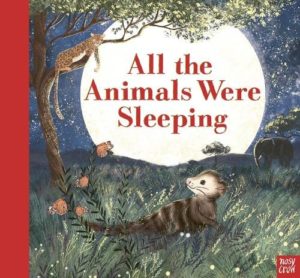
This picture book about a little mongoose and his adventure in the African Serengeti just before bedtime is a heart-warming and descriptive story. The illustrations in this quietly bewitching book are detailed and sophisticated – the bold brush strokes of colour paint a dramatic African night sky as a background to the story. The repetition in the story has shades of ‘We’re Going on a Bear Hunt’ within it however it is also suitable for an older audience thanks to its long, elegant sentences and rich vocabulary; ‘giraffes lay like shells curled beneath the tall acacia trees’ and ‘vervet monkeys hugged the boughs…their toes and tails hung like fruits from the branches’. This book may be of interest to parents to read as a bedtime story as well as EYFS or KS1 teachers teaching about the Serengeti setting. At the back of the book is a superb three-page non-fiction section detailing all the Serengeti animals that appear in the story accompanied by beautiful illustrations – some children will relish this part of the book as much as the story.

Short chapter books about Africa

Chapter book

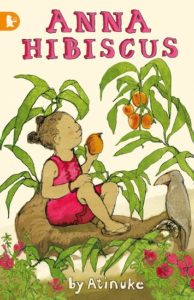
Anna Hibiscus is a young girl who lives in an African city with her family. This early chapter book is an excellent choice for KS1 and the story collection offers a window into what everyday life might look like for one child growing up in one part of amazing Africa.

Chapter book

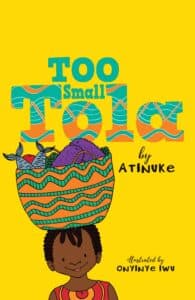
This story is set in Lagos, Nigeria and gives an insight into the everyday life for one Nigerian family.

The story focuses on Tola, who is the youngest in the family and she is not only the youngest but she is also the smallest – although Grandmummy, who looks after the family is also very tiny. Each member of the family has their own distinctive characteristic – Moji, who studies hard and Dapo, who is obsessed with football.

The book has three chapters and each has a clear message for the reader. Even though Tola is small, Tola shows that she is both strong and determined in all situations but also kind and caring. The stories show how being kind to others often brings benefits. In one story Tola has soft drinks, ice-cream and doughnuts having carried home the heavy shopping of many of the people who live in the block of flats. In another story, her kindness helping Mrs Shaky-Shaky, an elderly resident of the flats she lives in, is repaid when the residents stand together against the bully boys who trip Tola up as she carries water back to her family. In the final story, Tola’s thoughtfulness for the tailor who breaks his leg and is unable to take measurements from his clients around the city, is repaid by the tailor making a beautiful outfit for Tola.

This book helps to diminish stereotypes of non-descript ‘African’ settings and replaces them with a clear picture of life for a family in Lagos. More importantly, the author skilfully crafts believable characters that appeal to all children and couples this with a message that goes beyond the national boundaries of the story setting.

Chapter book Dyslexia-friendly
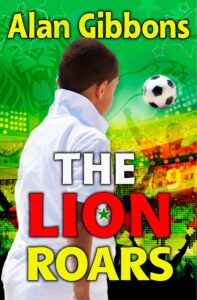
Jimi dreams of playing in the all-white kit of the Lions of Senegal but he can't see how his dream will ever come true. Even though he is the best footballer in the region, the bigger boys never let him play with them. But can he change their minds? With huge support from his family, Jimi finds that there is nothing that he can't achieve!Interwoven with lots of facts about the history of African football and African-born footballing superstars such as Didier Drogba, Samuel Eto, Patrick Viera and Yaya Toure, this book is ideal to engage reluctant reading football fans. Particularly suitable for struggling, reluctant and dyslexic readers aged 8+.
Chapter book Dyslexia-friendly
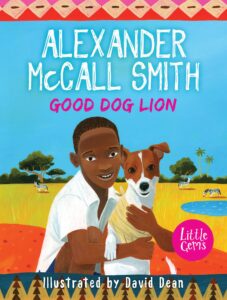
A beautiful, heartwarming story set in Africa about a young boy and his yearning for a pet dog. From internationally bestselling author Alexander McCall Smith. Timo and his mother do not have much money - in fact, they have almost none. But that does not matter too much, because Timo has his mother and she has him. They have their little house. They have friends and neighbours. They have the world about them. All of that can be enough for happiness. There is one more thing, though, that Timo would like to have ...A dog! High quality cream paper and a special easy-to-read font ensure a smooth read for all.

Longer chapter books about Africa

Chapter book

This is the first novel in Lauren St John’s popular series. When a young English girl called Martine moves to live with her grandmother on a South African game reserve, she finds herself feeling lonely and isolated. One night she sees a mysterious silver giraffe and as she begins to befriend it, a thrilling mystery begins to unravel.

Chapter book

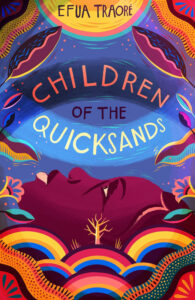
Set in Nigeria, the story centres on 13-year-old Simi, sent away from the city by her busy mother to stay with her grandmother in Ajao, whom she has never met and who is not expecting her. There’s no internet, TV or phone; just the sounds of birds and animals. Why has her mother never spoken of her grandmother? Her grandmother readily dispenses advice and healing potions and tinctures to the community yet remains silent on the topic of her own family. Simi only knows that she must keep away from the forbidden lake and jungle-like forest, but soon defies her grandmother and decides to explore. While at the lake, she is pulled under by the dangerous quicksand and her fantastical journey begins; a journey that she can share with no one. Will she uncover the truth? Can the years of rifts be healed?

This is a beautiful story with an evocative setting. The reader is drawn to the rich sights, sounds and smells of the remote setting with its mysteries woven into a story dealing with separation, grief and loss. It is Simi’s personal story, yet the history that she uncovers is also deeply powerful and moving: the story of a family dealing with loss in their own individual ways. It is her grandmother, Iyanla, whose secrets we want to uncover and, when we do, it is via a tale steeped in Yoruba folklore and magic.

This story radiates warmth and colour and deserves a place in a KS2 library. The book itself is a thing of beauty with a stunning cover by Helen Crawford-White. Display this on your classroom shelf and it just begs to be picked up by any middle-grade child in search of a wonderful adventure.


Chapter book

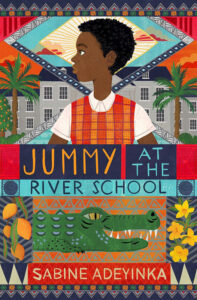
Jummy at the River School is an immersive introduction to life at boarding school in 1990s Nigeria. Many of the themes of friendship and bravery and justice are universal, but the vividly described River School setting, and Jummy’s own unique voice, make the story sing.

Jumoke has always dreamed of being accepted to Nigeria’s best girls boarding school, and the reality is everything she hoped for. The grounds are beautiful, her dorm mates take her under their wing, and before long she is caught up in a whirlwind of midnight feasts, picnics, school songs and working hard to win the house prize. Everything seems perfect, the only fly in the ointment stuck-up Bolaji who thinks she is better than everyone else. However, it is not long before Jummy finds that, to her surprise, her best friend from back home, Caro, is also at the River School. Jummy’s initial elation turns to confusion when she realises that Caro; brave, funny, clever Caro; is there as a maid to the matron, to work not learn. Jummy decides that everyone deserves the opportunities she has, and with the help of her new friends, resolves that there must be a way to help Caro join them at school….

Suitable across the KS2 age range, Jummy at the River School is very accessibly written, with short chapters averaging 8 pages and large, well-spaced text that is easy on the eye. The underlying poverty and class differences affecting Jummy, Caro and Bolaji are never shied away from but also never overwhelm the joyful nature of the story and the light-footed writing that keep you wanting to turn the next page. Perfect for fans of school stories and as a class reader linked to Africa, Jummy at the River School is as juicy and sweet and captivating as Caro’s favourite agbalumo fruit.

Chapter book

Inspired by West African and Igbo history, this adventure-filled fantasy introduces readers to Cameron Battle as he begins his journey to greatness.

Cameron Battle has vivid memories of his early childhood, listening to his Mother read him magical and adventurous tales from the Book of Chidani – a lost mythical kingdom of the Igbo people whose Queen bargained with the gods, cutting it off from the world to save her people from slavery.

However, after his parents mysteriously died in a car crash, Cameron’s Grandmother locked the book away in the attic and forbade him to open it again. That is until one summer sleepover with his best friends Zion and Aliyah, when strange things start to happen, and they decide to investigate the attic. As soon as they open the book, a portal drags them into the world of Chidani, which is no longer the place Cameron saw in his Mother’s stories, but is one of darkness and danger, having been thrown into a war between the Queen and her evil sister, who has stolen ‘The Three Gifts’ that give the Queen her power.

Cameron is quickly hurled into the centre of the battle for Chidani – and for Earth. He comes face to face with his past, the legacy his parents left him, and his future. He is ‘The Descendant’ and the people of Chidani are counting on him. But can a 12-year-old boy become a hero? After intensive training in the Igbo fighting style, Dambe, the young heroes set off to find ‘The Three Gifts,’ using The Book to help them solve riddles to seek the missing objects and facing Gods and monsters on their way.

The very relatable characters all grow through the story, facing their fears and finding their strength in different ways, and themes of friendship, family and destiny run through the story. The short chapters combined with the excitement and adventure in this fast-paced narrative would make it a fantastic class novel.

Non-Fiction about Africa

Non-fiction
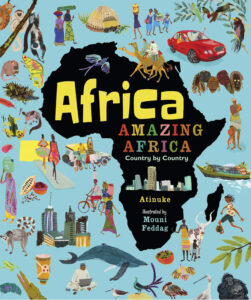
This non-fiction book is British-Nigerian storyteller Atinuke's personal love letter to the African continent, and its 55 countries in all their variety. It divides Africa into five sections: South, East, West, Central and North, each with its own introduction. This is followed by a page per country, containing a delightful mix of friendly, informative text and colourful illustrations.
Graphic novel
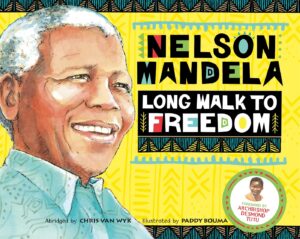
Long Walk to Freedom by Nelson Mandela is the amazing story of a true hero of our times; his famous biography has been specially adapted for children in a beautiful illustrated picture book format. Discover how a little boy whose father called him "troublemaker" grew up to fight apartheid, become South Africa's first black president and campaign for freedom and justice throughout the world.Adapted by poet Chris van Wyk and illustrated by South African artist Paddy Bouma, with an introduction from Archbishop Desmond Tutu, Long Walk to Freedom introduces children to the life of one of the world's most beloved leaders.
Non-fiction
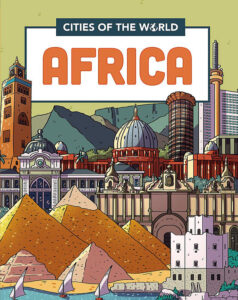
This series offers readers an engaging and visually exciting look at some of the world's major cities. Cityscapes draw in the reader with facts about the iconic buildings that help to shape each city's unique identity. Data-packed pages give the essential details about each featured city, including where to go, what to do and things to eat on a visit, as well as information about the city's history. The cities of Africa covered in the book include Lagos, Cairo, Kampala, Nairobi, Algiers, Yamoussoukro, Addis Ababa, Cape Town, Marakesh, Maputo, Tripoli, Harare, Monrovia, Las Palmas, Tunis, Windhoek, Antananarivo, and Johannesburg.
Non-fiction

Let’s Save the Okavango Delta is a superb choice to compliment KS1 and Lower KS2 topics around the environment, climate change or even to support a contrasting locality study in Geography.

It is a beautiful illustrated and fascinating look into the wetlands of Botswana. Catherine Barr takes this area of Southern Africa and uses each double page spread to share a compelling reasons for saving this extraordinary habitat, enabling young readers to appreciate the breadth of impact that climate change brings upon even the smallest of areas. Each section is written in a similar style; a short paragraph of introduction and then captions to accompany the beautiful pencil drawn illustrations.

The writing style is accessible for more able KS1 readers and offers enough topic specific vocabulary to aid discussion and research.Whilst the book can be enjoyed in its entirety, there are so many themes which can be built upon and developed as the book unfolds; from the animals and birdlife which live there to how rural and urban localities within the region are impacted by the river itself. As a resource for persuasive writing, the book offers so many opportunities to debate meaningfully. For example, the controversial subject of fossil fuel extraction in the area would be particularly interesting to explore.

The final two page spread challenges the reader to consider how they can impact climate change and become more informed about wetland habitats. It also offers some superb home learning activity ideas! The author asks the reader to consider supporting World Wetlands Day and even encourages readers to create their own wetlands hotspot in their garden. The final caption draws this together with the request to share all of the important things they have learned in an assembly. The book is truly thought provoking and is highly recommended.

Non-fiction
Discover the incredible history and diversity of the African continent in all its splendour with this stunningly illustrated and fact-filled encyclopedia.This fascinating and beautiful book is divided into broad geographical sections which celebrate and showcase the peoples, landscapes and wildlife from different regions of this great continent, and bright and bold illustrations bring these facts to life.Learn about the astonishing history of the continent, as the birthplace of the very first human beings, through rich historical civilisations such as the ancient Egyptians, the Benin Empire and the Kingdom of Kush, up to the development of the dynamic cities of the modern day.Africana explores:The beautiful visual cultures and artwork from across Africa, including the printed cottons of Guinea and the mud cloth of Mali Famous figures from African history and modern-day change makers The incredible landscapes and wildlife of the continent, ranging from the deserts of the north, the rainforests of the central regions and the savannahs of the southFeaturing a stunning copper foil–detailed cover, this large-format book is packed with maps, timelines and much, much more to open your eyes to the beauty and brilliance of this diverse continent.

SAVE 20% with Peters

Visit our booklists on Amazon

Support independent bookshops

Booklists you might also like...

Subscribe to our newsletter

Your Review

Stone Girl Bone Girl

review

Year group(s) the book is most suitable for:

Year group(s) the book is most suitable for:

Does the book contain anything that teachers would wish to know about before recommending in class (strong language, sensitive topics etc.)?

Does the book contain anything that teachers would wish to know about before recommending in class (strong language, sensitive topics etc.)?

Would you recommend the book for use in primary schools?

yes

Curriculum links (if relevant)

Curriculum links (if relevant)

Any other comments

Any other comments