Recommended children's booklists sorted by age or topic

Topic: Science, Maths and Computing

Non-fictionPicturebook

A stylishly illustrated non-fiction book about the search for life on Mars, told from the unique perspective of NASA’s Mars rover, Curiosity.

Discover the incredible story of the search for life on Mars, told from the unique perspective of Curiosity, the Mars Rover sent to explore the red planet. Markus Motum’s stylish illustrations and diagrams reveal how a robot travelled 350,000,000 miles to explore a planet where no human has ever been.
Shortlisted for the Klaus Flugge Prize 2018.

A hardback non-fiction book from Usborne’s interactive lift-the-flap series, exploring the topic of germs through bite-sized question-and-answer chunks. Written with advice from Public Health England, it’s an attractive book that is useful for addressing queries, ‘just-wonderings’ and misconceptions about germs. By learning what germs are, where they live and how they behave, young readers can also learn how to prevent germs from spreading between people and the book includes top tips about staying healthy and hygienic.

After George visits the Museum of Wildlife with Grandad, all he can think about is bugs! The very next day he goes out hunting, but he soon finds there are no more insects left in the garden, and the ones he has captured in jars don’t look very happy… George is about to learn exactly why bugs are so important. A brilliant, vibrant debut from Alex G Griffiths, featuring a wonderful grandfather-grandson relationship.

Within a floating ice palace high above the clouds, the Snow Queen operates a snowflake machine, ensuring that it produces perfectly identical flakes. But one day when the Queen leaves her daughter Princess Ellie in charge, the machine breaks and Princess Ellie has to find a new way to make the snowflakes. Princess Ellie creates exquisite and unique snowflakes by hand, making the most beautiful snowfall ever.

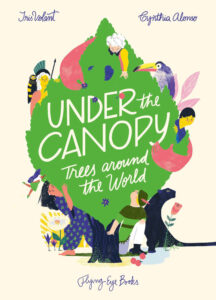
A beautifully presented hardback book that tells stories about lots of different trees – from the legend of the Major Oak in Sherwood Forest, to the olive trees of Greece and the blossom in Japan – as well as giving factual information about seasonality, average height and where in the world they grow. A fascinating read for all ages, with brilliant and vibrant illustrations throughout. The book explores the importance of trees historically and culturally, and would encourage discussion around their importance with future generations

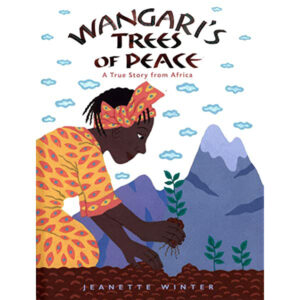
This beautiful and factual picture book about Wangari Maathai is inspiring and full of hope. The devastating impact of deforestation is made starkly clear but it is counterbalanced by the actions taken by first Wangari Maathai and then more and more women until millions of trees had been planted and healing began. Children I have shared this story with have asked probing questions and wanted to find out more: How long did it take the trees to grow? How long before the earth recovered? Maathai was the first African woman to receive the Nobel Peace Prize for her work and classes may enjoy this two-minute video clip where she tells, herself, the story of the tiny hummingbird who does her best to make a difference. This book could also be useful for Black History Month and International Women’s Day.

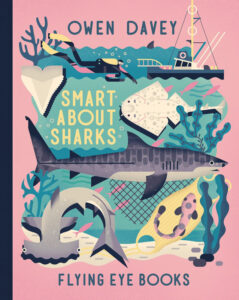
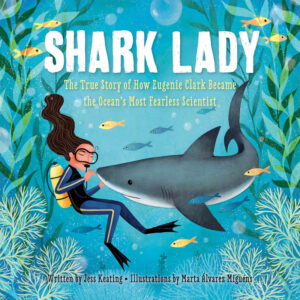
This is the inspiring story of real-life scientist Eugenie Clark, who loved sharks so much from a young age that she became determined to study them and show the world how wonderful the creatures actually are. Written by a zoologist, this is a great story representing girls who follow their aspirations in STEM careers.

Tiddler is a fish who is always late for school. Every day he arrives with a different tall story about why he is not there on time, until one day he finds himself caught up in a big adventure that will make him very, very late indeed! A fun, rhyming story with a repeated refrain.

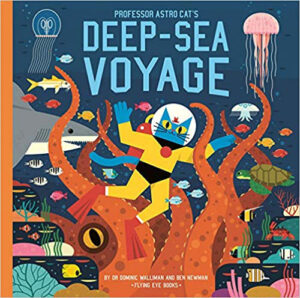
This charming concertina book follows the journey of a little submersible on a voyage beneath the waves, down into the deep dark ocean and back again. Folding out to nearly 2.5 metres, children can look at all the different things the sub sees on its way, as it travels past a shipwreck, through a coral reef, near to a pod of orcas hunting for their lunch, close to a leatherback turtle feasting on jellyfish, and past some rather strange deep-sea fish. Playful text guides the journey, providing a fun shared experience and a conversation starter for parents and young children.

The reverse side of the concertina features spot illustrations picked out from the main scene, with more expansive information about submarines, ocean life and the dangers it is facing.

Part of the popular ‘One Day on our Blue Planet’ series, this beautifully illustrated picture book charts the wildlife in the ocean across the course of a whole day. Informative and visually appealing with accessible text, this non-fiction series is a winner for KS1 classrooms.

Subscribe to our newsletter

Your Review

Stone Girl Bone Girl

review

Year group(s) the book is most suitable for:

Year group(s) the book is most suitable for:

Does the book contain anything that teachers would wish to know about before recommending in class (strong language, sensitive topics etc.)?

Does the book contain anything that teachers would wish to know about before recommending in class (strong language, sensitive topics etc.)?

Would you recommend the book for use in primary schools?

yes

Curriculum links (if relevant)

Curriculum links (if relevant)

Any other comments

Any other comments