Recommended children's booklists sorted by age or topic

Rivers and Coasts Booklist

icon water cycle

Best children’s books about rivers, coasts and water cycles

This geography curriculum booklist is designed to help those looking for children’s books about rivers, coasts and the water cycle.

The topics of rivers, coasts and water are components of the National Curriculum in primary schools, covering aspects of both Science and Geography. From erosion and tributaries to precipitation and the water cycle, we’ve got the topic well covered with our selection of the best children’s books about rivers, coasts and water.


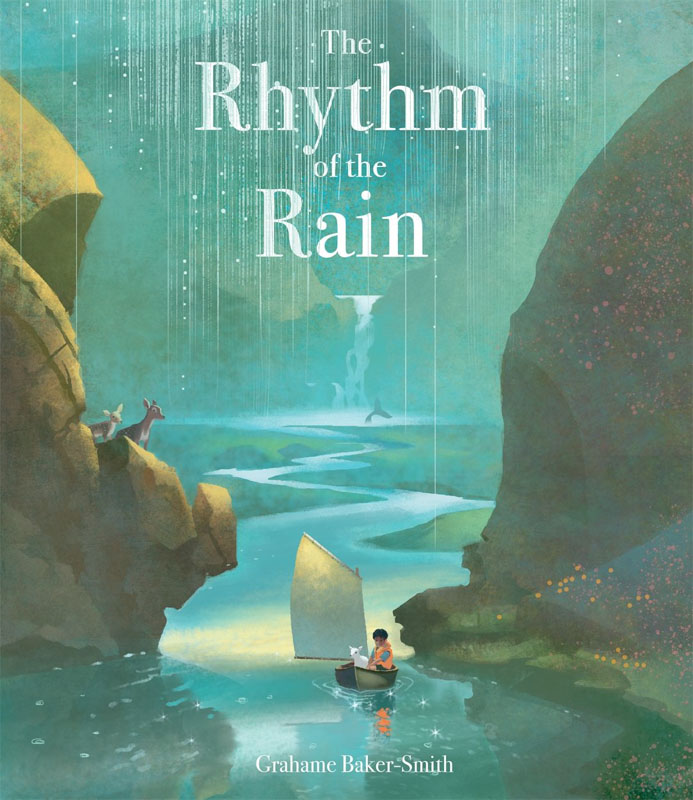
Recommended chapter book fiction options include Elizabeth Laird’s Song of the Dolphin Boy, a topical and thought-provoking novel about coastal pollution,  and Gill Lewis’s short chapter book Song of the River, about wildlife and river conservation. There is an array of beautiful picture books to support this topic, including Grahame Baker-Smith’s The Rhythm of the Rain, which explores the remarkable journey of the water cycle.

So, dive into the watery world of rivers and coasts with our expertly selected booklist…

Add to Favourites
Please login to bookmark Close

Visit our booklists on Amazon

Support independent bookshops

SAVE 20% with Peters

Chapter books about rivers and coasts

Chapter book

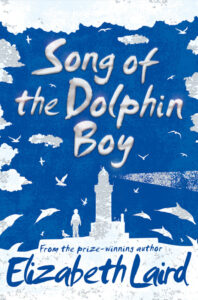
This story from award-winning author Elizabeth Laird is a great choice for KS2.

When young Finn takes a dive in the water near his fishing village, he is delighted to find dolphins to swim with. However, the dolphins face a terrible threat due to the masses of rubbish floating around in their water. It is up to Finn to find a way to save the sea creatures and prevent their natural environment from becoming ruined.

This is a topical and thought-provoking novel with environmental and ocean themes.

Chapter book

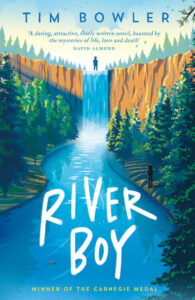
Winner of the prestigious Carnegie Medal, this profound novel is incredibly rich in descriptive language. It tells the story of swimming-obsessed Jess as she struggles to come to terms with the impending death of her grandfather, who insists on finishing one last painting before he dies. Jess meets a mysterious river boy and is faced with an ultimate challenge of her own to complete. This is a novel that deals with themes of life and death and is suitable for more mature or confident readers in Upper KS2 or Lower KS3.

Chapter book Dyslexia-friendly

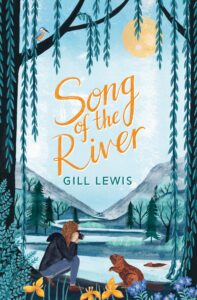
Cari and her mum both miss Dad after he’s killed in a road accident. For Cari’s mum, a new start in a cottage by the river where they can open a tea shop seems a positive way to move on; for Cari, it’s just another painful wrench. When a devastating flood follows a storm, it looks like a disaster to them both. Cari’s the one to realise that there’s no path back, only forwards.

Struggling to rebuild their home and their livelihood, she and her mum hear of a plan to reintroduce beavers to the area. Conservationists believe they may hold the key to regulating flood waters and protecting the village but there is intense local opposition. Cari is stung to action. Can she persuade the community to give beavers a chance? And if she does, will the plan work?

Gill Lewis writes so powerfully of the natural world and the need to work with it rather than against it, to balance the needs of communities and the landscapes they inhabit. This moving story from Barrington Stoke uses deliberately accessible language but handles the themes of loss and grief with sensitivity and depth. The themes of rewilding, conservation and environmental change are both topical and challenging.

The book could be used to provoke thoughtful discussions about resilience and courage as well as to build reading stamina and nurture an interest in the natural world. It would fit well alongside topics on rivers, climate change and environmental responsibility and would lead naturally to work on persuasive writing. This is a good book to recommend to children who love animal stories.


Chapter book

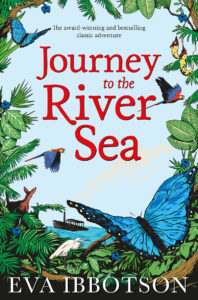
Winner of the Smarties Book Prize Gold Award, this is a very popular choice for KS2. It tells the story of a small girl called Maia, who journeys down the Amazon River with her strict governess, making friends and enemies along the way. It is rich in descriptive language in both its depiction of the Brazilian jungle and in its descriptions of complex and cruel characters that will stay with you long after you close the book.

This is a wonderful yarn, featuring not just one but two high-spirited female role models. Maia, a determined heroine, overcomes numerous challenges and a questionable step-family, whilst her governess, Miss Minton uses hidden talents and inventiveness to outwit incompetent villains and defy stuffy conventions. Both characters challenge small-minded colonial-types and lazy stereotyping as they embrace the adventures offered in this new extraordinary world.

The plot rattles along at a good pace and paints brilliant scenes of life along the Amazon. Maia’s true friends are unconventional and engaging, contrasting well with the nastiness of the Carter family. Ibbotson’s humour and storytelling skill ensure that the book never preaches but encourages us to travel with ‘courage and an open mind’. Much needed advice for young readers today!

Picturebooks about rivers and coasts

Picturebook
"Come with me. Come with me. I will take you to the sea," sings the stream to Cam, the mountain boy. And so Cam's adventure begins, an adventure in which he will see many strange and wondrous sights, and make a marvellous discovery.In this resonant story, Cam the mountain boy follows the river from its trickling source in the snow all the way to the sea. The river leads him through forest, farms and towns to the salty wind of the sea. The dramatic landscapes are packed with detail to discover in the world of the river. A poetic and beautifully illustrated picture book exploring the different forms that water can take.
Picturebook

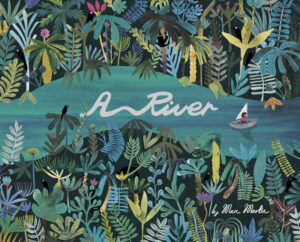
This is a stunning picture book about a girl who observes a river outside her window and imagines where it might go. The book follows the incredible journey of the river through different landscapes, including cities and forests, and there is much to spot in the details of each double-page spread. Highly recommended across both KS1 and KS2.

Picturebook
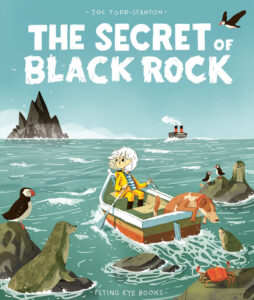
This is a richly illustrated story from the much-loved Joe Todd-Stanton. Erin is the daughter of a fisherwoman. Despite living in a fishing town, Erin is not allowed out to sea herself because of the legend of the Black Rock, which casts a mysterious shadow over the town. Determined to discover its secrets for herself, Erin stows away and soon finds herself exploring the rich ecosystem it harbours and desperately seeking a way to protect the Black Rock from impending destruction.
Picturebook

This is a beautiful picture book that explores the remarkable journey of the water cycle. From a few drops of rain in a little boy’s jar to the depths of the vast ocean and back to clouds in the sky above, wonderful water is given centre-stage in this gentle narrative that evokes awe at the sheer beauty and scale of nature’s systems.

Picturebook
Discover the true story about the determined engineer who fixed London’s pollution problem in this funny, accessible nonfiction picture book.It’s the summer of 1858, and London’s River Thames STINKS. What is creating this revolting smell? The answer is gross: the river is full of poop.But the smell isn’t the worst problem. Every few years, cholera breaks out, and thousands of people die.One engineer dreams of making London a cleaner, healthier place. His name is Joseph Bazalgette. His grand plan to create a new sewer system to clean the river is an engineering marvel.

Picturebook

If you are learning about the Hindu festival of Ganesha Chaturthi or thinking about environmental issues, this book is an ideal read or read aloud, for children in upper KS1 or lower KS2. The illustrations and storyline effectively communicate the community of the main character, avoiding the potential for stereotypes and caricatures when stories are set in countries other than those in the UK.

The story raises the issue of the unintended consequences of traditional practices and celebratory customs. In this story, it is the purchasing of plaster figures of Ganesha to place in the river, which is the focus. This results in the pollution of the river as the colourful dyes and chemicals in the plaster, disperse into the water. The main character, Prema shows the reader how even small, creative and thoughtful acts can make a difference. Prema finds that using the clay from the riverbed is a much more sustainable and environmentally aware approach to the making of Ganesha statues. The story also demonstrates the power of friendship and community, where working together can have a greater impact on the issues that matter, than trying to solve issues on your own.

The book is beautifully illustrated and provides an opportunity to look at the details. The illustrations can be used to prompt discussion and to map what is known and what we might want to find out about temples, rivers used in religious festivals, Ganesha, the variety of clothing worn, religious symbols and festivals.

This is a hopeful story and one worth sharing for the many curricular avenues that could be explored as well as a good read-aloud story for enjoyment.

Non-fiction books about rivers

Non-fiction

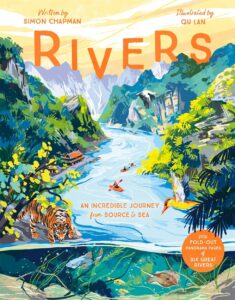
“Rivers”, written by Simon Chapman and illustrated by Qu Lan, is a geographical masterpiece and educational gem that breathes life into the vast, diverse world of our planet’s waterways.

The book has a superb balance between text and image, a testament to Chapman’s writing and Lan’s exceptional artistic skill. It presents geographical facts and a vivid story unfolding across every continent, showcasing rivers in all their glory. Chapman’s keen sense of adventure and passion for exploration are evident throughout the book. His detailed yet accessible narration of the journey of a river is expertly supplemented with an ecologist’s viewpoint, thanks to the contributions of river ecologist François Edwards. This combination of adventure, exploration, and factual accuracy will ignite curiosity in students about the natural world and engage pupils in geography, ecology, and history.

The six rivers featured – the Amazon, Nile, Mississippi, Rhine, Ganges, and Murray – are depicted with intricate detail on the beautifully executed fold-out pages, allowing for a more immersive reading experience. Equally interesting is the focus on the human relationship with waterways. This perspective offers a unique opportunity for educators to discuss geography and wildlife and delve into the history of the civilisations that have thrived along the rivers, spanning various curriculum subjects. The beautifully crafted illustrations by Qu Lan bring an enchanting visual element to the book, with intricate details and vibrant colours that capture the essence of each river and the wildlife it supports. The images can prompt discussions, help in comprehension, and offer a multi-sensory experience that caters to various learning styles in the classroom.

This book will be valuable to every educator, parent, and professional library in the children’s education sector. It is an educational gem that is a must-have tool to inspire a love for geography, history, and the environment.

Non-fiction

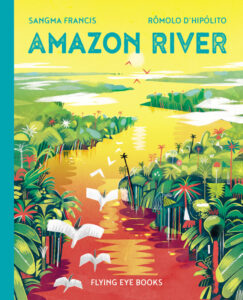
If you know Flying Eye publishing house’s output, you will know before you even see this book that ‘Amazon River’ is a beautiful object, that the art will be as thoughtful as the writing, the quality of paper as important as the factual information.

Reading this to a class as the launch of a topic on the Amazon/Rainforests will undoubtedly whet the children’s appetite to learn about this astonishing and awe-inspiring place. The introduction is amply matched by the end piece, ‘A River of the World’, which sums the book up perfectly, as well as acting as an excellent discussion starter on the interconnectedness of our planet.

In between these two marvels, the main body of the book is divided into 4 main themes: water, wildlife, people and life on the river. These pages tread the tightrope between concision and depth expertly. Despite a background as a geographer, I learnt many new facts such as the difference between clearwater, blackwater and whitewater. The summaries of a wide range of exciting and unusual animals are also superb, as are more summaries of the Legends of Pirarucu and Naia, star of the water.

‘Amazon River’ is a stunning way to engage children with an important and breathtaking part of the world. It could easily be used as the centrepiece of a topic, and would inspire much engagement with the natural world and our place within it.

Non-fiction
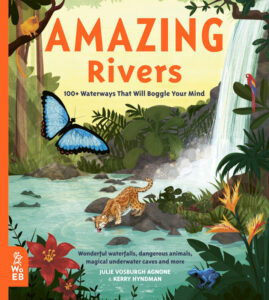
Fearless adventurers, set sail on a fascinating voyage down the world's most extraordinary rivers! Discover over 100 of the world's most incredible rivers in this fascinating title by Julie Vosburgh Agnone and illustrated by prize-winner Kerry Hyndman. Amazing Rivers takes readers on a tour of the world's waterways, revealing the animals that call them home, the societies that rely on them, and the environmental issues threatening them along the way. Learn about incredible wildlife, from brown bears catching salmon that swim upstream to anacondas large enough to eat a pig. Explore astounding natural wonders, from a boiling river so hot you can cook an egg in it to a multicoloured river that flows like a liquid rainbow. And discover awesome river traditions, from ritual baths to rubber duck racing to barefoot waterskiing!
Non-fiction Picturebook

The River that Flows Beside Me follows the course of a river from its source, high in the mountains, to its mouth where it meets the sea. It travels across a dam, past meadows and farms and, finally, through a town and a port. As we follow the river we see some of the wildlife which use it as a food source as well as a home. We see how different natural features are formed over time, such as an oxbow lake and a gorge. We also see how humans use the river, from farming to leisure activities such as canoeing as well as for transporting both people and goods.

The book contains a wealth of subject-specific vocabulary, especially if you are studying rivers, and is beautifully illustrated. The illustrations are labelled with points of interest (such as animal names) and the text is broken up into small, manageable chunks.

One of the best features of this book is that the pages fold out, allowing you to follow the whole course of the river as it flows across the pages. The pages themselves are made of a sturdy card which will stand up to many foldings and refoldings.

A gem of a book!

Children's books about water and the water cycle

Non-fiction
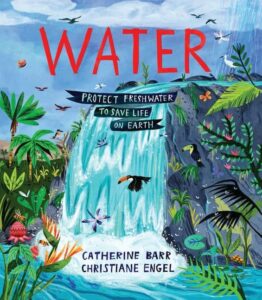
Water is life! Freshwater bubbles, flows and floods with the most wonderful life on Earth - and all of us rely on it to stay alive. BUT today, because of pollution and climate change, it is becoming more and more difficult for people and animals to find the clean freshwater they need to survive. It's time to act!Water tells the story of freshwater around the world. Discover the history of water, how the water cycle works, learn about the different kinds of water and about the amazing variety of wildlife that freshwater is home to. Then find out what happens to water because of climate change and global heating; the importance of clean water for health; the worldwide problem of water pollution and the devastating impact of water shortage on children's lives and education.Catherine Barr challenges us to take action, to use water wisely and protect freshwater to save our planet.
Picturebook

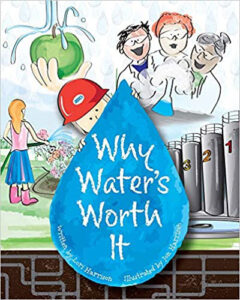
An informative picture book aimed at teaching children why water is valuable and what changes they can make in their everyday lives to conserve and not waste water. The book starts by exploring different uses for water, moving on to how our water is cleaned at treatment centres before closing with ideas for children to consider about how they can use less water.

DK
Non-fiction
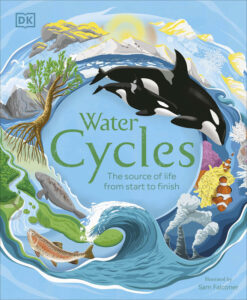
Dive into the life-cycle of water and discover how it supports all life forms, how humans harness its power, and why we need to conserve it. From snowflakes falling from the clouds and deep ocean currents to hot springs and water in space, this children's nature book showcases the beauty and power of water in the natural world.
Picturebook Poetry

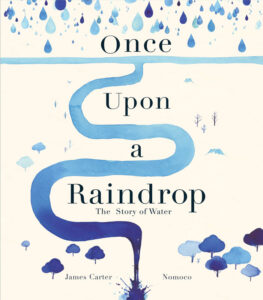
Publishers are spoiling us at the moment with a wealth of non-fiction titles for children that are presented with creativity and a high visual appeal. Once Upon a Raindrop: The Story of Water by James Carter and Nomoco immerses the readers into the wonderful world of water; from the tiny raindrops that drip and drop onto hills to the waves roaring mightily in the oceans and then to the wispy evaporations of steam and clouds.

More than a simple explanation of the water cycle, this book uses gentle and poetic verse to evoke the transient flow of water through its different forms, accompanied by swirling, meandering watercolour illustrations. Sometimes the shape and sizes of the words on the page seamlessly blend with the images to further bring life to the poetry.

The book is certainly informative when it comes to learning about water, but also offers something more. The gentle poetry of the words, the elegant illustrations and the high quality production of the book itself work together to pass on a key message about the beauty and importance of water as a life-giving element.


Picturebook
A beautifully illustrated look at our wonderful watery worldThis Drop of Water begins with a thunderstorm on a hot summer day. Suddenly - splash! A drop of water hits a girl right on the nose. Where did it come from? And where will it go? She wants to know!The book uses this simple premise as a jumping-off point to explore what water is, where it comes from and how essential it is to life here on Earth. It explores topics as important and wide-ranging as how the Earth formed, the water cycle, clouds and the tides. It also highlights just how precious a resource water is.A beautifully illustrated picture book with friendly narrative text by the award-winning author of This Little Pebble, which was shortlisted for prestigious science and art awards, This Drop of Water will make the topic come alive for readers aged 7 and up.

SAVE 20% with Peters

Visit our booklists on Amazon

Support independent bookshops

Booklists you might also like...

Subscribe to our newsletter

Your Review

Stone Girl Bone Girl

review

Year group(s) the book is most suitable for:

Year group(s) the book is most suitable for:

Does the book contain anything that teachers would wish to know about before recommending in class (strong language, sensitive topics etc.)?

Does the book contain anything that teachers would wish to know about before recommending in class (strong language, sensitive topics etc.)?

Would you recommend the book for use in primary schools?

yes

Curriculum links (if relevant)

Curriculum links (if relevant)

Any other comments

Any other comments