Recommended children's booklists sorted by age or topic

Human Bodies Topic (KS1)

icon human body

Best Children’s Books about the Human Body

In the younger primary school years, children learn the basics of human anatomy, including learning to name and identify body parts and finding out about the senses – as well as learning about basic human needs and the importance of healthy lifestyles.  To support children in finding out more about their amazing bodies, we’ve put together a list of the best children’s books about human bodies and health.

NB: This human body topic booklist is designed to cover Key Stage 1 (ages 5-7). For human body books for older children, try our Healthy Humans (KS2) booklist.

Add to Favourites
Please login to bookmark Close

Visit our booklists on Amazon

Support independent bookshops

SAVE 20% with Peters

Children's books about parts of the body

Non-fiction
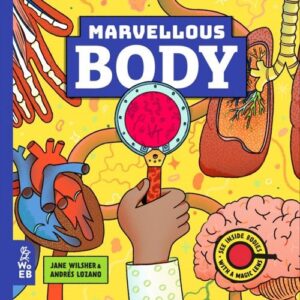
In this eye-catching book, readers can explore the hidden inner workings of the human body, look inside different organs and body systems and learn about how to look after their own physical and mental health at the same time. Readers use the see-through magic lens to reveal how our bodies function and the different body parts hard at work inside us. Find out how your senses work with your brain to show us the world around us, how doctors and nurses spot diseases and how we turn food into energy... and poo.So pick up the magic lens and take a tour of the marvellous human body!
Non-fiction

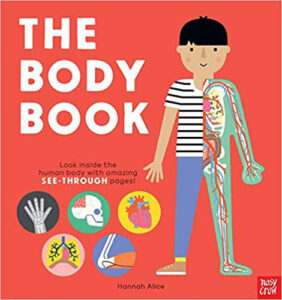
The Body Book aims to help children aged 4-7 to explore some of the incredible things that our bodies do. This is an engaging non-fiction board book containing see-through acetate pages, allowing an x-ray peek into the human anatomy. Each page covers a different function of the human body, from breathing air and pumping blood to moving around and – yes – making waste. With labelled acetate diagrams of the muscular, skeletal, respiratory, circulatory, digestive, excretory and nervous systems, this is a superb first look at human anatomy for young children. The smallest readers will enjoy running their fingers along the acetate diagrams, tracing blood vessels or touching the familiar outlines of the skeleton. Older KS1 children will find plenty of food for thought among the pockets of interesting information that outline the processes of each of the body’s major systems…

Non-fiction
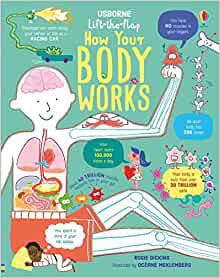
Lift the flaps to uncover the amazing inner workings of your very own body - from your bones, blood and brain to the bacteria in your belly button. Discover what happens when you eat, how your senses work, what your heart and lungs do and lots more fascinating facts. With links to specially selected websites for activities and videos about the human body.
Non-fiction
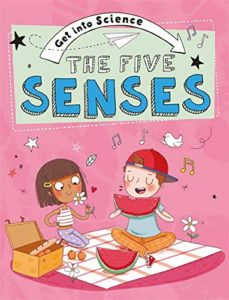
This first science book exploring the science behind the five senses provides a great foundation for scientific knowledge. From sight and hearing to touch, smell and taste, the book has clear information, fun illustrations and plenty of interactivity from challenges to think about and activities to try. It also has lots of facts about animal senses and would be a great resource for comparing humans with other animals.
DK
Non-fiction

It’s not easy to find top-quality non-fiction books for the youngest children, especially those children who genuinely love to learn facts but are not ready for dense paragraphs of text.

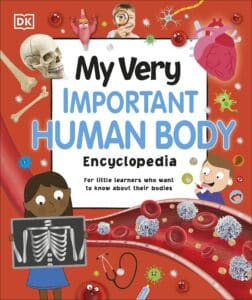
DK’s My Very Important Human Body Encyclopedia is perfect for the job – a fantastic non-fiction guide, making the human body’s complexities fascinating for young readers. It clearly explains everything from bones to brains with accessibility.

Packed with interesting visuals and digestible facts, it hits the spot for young children wanting to learn more about what goes on inside the human body. This superb resource, like the rest of the My Very Important series, helps young children to understand the world around them and enjoy reading early information texts.


Non-fiction
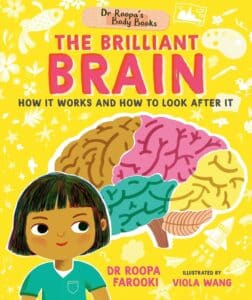
A new series on a hugely popular topic – the human body! First up, award-winning writer Dr Roopa Farooki explores the wonderful workings of the BRAIN.Every second of every day, something is happening in every tiny bit of your body, from the top of your head to the soles of your feet... And if you think of your body as a machine, your BRAIN would be the control room – with billions of buttons for all kinds of incredibly important jobs.With words by medical doctor and writer of acclaimed memoir Everything Is True, Roopa Farooki, and pictures by award-winning artist Viola Wang, this book explores how different bits of the brain work and (just as importantly) how they work TOGETHER... As well as sharing handy tips for looking after your brain!
Non-fiction

‘The Super Skeleton’ is an engaging and accessible non-fiction book that’s perfect for younger children learning about the human body. While many books on the subject are often aimed at older readers, this book presents the fascinating world of skeletons in a way that’s simple, fun, and easy to understand for primary school children.

The book is a fantastic resource for the human body topic, offering clear, colourful pictures and diagrams that bring the skeleton to life. The simple yet effective text introduces key scientific vocabulary, helping young learners build their knowledge in an approachable way. Brief definitions of important terms on some pages further enhance the learning experience, making this a great resource for reinforcing core concepts.

Overall, ‘The Super Skeleton’ is a wonderful, child-friendly introduction to the world of bones and bodies, making it an ideal choice for teachers and parents looking to introduce children to science in a fun and informative way.

Non-fiction

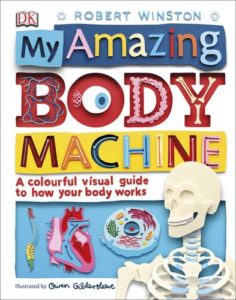
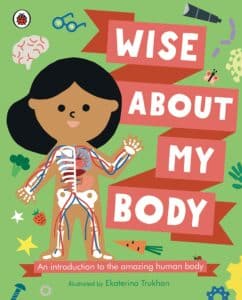
This book is a fantastic resource with something in it for all primary-school-aged children. The topics are varied – from telling the children what a body is and naming parts of the body, to specific chapters on the heart, lungs, five senses etc. The book is aimed at children from 4+ and would suit this age group well.

Many of the pages contain technical vocabulary but are aimed at Reception and KS1. The explanations and text are very clear but there is also a further level of detail to explore for those children who are interested in science or the human body, or for older children who will still get something from the book.

The illustrations in the book are simple and very effective. They are clearly labelled and easy for children to understand. All in all, this book is perfect for a classroom non-fiction collection.

Children's books about healthy lifestyles

Picturebook

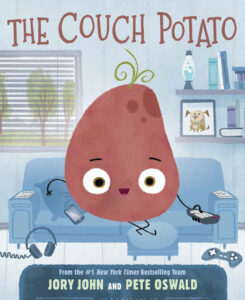
If you’ve ever made a New Year’s resolution to improve your fitness or get outside more, you might just relate to the journey of this hilarious spud.

With everything he needs within arm’s reach of the sofa, this potato has it all – multiple TV screens, hundreds of video games and even a button that activates a snack-fetching gadget. He can’t see any reason at all to leave the couch… until the electricity cuts out. The potato steps foot outside and embarks upon a new-found appreciation of fresh air, exercise and the sounds and sights of the great outdoors. After some deep introspection, the potato sets himself a resolution to achieve a better balance between screentime and time enjoying the outdoor world.

This is a really funny book and is always a winner with children. As well as guaranteeing giggles, this story can provide an opportunity to reflect on healthy lifestyles, screentime limits and personal resolutions.

Non-fiction
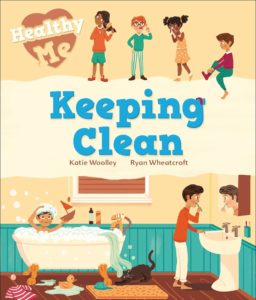
Why do I have to wash? What's wrong with biting my nails? Why can't I pick my nose? Why can't I wear the same socks each day? The answers to these and many other questions about hygiene can be discovered in this lively and informative series. The topic of keeping clean is complemented by charming and humorous illustrations.This book is designed for children to begin to learn about the importance of being healthy, and the ways in which we can look after our bodies to keep fit and well. A clean body is very important for keeping illnesses at bay and for feeling good about yourself. Creating good hygiene habits from an early age is vital.At the back are notes for parents and teachers that provide additional advice and support as well as further activity ideas and information.
Non-fiction
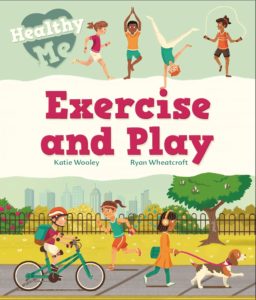
Why do I have to exercise? Why is it fun to play? The answers to these and many other questions about exercise and play can be discovered in this lively and informative series. The topics of fitness and fun are complemented by charming and humorous illustrations. This book is designed for children to begin to learn about the importance of being healthy, and the ways in which we can look after our bodies to keep fit and well.At the back are notes for parents and teachers that provide additional advice and support as well as further activity ideas and information.
Picturebook
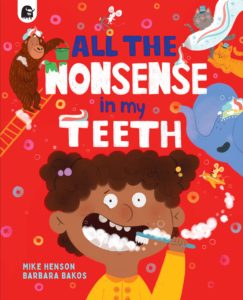
All the Nonsense in my Teeth is a fantastical, dream-like story about teeth brushing, that takes readers on a journey into the narrator’s imagination and encourages good personal hygiene and following a daily routine.Tonight I brushed my teeth. They really needed a good clean! Oh, let me tell you about all the things that I found in them… There were breakfast hoops and ice cream scoops An aeroplane doing loop the loops An aeroplane, now that’s absurd! Then to my shock... a flock of birds!The charming artwork and sing-song rhyme scheme take readers on an adventure filled with fantastical imagery, as all kinds of things from cyclists doing stunts to an animal brass band are revealed inside the protagonist's mouth as they brush their teeth!With entertaining illustrations from Barbara Bakos, let this wonderful picture book transport you and your children to another world before they go to sleep.
Picturebook

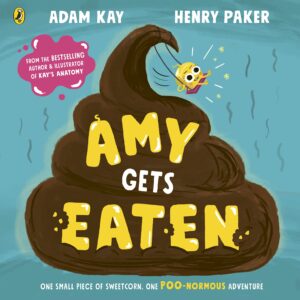
Adam Kay’s ‘Amy Gets Eaten’ is a gruesome yet hilarious book explaining what happens in our bodies when we eat food. Despite getting eaten, Amy (a positive and chirpy piece of sweetcorn), explains in child-friendly language the journey she takes from the mouth, through the stomach and out again into the toilet. Although told in a narrative style, this is really a non-fiction book that teaches children the science behind some of our human anatomy.

Throughout the story, while travelling through the small intestine, a wise old raisin teaches the reader how different food types help to make your body strong, active and healthy. The children get opportunities to interact with the book and recap, through cartoons, where the sweetcorn has travelled. Readers are also invited to make opinions on the strange food combinations the character of Noah has chosen to eat. My children have read this over and over, and every storytime ends in fits of laughter—a highly recommended short picture book for younger primary children.


Children's books about growing

Picturebook

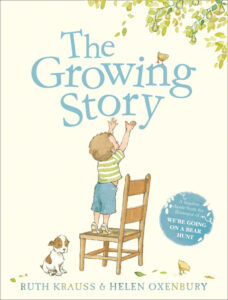
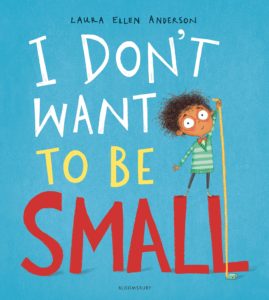
This book will appeal to many children in EYFS and Key Stage 1. Often in these years, children are growing at different rates which sometimes leaves some children inevitably smaller than others. Children will quickly identify with the hero of the narrative. This book captures that feeling so well and does so with great humour that will appeal to young readers. The use of rhyme brings the story to life and enables the listener to be carried along. It also makes it a fabulous read aloud that children will be able to predict and join in with as they become familiar with it. The illustrations capture the child’s expressions so well: expressions that range from frustration and anger to happiness.

The simple message of the book about friendship and the uniqueness and specialness of each of us, is one that children can’t hear enough. The illustrations offer plenty to explore beyond the story itself and add a further dimension to the story. There is ample opportunity to pause and discuss the feelings of the character, particularly when his teddy bear is stuck on the branch that is too high for him to reach, as well as giving children the chance to reflect on his ‘schemes’ to ‘grow tall quick’! This is a great accompaniment to the author’s (Laura Ellen Anderson) book in the same vein, ‘I don’t want curly hair’. This is a delightful story for young children.

Picturebook
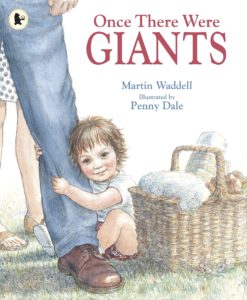
Once there was a baby in the house - and to that baby, Mum and Dad and Jill and John and Uncle Tom were giants. But little by little, that baby grew up - until she became a giant too! Martin Waddell says of the book, "Small children live in a world designed for big people. I wrote this story to help them understand it, and the idea of growing older."
Picturebook

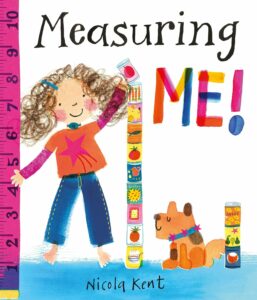
The book is perfect for an Early Years classroom library or would support an All About Me topic, linking with Knowledge and Understanding of the world (Science) and Maths.

The story introduces children to concepts for different types of non-standard measurement, facts about the five senses and interesting information about the human body related to measurement, for example, the smallest and largest bones in the body. The height chart at the back was a bonus and is also full of facts, which, when put on the wall, facilitated a lot of comparative language conversations in the classroom between children about their height.

The diverse illustrations include a child with a walking frame, a girl with a head scarf and a child with a tracheostomy collar. The number of opportunities to be curious is maximised in this book- a book that we will come back to again and again for sure!

Children's books about bones and skeletons

Picturebook
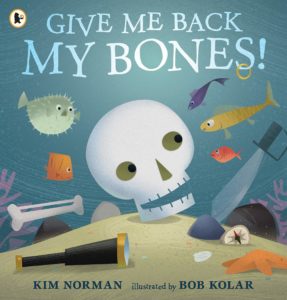
A pirate skeleton seeks to put its bones back together in this rhyming first book of anatomy! A stormy night at sea has uncovered some long-buried secrets and surprises. Is that the mast of a shipwreck? A faded pirate hat? And what's that hiding in the sand? A mandible and a clavicle, phalanges and femurs, a tibia and a fibula - could there be a complete set of bones scattered across the ocean floor? And who might they belong to? A jaunty rhyme takes readers on an underwater scavenger hunt as a comical skeleton tries to put itself back together piece by piece. Make no bones about it - this rollicking read-aloud will have young ones learning anatomy without even realising.

Children's books about hair

Picturebook

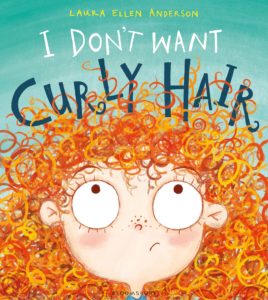
This is a funny tale about learning to be happy with what we have. The story focuses on a young girl with gorgeous, curly hair that she hates. The story details all the different ways she tries to make her hair straight, from weighing her hair down with books to getting her friends to stretch it out.

Laura Ellen Anderson uses a range of descriptive details to bring the hair to life. The main character eventually meets another girl who is equally upset because she doesn’t like her hair, which is straight and won’t curl. This girl then explains all the ways she has tried to make her hair curl without any success. The two help each other to realise that the hair they have is beautiful and they should love what they have.

The story is positive and empowering and a wonderful message for children as they grow up and learn to accept who they are and celebrate differences too. The illustrations and comic aspects of the story just add to the impact on the reader.  A highly recommendable book.

Picturebook

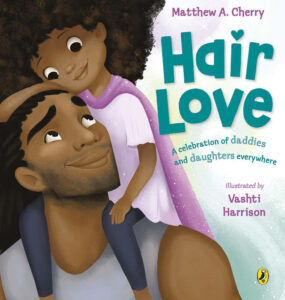
Zuri loves her beautiful hair. Even though it has a mind of its own, it lets her feel like a superhero. Mum usually styles Zuri’s hair, but one day Mum is away and Daddy has to step in and create a wonderful hairstyle for her – with plenty of help from Zuri. This is a lovely story showcasing a tender father-daughter relationship and encouraging young readers to love the hair they have just as much as Zuri does.

Picturebook
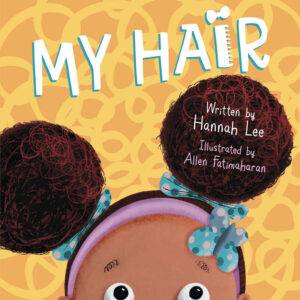
Joyous and vibrant, this captures perfectly the excitement of getting ready for a celebration, as well as showcasing a dazzling array of intricate hairstyles.This is a glorious debut from an exciting new partnership who both emerged from the FAB Prize for undiscovered BAME writers and illustrators.
Picturebook
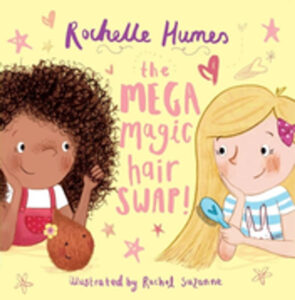
Two friends. One wish. Mai and Rose are best friends but they're not two peas in a pod. Mai has dark hair that is curly and whirly and never stays put. Why couldn't she have perfect hair just like her best friend Rose? Rose has blonde hair, as straight as a ruler, which slips and slides whenever she tries to put it in a pony tail. Why couldn't she have perfect hair just like her best friend Mai? When a magical coconut grants each girl their wish, and they get the hair they've always dreamt of, the friends are overjoyed. However, they soon learn that perfect hair is not everything it's cracked up to be. In fact, their hair was pretty magical and perfect the way it was before... A joyful and fun story about celebrating differences and loving yourself from head to toe!

SAVE 20% with Peters

Visit our booklists on Amazon

Support independent bookshops

Booklists you might also like...

Subscribe to our newsletter

Your Review

Stone Girl Bone Girl

review

Year group(s) the book is most suitable for:

Year group(s) the book is most suitable for:

Does the book contain anything that teachers would wish to know about before recommending in class (strong language, sensitive topics etc.)?

Does the book contain anything that teachers would wish to know about before recommending in class (strong language, sensitive topics etc.)?

Would you recommend the book for use in primary schools?

yes

Curriculum links (if relevant)

Curriculum links (if relevant)

Any other comments

Any other comments