Recommended children's booklists sorted by age or topic

Topic: Reading for Pleasure

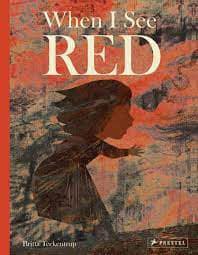
On the night before Earth Day, as the clock strikes midnight in Greenwich, two children take an imaginary journey around the world to see what is happening in each different time zone.

They travel to the Arctic Circle, where we learn about melting ice. They watch a family of elephants in Zambia, where it is 2am. They see the baby sea turtles make their journey into the waves on the beach at India. They hear the morning song of gibbons as they pass through Gaoligongshan National Nature Reserve in China, at 6.30am. They dive down into the ocean in the Philippines as we watch whale sharks have their breakfast of plankton. In Australia at 10am, kangaroos and their joeys find shade under the gum trees. At 12 noon they are in Antarctica, where melting ice again makes things difficult for its inhabitants, the emperor penguins, who rely on it to raise their chicks. Heading into the afternoon, they pass through Hawai’i where they see that humpback whales are thriving now that humans no longer hunt them as we once did. At 4pm in California, they wander through a beautiful meadow of flowers and learn how important the insects pollinating them are to all life on earth. As evening falls, they come to Ecuador, home to owl monkeys, insects, birds, and bats – but only for as long as humans resist the temptation to drill for oil here. In Brazil jaguars are endangered, but changes to farming are helping to protect them. Late into the night at 10pm, they pass over Bird Island, South Georgia, where albatross parents risk feeding their chicks plastic in the mouthfuls they return home with. As the last chime of midnight sounds, they return home, back to their human world of plastics, oil, roads and lights.

The illustrations in this book are simply stunning – full of movement and colour. The evocative words weave learning about the earth’s rotation and time zones into the fascinating journey around the globe. Although we see the destruction human beings are causing to the planet and its inhabitants, we also hear stories of success and change, and the book has a really positive message about how we can make a difference and can do something to protect the planet.

This would be absolutely perfect to read around Earth Day each year, as well as for general learning about climate change, time zones, animals and places of the world. There is some simple and clear information at the back about what climate change is and how we can do something to help. All in all a fascinating book in both story and imagery.

Reviewer: Amy Cross-Menzies

The mouse may sometimes help the lion in need is one of the proverbs quoted before the prologue and beautifully sums up the ethos of this story.

Fleur Hitchcock is a master of mystery writing and involving the reader to solve clues along with the characters. Mouse Heart is no different and expertly weaves costumes, props and a close-knit cast into a captivating story for children, while holding adult interest too.

Young Mouse’s experience of vile-villains, sword fighting and outwitting deadly assassins are purely staged at first; all part of the daily performances put on by her adopted theatre family. When drama and reality suddenly collide, Mouse is caught up in a tangle of confusion, secrets and mistaken identities.

The Moth theatre setting could double for the Globe and there’s more than a hint of Shakespearian theatrics, transposed to Bristol and the fictional 18th century reign of Queen Anne. The Conte de Monte Cristo’s plight comes to mind with a wrongful imprisonment and occurrence of several gruesome murders – not for the faint-hearted!

Mouse may be small, but she is a fierce detective, determined to prove her friend, Walter, is innocent of murder. Persevering against all odds, Mouse is forced to challenge what she thinks she knows about her friends and fellow cast members. Naïve to the dark goings-on in an adult world, nothing stops her curiosity in pursuit of the truth.

As readers, we are right there with Mouse. Experiencing every heart-stopping moment, daring stunt and bright idea. An edge-of-your seat adventure to the final page.

Reviewer: Kate Spurrier

Flooded is a visually stunning book with a powerful story about learning to face up to problems before they grow too big.

In Flooded, the city faces a problem. It seems like a normal day; the city wakes up to find itself a little bit wet. No one minds at first as it was just a little bit of water, but as the city carries on with its usual rhythm, the smaller animals start to realise that it is all becoming a rather big problem.

Flooded is a fun story illustrating how small problems can grow into bigger problems if we don’t give them enough attention. It is also a story about how problems are easier to solve together and communities that work with a positive common goal can be very powerful.

This book is full of surprises and has a pull-out page at a very significant part of the story, which really creates excitement for younger children as they are reading the book. When sharing this book with my class, it really made them think and predict about how the animal’s problem could be solved. They absolutely loved the artwork featuring gorgeous, blues and blacks as well as yellow shades for a very significant character within the book.

The eighth book in the Dog Man graphic novel series now available in paperback.

Petey the Cat is out of jail, and he has a brand-new lease on life.

While Petey’s reevaluated what matters most, Li’l Petey is struggling to find the good in the world.

Can Petey and Dog Man stop fighting like cats and dogs long enough to put their paws together and work as a team?

They need each other now more than ever — Li’l Petey (and the world) is counting on them!

Dav Pilkey’s wildly popular Dog Man series appeals to readers of all ages and explores universally positive themes, including: empathy, kindness, persistence, and the importance of being true to one’s self.

Full colour pages throughout.

There seems to be a wealth of self-help for children books on the market at the moment and looking for a book that really considers the issue in a suitable way can be is quite overwhelming.

However, ‘You Don’t Have to Be Loud’ pitches itself perfectly in its mission through the gloriously simple yet innovative title.
The book cover looks appealing, with a huge mouth covering the page. The edges of the book itself are curved, rather than pointed, which make it rather soothing to hold.

The book is written in the first person and draws on the experience of the author. It is utterly refreshing to listen to the anecdotes; which are charming, funny and absolutely authentic. There is a balance between advice and support for children and young people who identify as shy, quiet or introverted and insights into Ben’s journey, navigating the world through his ‘quiet’ viewpoint.

There are also some amazing quotes from famous people, some of whom you may never have considered as being shy. Ben drops these into the narrative regularly and they are really effective in reminding the reader that a change of mindset can be helpful in reframing feelings of shyness. The illustrations are in a red, grey and white colour scheme and red is used perfectly; it highlights the shy characters on the page brilliantly.

The book would be a super addition to a Key Stage Two bookshelf and could be used as part of a mental health collection or as part of PSHE or citizenship.

This is a fast-paced and fun graphic novel series that is the perfect new read for fans of Bunny vs Monkey, Dog Man and the Beano.

The story follows two cats, who embark upon a hilarious monster-slaying quest to save their town from an attack of sea creatures. This funny graphic novel has Medieval weapons, bumbling wizards, rampaging monsters and wannabe warrior cats.

The Brightstorm Twins are back for the final time, in another thrilling adventure. Book Three wastes no time before plunging the reader straight into the latest exploration undertaken by the Sky Ship Aurora and her undaunted crew. This time, the ship is travelling north to the volcanic islands and the site of the first adventure for Ernest Brightstorm, the twins’ father.

This time the crew have two new members – Gan a princess who just wants to be an explorer and Hugo, a vulcanologist from the North. Also back is their old adversary, Eudora Vane, her mind completely wiped after the last adventure…. or is it?

In this book we are also introduced to new sapients, some of which, like the terrier, seem to deserve entire books of their own. At the centre of the story is a huge bear and there was definitely a Lion, the Witch and the Wardrobe moment in the latter half of the story.

There is something about reading the next novel in a series you have particularly enjoyed – is it going to live up to expectations? This one certainly does, raising the high-octane adventure to a new level, with plenty of cliff hangers and new places to discover. Arthur and Maudie, the twins, also find out more about their own family history and of course there are more maps to pore over. I have a love of maps and the maps by Jamie Gregory satisfy nicely, in lovely fold out panels front and back.

The story raises issues over how we treat the Earth (even an imaginary one) and how we view animals. It also looks at growing up and changing and physically moving away from the people we love, a particularly difficult issue for twins. This may be the end of the books about the Brightstorm twins, but it didn’t feel like an absolutely closing and perhaps Vashti Hardy has left it open to return to one day. I hope so.

Review: Jacqueline Harris

The Billow Maiden is a hauntingly beautiful story, set in the wild countryside of a North English coastal village. The main character, Aisla, has briefly moved there to live with her Aunt and Uncle Nod while her mum is sick. When she arrives, she quickly makes friends with the daughter of an infamous family, Camilla. Ailsa also makes a discovery in one of the caves which leads to the pair learning more about the island, its history and themselves.

The book shares the complex backgrounds of the main characters wonderfully well. Ailsa’s struggles with her mum’s ongoing mental health needs contrast with Camilla’s own family challenges. These two girls appear to have lives which are polar opposites but find sanctuary together; with Ailsa’s Aunt and Uncle providing both with much needed stability and comfort. The author also uses Norse legends to add further layers of mystery and intrigue throughout.

There is so much that could be used within the book to inspire learning in the primary classroom; the descriptions of the wild English coastland and caves would be perfect when looking at Geographical features. Camilla’s passion for Norse Gods compliment topics on myths and legends and, of course, there is the ongoing PSHE topic which weaves the characters together. It’s rare that a book tackles parental mental health so honestly; with each character sharing their confusion and compassion in different ways.

It is a thoroughly wonderful book and highly recommended for children in Upper Key Stage Two, due to the mature themes discussed.

Reviewer: Claire C

Michael Rosen is a master of the word. He is a master of rhythm and rhyme and a master of the engagement of young children. This book is full of poems specifically aimed at the youngest children. It recognises that enabling children to hear and feel words in an enjoyable and engaging way, is not just a foundational skill for learning to read and write, but a fundamental entitlement for all children to be able to be introduced to the joy of playing with words.

The poems and rhymes follow the loose structure of a child’s day from the rhyme “Up” at the start to “Goodnight” at the end. In between come rhymes that can accompany all sorts of activities, such as “On the swings” and feelings, like the rhyme “Happy”. The rhymes are simple and easily recalled, but the joy for the child will also be in the illustrations by Polly Dunbar. Pictures of children illustrate each rhyme – my particular favourite is the illustration of the child ‘putting on’ her pyjamas to accompany the rhyme, “Jimmy Jams”.

Children will quickly know their favourites and, in no time, will be reading along with the adult.

Spellstoppers is a wonderful tale of magic and adventure. Cat Gray’s imagination is endless, and she includes moments of pure joy on every page. From selkies, ghosts, magic teapots and enchanted music boxes, the story creates magic in a seemingly normal world.

Max, the main character, has spent his life having problems with electricity. For some reason, Max is unable to touch anything electric and when his mum’s new electric car breaks down as Max gets inside, it’s a step too far. Consequently, his mother sends him to go and live with his grandpa (a spellstopper) and his world is transformed to one of magic (which has a tendency to misbehave).

My favourite part is when Max attempts to spellstop a vicious stuffed weasel but is left with bitter disappointment. Living with his quirky uncle, Max discovers a strange history to his family and learns he is not as normal as he once thought. Later in the story, Max, along with his friend Kit, finds himself needing to rescue the village of Yowling from Leandra, an unpredictable evil villain who lives in the castle. The reader is left rooting for the main character throughout and is always asking whether he has the ability to become a spellstopper or not.

Although the story is told with elements of humour, Gray interweaves themes of good vs evil in a captivating voice. There are twists and turns, with exciting scenes of action. I would recommend this to anyone who is a fan of Harry Potter, as it incorporates the same exiting themes of magic, told with a fresh new voice. This is a great book to engage reluctant readers, as there is something wonderous on each page and the language is not too ambitious.

Reviewer: Claire Sleath

Subscribe to our newsletter

Your Review

Stone Girl Bone Girl

review

Year group(s) the book is most suitable for:

Year group(s) the book is most suitable for:

Does the book contain anything that teachers would wish to know about before recommending in class (strong language, sensitive topics etc.)?

Does the book contain anything that teachers would wish to know about before recommending in class (strong language, sensitive topics etc.)?

Would you recommend the book for use in primary schools?

yes

Curriculum links (if relevant)

Curriculum links (if relevant)

Any other comments

Any other comments