A classic from Roald Dahl, with an edginess to it that invites Dahl’s darker humour to come out more strongly than some of his other children’s books. There’s fantasy, horror and the grotesque woven through what is ultimately an optimistic story about good triumphing over evil, where the smallest character saves the day, with the help of a caring grandparent.
The Grandmother in the story is bold, brave and full of great advice on how to cope in a world filled with secret child-hating witches. She works with her grandson (The Boy) to outsmart and eradicate the Grand High Witch and her followers.
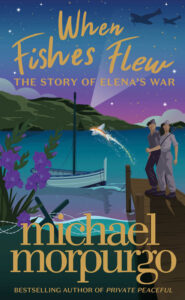
The protagonist, Sophia, spends months with her grandmother on their remote family island in the Gulf of Finland. They row boats, collect bones and driftwood, visit the magic forest, adopt a cat and build Venetian palaces in the middle of the night.
Ben hates spending time with his boring granny while his parents go off to their ballroom dancing, but it turns out that there is much more to her than meets the eye! Because Granny is really a gangsta. Together they go on an adventure and become the best of friends.
One of my favourite childhood books. Twins Ruby and Garnet rely on their grandmother to be a much-needed calming influence when their world is turned upside down.
I loved this rhyming book which is a reminder that not all grandmothers have the traditional grey hair and old fashioned clothes. The grandmother here wears vibrant, tie-dyed clothes and has a guitar-strumming boyfriend. She also has a wonderful bond with her granddaughter.
I’ve adored the character of outlandish inventor Caractacus Pott (or ‘Commander Crackpott’ as he’s known by his neighbours) ever since childhood, and this wonderful book has inspired my own writing no end. Fleming’s descriptions of Pott’s fantastical inventions fizz with energy — there’s collapsible coat hangers, cubical potatoes, edible gramophone records, and of course, the infamous flying car. This is a classic story with a real sense of whimsy, and one that celebrates imagination, eccentricity and thinking outside the box.
This stunning hybrid of novel and picture book tells the story of Hugo, a boy living alone in a Paris train station, whose circumstances lead him on a journey of clocks, film, discovery and connection.
It’s a story that also takes the reader on a journey through the streets of Paris and teaches about emotions, self-discovery, and the magic of storytelling itself.
Inventive, cinematic, mysterious, moving and timeless.
This fast-paced adventure revolves around a fantastical invention, The Imagination Box, which gives users the power to create anything they desire. When the contraption falls into the hands of lonely only-child, Tim, he thinks that all his birthdays have come at once, until inventor Professor Eisenstone is kidnapped…
This book is jam-packed with action, adventure and danger, as well as plenty of humour in the form of forthright finger-monkey sidekick, Phil! I love this book as it cleverly explores both the wonders and perils of technological advancement.
This isn’t just a book – it’s a GAME in a book that entices even the most reluctant of readers! One of Beanstalk’s reading helpers was working with a child who wanted to read it again and again – they couldn’t figure out how the magic worked! It involves the reader carrying out different tasks in order for the pages to turn. It can be a lot of fun to read together and carry out the ‘instructions’ with a child and can provide endless enjoyment over and over again!
I have a passion for books set in eighteenth and nineteenth-century London – tales brimming with dark courts, fog-bound alleyways and n’er do wells lurking in the shadows. There are echoes of Oliver Twist in this story about Smith, a ragamuffin pickpocket, who, when he steals a mysterious ‘dockiment’ from an elderly man, gets caught up in a murderous plot that puts both his, and his sisters’ lives in terrible danger. Garfield was a master storyteller and his books may – as was the case with me – prove to be the perfect stepping stone to Dickens.
review
Year group(s) the book is most suitable for:
Does the book contain anything that teachers would wish to know about before recommending in class (strong language, sensitive topics etc.)?
Would you recommend the book for use in primary schools?
yes
Curriculum links (if relevant)
Any other comments
Any other comments