Myra and Rohan are life-long friends through a shared experience at birth. Every year they share a birthday party. Every year Myra causes havoc at that party. Last year, for example, she broke the magician’s hand and superglued Rohan’s cousin’s hair. This year she sets the shed alight. But while everyone is distracted, Rohan’s little sister Shilpa is kidnapped by the Fairy Queen and taken to Otherland – a world where nothing is quite as it seems.
With the help of another fairy, Myra and Rohan follow Shilpa to Otherland and accept a challenge from the Fairy Queen. If they can win three challenges in a deadly game set by the Fairy Queen, then Shilpa can return with them to their world. If they lose, all three of them stay in Otherland forever.
Louie Stowell’s newest story is a fabulous journey through the world of fairies, gods and vampires. The interaction between Rohan and Myra is hilarious and the characters visibly change throughout the story – both of them realising things about themselves and each other along the way. The challenges that the characters face and twists in the story keep the reader entertained all the way through. Each piece of action is superbly described and the tale was so fast-paced that I was desperate to read what happened next. For a teacher teaching story writing this is brilliant. The dialogue is superb, the pace fast and the descriptions wonderful.
Otherland is a fantastic escapist story, encompassing action, mischievous characters who are not quite what or who you think and an adventure that sees the children learn important things about themselves and each other. Just remember – in Otherland nothing is quite as it seems!
On the day she was born, a coach of tourists appeared at the hospital – was it just a coincidence or is there something special about Alex? To her friends and teachers, Alex is a nobody – but what does the future hold for her?
Alex is a unique, brave and intelligent protagonist who doesn’t feel like she fits in with her peers. That is, until the appearance of Jasper. Jasper arrives just when Alex is feeling extremely alone and most in need of a friend. Alex can’t help wondering where Jasper came from, especially as she knows so little about him. Then Jasper mysteriously disappears and Alex decides she has to find a way to save her friend.
When she discovers that the only logical explanation for the sudden disappearance is time travel, Alex becomes focussed on finding a way to follow Jasper. Alex’s only option is to become a stowaway on the coach of tourists outside her school. With the help of an interesting cast of characters, Alex begins her journey through the future to locate and rescue Jasper, but she is also determined to uncover the truth – why was Jasper sent to watch and protect her?
This is Kate Gilby Smith’s debut novel, and after thoroughly enjoying this thought-provoking read, I am intrigued to see what comes next. Time travelling is a fascinating subject, and this is a gentle enough introduction to excite young readers by the concept without leaving them scratching their brains in confusion at the metaphysics – especially as Alex’s back-story is really her future-story. This well-crafted story with its strong female lead celebrates difference, friendship, family and determination. It does also include a number of interesting historical references, through Gerty’s collection of stolen historical items from Martin Luther King to Cleopatra. This would make a fabulous class read, as there are plenty of talking points throughout the story.
Set in Nigeria, the story centres on 13-year-old Simi, sent away from the city by her busy mother to stay with her grandmother in Ajao, whom she has never met and who is not expecting her. There’s no internet, TV or phone; just the sounds of birds and animals. Why has her mother never spoken of her grandmother? Her grandmother readily dispenses advice and healing potions and tinctures to the community yet remains silent on the topic of her own family. Simi only knows that she must keep away from the forbidden lake and jungle-like forest, but soon defies her grandmother and decides to explore. While at the lake, she is pulled under by the dangerous quicksand and her fantastical journey begins; a journey that she can share with no one. Will she uncover the truth? Can the years of rifts be healed?
This is a beautiful story with an evocative setting. The reader is drawn to the rich sights, sounds and smells of the remote setting with its mysteries woven into a story dealing with separation, grief and loss. It is Simi’s personal story, yet the history that she uncovers is also deeply powerful and moving: the story of a family dealing with loss in their own individual ways. It is her grandmother, Iyanla, whose secrets we want to uncover and, when we do, it is via a tale steeped in Yoruba folklore and magic.
This story radiates warmth and colour and deserves a place in a KS2 library. The book itself is a thing of beauty with a stunning cover by Helen Crawford-White. Display this on your classroom shelf and it just begs to be picked up by any middle-grade child in search of a wonderful adventure.
Brave and utterly gripping, this is an edge-of-your-seat tale of survival that will delight fans of The Boy in the Tower, Orphans of the Tide and Crater Lake. Filled with all of the chills and thrills that you’d expect of Polly Ho-Yen’s dystopian middle-grade stories, the story is also served with a generous helping of emotional poignancy that explores themes of family bonds, mental health, learning to trust and never giving up on those you love.
Sylvia has always taught her son Billy the basic rules of survival; always be prepared, pay attention, trust no-one, master your fears and never stop trying. Sylvia loves taking Billy on outdoor adventures and ensuring that he is as ready as possible for surviving whatever may come their way. But Billy knows that his mum’s behaviour is different from other parents. Her actions become increasingly erratic, and she soon removes Billy from school altogether to prioritise survival lessons. After a crisis weekend when one of their survival lessons goes awry, Sylvia is admitted to hospital for mental health help, and Billy is sent away to live with his Dad in Bristol. Billy knows more than anything how much Sylvia loves him, but now he feels alone, confused, and cross with the grown-ups who do not seem to think that Sylvia is able to look after him well. Among the strangeness of living in a new place, Billy notices other unexpected things starting to happen. Before long, a mysterious virus seems to take hold in the local area, turning people into zombie-like creatures called ‘Greys’. Suddenly, the world appears to change in the blink of an eye, and Billy and his new family embark on a race against time when his survival instincts will be more important than ever.
Like the very best dystopias, Polly Ho-Yen’s sci-fi worlds always feel just the smallest step away from our own and after the past year, reading a virus-themed story feels both daunting and relatable. The fast-paced virus escape scenes are quite frightening in places, but the zombie-esque appearances of the victims helps to maintain a fictional edge that stops the tale becoming too close to home. There’s a well-crafted mirroring between the physical virus taking hold of the community and the mental health crisis that has been gaining a grip on Sylvia’s mind over a number of years. Billy’s character development in the story is beautiful, and by the end of the narrative, he has formed a good set of real-world survival skills of his own that will help him to navigate the ups and downs of growing up and making trusting relationships with others.
This is an exciting thriller that packs an emotional punch and leaves you rooting for the main character. It’s not for the faint-hearted, but is sure to thrill mature readers in KS2 or lower KS3 who love a page-turning plot with a rollercoaster of emotions and a few truly nail-biting scenes to get stuck into.
This month sees another impressively comprehensive non-fiction offering from Britannica and What On Earth Books, following from Christopher’s Lloyd’s Children’s Encyclopedia and Kate Hale’s Factopia. Listified is a robust, 400-page hardback compendium brimming with intriguing information on a range of topics – each presented in list form. This is an absolute treasure trove for readers who love dipping in and out of information books and impressing their friends and family with a host of unusual trivia.
Divided into eight chapters on various themes – from space and nature to inventions and the body – the book is bursting with pocket-sized facts and snippets all grouped into lists. It’s easy to get lost in the list of animals that have visited space (although I’m sure I’m not the only one who was grateful for the footnote explaining what a Tardigrade is) or in the list of five things that scientists would need to do in order to clone a T-Rex. Many readers will be intrigued to learn that a bolt of lightning is the same width as a human thumb and five times hotter than the sun, or that on Liechtenstein’s National Day (15th August), the monarch invites the whole population for a party and funfair at the castle.
Many of the lists are just as humorous as they are informative (it’s easy to imagine that some readers will jump straight to ’10 Sounds the Body Makes and Why They Happen’ or guffaw at the section about smart underpants that can automatically measure how much your buttock muscles move in order to tell you if you need to exercise more). Coupled with Andrés Lorenzo’s appealing illustration as well as photographs, diagrams and prompts to move to other pages to find out further related information, the book takes on a playful nature without ever compromising on the density of content.
Suitable for KS2 and beyond, this is a cornucopia of information that would make a great gift for inquisitive individuals or a worthy investment for school libraries.
The Treeple lived up high in the trees. They liked to build houses of sticks, climb with lemurs and make papaya pies.
But most of all, the Treeple loved to make things.
The Seaple lived deep down in the ocean. They liked to build houses out of shells, swim with the fishes and bake seaweed pie.
But most of all, the Seaple loved to watch nature.
The Treeples aren’t bad but they are thoughtless. They continue to make things without thinking about whether or not they need them and when they run out of space on the land, they decide a good place to put it would be in the ocean. This is when the problems start for the Seaple.
This is a lovely book to use as an introduction to caring for the environment and why we need to make sure that we don’t drop plastic and litter. The Seaple go on to reuse and recycle items that the Treeple had discarded. This would be a great conversation starter and would encourage children to think about everyday items that could be reused and how we can recycle products and what could be made from them.
The illustrations by Paddy Donnelly are beautiful and really add to the mood of the story. The worlds of the Treeple and Seaple come alive and the characters are very engaging. A section at the back of the book gives ideas on how everyone can help to be an ocean hero and keep the seas and beaches clean. A donation of 3% of the cover price goes to the Marine Conservation Society.
Nell lives with her clan in the cave. Her best friend is a small cave bear, who will grow very large as he gets older. One day Nell overhears some of the adults talking about giving Cave Bear away as a gift for another clan. Nell is horrified and decides to run off with Cave Bear. They follow the stream from their village in search of somewhere they can be safe. On the way they meet mammoths and other less friendly clans and a fierce wildcat kitten. All the time Nell is searching for a way that she can remain with Cave Bear.
This is a very charming story, filled with gentle humour and a very mildly scary level of adventure. The pictures are drawn in much the same way in a blue wash and create a sense of the story and the jokes in the text. There are also allusions to other well-known stories like Bear Hunt and Winnie the Pooh.
The final pages have instructions for how to look after a cave bear and this was possibly my favourite bit of all. Martin Brown is the illustrator for the Horrid Histories series and some of that humour has definitely rubbed off on this book.
This is a heart-warming story about friendship and is going to be the first in a series about Nell and Cave Bear. I think it will prove a popular choice among children who are just starting to read independently as it is not too long or difficult.
Fans of Sara Pennypacker’s Pax will be thrilled to see the arrival of the long-awaited sequel this month.
A year ago, Peter met his former pet fox, Pax, for what he assumed was the last time. Since then Pax has been happy as part of a new family in the wild. Thirteen year old Peter, on the other hand, has now lost not just his mother and his beloved pet but also his father, killed in the war. That just leaves his grandfather, who makes him feel inadequate. He’s determined to bury his feelings of guilt, hurt and loss by striking out alone and shunning close relationships.
He sets off to join the Water Warriors, cleaning up water that has been contaminated by the war near to his old home. Meanwhile, unbeknownst to him, Pax is travelling in the same direction – towards Peter but also towards the contaminated water. Slowly, surely, inevitably, their paths collide.
Told alternately from the points of view of Peter and Pax (although always in the third person), this story will break your heart and warm it at the same time. It’s a superb and sensitive portrait of how emotions can become tangled and how grief can become toxic. It draws you into the vivid tale of companionship between boy and fox and compels you to ponder the complex relationships between loss and guilt, loyalty and love.
Despite being a sequel to Pax, it stands alone very well, although I would recommend reading the books as a pair. Doing so heightens the pathos of watching Peter follow the emotionally self-destructive path set by his father and, ultimately, finding healing and redemption through love.
The emotional content of the book makes it ideal for broaching difficult subjects like bereavement and mental wellbeing. The setting and context link it to environmental issues, most of all the importance of water. The story as a whole is a joyous read – perfect reading for pleasure material. I read it with tears running down my face and since I’ve finished it, I’ve felt somewhat bereft myself.
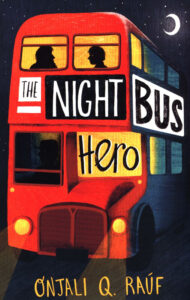
Onjali Q Rauf’s loyal fanbase will be pleased to hear of a new novel. True to form, the Lion Above the Door explores important social issues while capturing voices from the younger generation in a most relatable manner.
The story broaches the topic of cultural blindspots in history education, posing questions about the missing and ignored figures from the history topics taught in schools. Young Leo is intrigued to find a WW2 memorial in which he recognises his own name; being of Singaporean heritage he has become used to rarely seeing people like himself reflected in the history books. As Leo and his classmates research their relatives’ roles in the war, important stories come to the surface and it’s up to the children to make sure these histories get the spotlight they deserve.
This is a sincere and timely story that gently turns over themes of prejudice, cultural underrepresentation, racism and the courage to put right societal injustice – while at once holding out the mantle to young readers to invite them to be the catalyst for change.
Meet Hack and Whack – the worst behaved Vikings in the village! They revel in creating chaos and causing carnage wherever they go with hilarious consequences – and what is more, their parents are proud of them!
This series of 3 short stories set in the frozen fjords of a Viking kingdom, the two terrible twins (along with their wolf cub Bitey-Bitey and their friends Twisty Pants and Dirty Ulf,) plunder and pillage the polite and perfect Elsa Gold Hair’s birthday party, track a troll and attempt a daring and dangerous raid of a nearby island.
As well as plenty of laughs and make believe, this book includes some more accurate historical details too; describing longhouses with smoke holes and thatched roofs, iron cauldrons and the need for foraging for rood and smoking fish to name a few. It would be a great addition to a class library during a Viking topic to use alongside non-fiction texts.
Francesca Simon is best known for the Horrid Henry series but also harbours an interest in Norse mythology after having read Old and Middle English at Oxford. These stories bring the author’s expertise in all things Vikings into the full spirit of Horrid Henry’s comic revelry. The variations in font and the comic illustrations by Steve May really add to the humour and engagement of the story for young readers. It is a fantastic early chapter book – a really accessible read for those starting out tackling longer texts. It will also engage and amuse older but more reluctant readers and would also be great fun to read aloud.
review
Year group(s) the book is most suitable for:
Does the book contain anything that teachers would wish to know about before recommending in class (strong language, sensitive topics etc.)?
Would you recommend the book for use in primary schools?
yes
Curriculum links (if relevant)
Any other comments
Any other comments