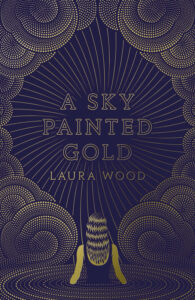
Have you ever imagined travelling through portals to new times and places?
In this novel, three unsuspecting teenagers, Arthur, Ren and Cecily, unexpectedly find themselves in a mysterious house. Suddenly one doorway disappears and another opens. In this fast-paced, exciting book, the three children slowly learn to trust and help each other, working as an unlikely team to solve different challenges in each of the realms in which they find themselves. The three children prove to be intriguing heroes. Each has their own flaws and insecurities but rise to the challenges, finding skills and strengths they didn’t know they had. It is good to have 2 more strong female role models to add to the growing list – but Arthur too proves that strength can be found in all children – even a scrawny boy in a second-hand school uniform.
I was hooked from the first chapter. The book reminds me of the fantasy adventure books I used to read as a child. But, the futuristic setting of the book has a strong injection of 25th century living with elements of computer games and some very weird and wonderful technological advances thrown in for good measure. The Wondercloaks, in particular, were an inspired invention. I’d love one of these fabric Wondercloaks which read your moods and project beautiful images both inside and outside!
There is little preamble and no lengthy descriptions in the book. The action begins very quickly and would work well to engage reluctant readers. Any book which begins with the line ‘It was early morning and Arthur was already running late for school when the gnomes exploded’ is set to be full of surprises! And it doesn’t disappoint as each realm the three travellers visit throws new challenges at them in the search for the man who can get them home.
This is an exciting and action-packed read that shows us the value of teamwork and persistence.
Reviewer: Emma Rogers
A wild, romping adventure with nods to Frankenstein, The Maker of Monsters is a joyfully imaginative children’s story with very human themes of friendship and acceptance at its heart.
Young Brat lives as a servant in Lord Macawber’s castle. Having been on the castle’s remote island ever since he was washed ashore as an orphaned baby, Brat is quite used to his master’s strange experiments. Without human friends around, Brat’s only company is Lord Macawber’s army of ‘creations’; stitched-together creatures brought to life through the act of necromancy. Most of the monsters are terrifyingly dangerous and locked in cages on the various floors of the castle, but Brat forms loyal friendships with a couple of the more placid mini monsters.
When Lord Macawber brings to life his most fearsome monster ever and intends to send his army on a vengeful attack of a nearby city, it falls to Brat to find a way to warn and save the inhabitants. What follows is a fast-paced adventure as Brat races against the clock (and against a whole heap of other obstacles, including prejudice, imprisonment and a city that creates outcasts at every opportunity) to stop the monsters wreaking havoc.
I enjoyed the mix of magic and mayhem, the harmless humour and the breadth of imagination poured into the characters and setting. But the real heart of the story is Brat’s own journey to face the metaphorical monsters within himself. Never having been met with true acceptance or kindness before, Brat’s story demonstrates the transformative power of positive human connection for both individuals and wider society.
A fun, gothic adventure filled with thrills and imagination, The Maker of Monsters will surely be a winner for readers in Years 3-6.
This stylish non-fiction book about the orchestra hits all the right notes to inspire and inform children in primary schools.
The compendium of all things musical includes sections on individual instruments of the orchestra, a diversity of notable composers and famous pieces of music and finally a section about musicology including modern music and music technology. The tone of the text conveys clear passion for the subject matter and the author is quick to point out how music is all around us in both nature and culture. David Doran’s stylish artwork makes you almost want to reach in and try out the instruments for yourself and despite our recommendation, we take no responsibility for children pestering parents to organise clarinet or double bass lessons after being exposed to this book (perhaps the cover should come with a warning!).
Through text, illustrations and diagrams, the book contains scores of information about different aspects of music and is a real must-have to support your music curriculum in school as well as to offer as an enjoyable non-fiction read for pleasure.
The Big Book of Birds is a delight for readers young and old. This visually appealing information book showcases the splendour of all sorts of birds, from flamingoes and kingfishers to red-crowned cranes and hoopoes.
Part of a series that also includes The Big Book of Bugs and The Big Book of the Blue, this is the kind of book that is magnetic in drawing in readers in a primary classroom. Yuval Zommer’s winning formula combines vibrant and quirky illustrations with short bursts of accessible text, united in a large-sized compendium that is perfect to gather round and pore over.
Each double-page spread dives into a different avian-themed question, such as ‘Why can’t some birds fly?’, ‘Is a bald eagle really bald?’ and ‘Why does a bird have a beak instead of lips?’. There is never too much text on each page, but what you find is accessible chunks of information interspersed into each illustrated scene. There are interactive aspects too, with extra elements to spot throughout the book. The illustrations are filled with visual delights for young eyes, with text and images working together to build an understanding of the amazing diversity of the bird family tree as well as well-explained insights into their fascinating behaviours and habitats.
A winner of a book to treasure and share, this is highly recommended for readers across the whole primary school.
Often young children find it difficult to put big emotions into words and even more difficult to know what to do to help themselves. Little Unicorn is Angry is part of a new series that explores emotional literacy through the character of a unicorn with a mane that changes colour with his different feelings. The illustrated stories are appealing, colourful and well-pitched for children in early years classrooms.
Little Unicorn loves playing with his toys but sometimes things make him bubble up with anger, like when it is time to stop playing and get in (or out of) the bath or when Daddy refuses to carry him all the way to school and expects him to walk. Little Unicorn feels like a big, black stormcloud has landed inside him. In response, Little Unicorn learns to try a calming breathing exercise and encourages young readers to join in too.
My own young children found Little Unicorn very easy to identify with (the bathtime scene is all too familiar) and loved listening to his stories. The calming breathing exercises are a great tool to learn but even more powerful is the way different emotions are named and defined using a combination of story context, different colours and weather clouds.
This is a promising new series and an excellent tool for developing emotional literacy. Also currently available in the series is Little Unicorn is Sad.
Atmospheric, intelligent and thought-provoking, this is the kind of story that loves to surprise you every time you feel sure you have a handle on it. At less than 200 pages, it is a quick but intriguing read in a similar format to Edge’s other recent science-themed books like The Infinite Lives of Maisie Day and The Jamie Drake Equation.
The initial premise of the plot is a basic one: three children get lost in the woods and desperately try to help each other to find their way home before the legendary Old Crony, whom they say eats children, makes an appearance.
Tapping into the natural world around them and putting their code-cracking know-how to good use, the children find clues in the rhythm of birdsong and shapes of the sticks on the floor. As the story unfolds, so do a series of surprises and layers of philosophical depth as metaphysics are questioned and explored in a child-friendly manner. Suspense builds with every page, and the usual rules of time seem to become increasingly distorted as the story progresses.
The Longest Night of Charlie Noon is highly recommendable to readers who like their stories served with plenty of intrigue, puzzles to solve and a good dose of metaphysics thrown in.
Greta and the Giants is a new picture book containing a fictionalised forest story inspired by Greta Thunberg, the Nobel Prize nominee who has stirred people to action worldwide through the youth climate movement. The book itself is printed on 100% recycled paper and with every purchase a donation is made to GreenpeaceUK.
Greta is a young girl who lives in the forest. The forest is beautiful but is threatened by a group of giants, who chop down trees to make big houses and have extended their busy city until there is nearly no forest left. Greta realises that the forest may soon disappear but the unthinking giants are too busy to listen. When some of the forest animals approach Greta to ask for help in saving their home, she has an idea to make herself small. As a single voice, the lumbering giants will never take notice, but once other people and animals notice her peaceful protest and decide to join too, soon the giants begin to see their actions in a new light.
The vibrantly illustrated story allegorises the spirit of Greta’s real campaigns while putting it into words and pictures that are accessible to even the youngest of children. There is an additional section at the back of the book with information about the real Greta and some positive actions that everybody could take to make a difference to the environment.
Can an information book solely about frogs really be that good? Yes. It can and it is.
Although ‘Fanatical about Frogs’ is not the only book by Owen Davey on one particular type of animal (there are more in his series on sharks, monkeys, cats and beetles), it is the first I have read and it certainly won’t be the last. This fascinating book provides an excellent overview into everything you’d ever want to know about frogs in a child-friendly yet technical way.
Upon opening the book, the beautiful endpapers are striking and confirm the book is not just informative but also very artistic in style. The stylised illustrations throughout encourage the reader to look for the details more than a photograph of a frog might. My eyes were drawn all over the pages and I enjoyed looking for the nuggets of information scattered across the page.
As I made my way through the book I found myself looking up the various frogs and realised what a brilliant book this is in inspiring readers to look deeper. The information included within each section is just enough that the reader builds an understanding, yet not so much that readers won’t be inspired to go and discover more on their own. The book is not overloaded with content; the balance between the information and images is a good one and it is therefore a book that a whole range of reading abilities could access and enjoy equally.
This is a book that any nature-lover would likely enjoy and also a good choice for more reluctant non-fiction readers. The mix of thoughtful design and informative facts could provide young readers with a new way of seeing non-fiction books altogether.
Review by: Nathan Wilcox , Primary School Teacher
Suspenseful historical fiction set in the Edwardian period. Tightly woven around a central family mystery are eccentric characters with quirks aplenty and a plot brimming with darkness and intrigue.
Helena and her pet parrot, Orbit, move away from their family home in London to live in Cambridge, where her father has secured the role of clock-keeper in Mr Westcott’s house. There’s not just one timepiece to keep an eye on, though, or even a few – Mr Westcott’s house is filled with clocks in every room and he seems to believe that keeping the clocks ticking is the most important thing of all. If even one of the clocks were to stop, warns Mr Westcott, the consequences for everyone involved will be severe.
As Helena settles in, she begins to glimpse a deep strangeness around the house as a series of mysteries present themselves. As if the house wasn’t creepy enough with its never-ending cacophony of ticks and tocks, Helena soon notices a ghost-like figure watching her father wind the clocks and her curiosity reaches new heights. Before long, she finds herself deeply intrigued by the Westcott family’s mysterious past. It soon becomes clear that her family’s future is in danger and that unravelling the mysteries of the house before it’s too late is going to be a race against – well, time.
There’s plenty to unpack in A M Howell’s alluring narrative. The novel explores how different people respond to bereavement and the role of compassion in helping others through their grief. Themes of friendship, time, poverty and empathy ebb and flow through the plot, pulled together by sharp historical details that pave the way for the gender roles of the time to be examined with due nuance. Balancing the sadness of the themes of grief and loss is a thread of hope that picks up strength as the story progresses, especially in relation to the liberation of gender constraints – a hope that is personified in the characters who opt to compose themselves with integrity and forge their future path without compromising on either rights or morals.
I found this to be a clever and atmospheric story and, for me, it had added personal interest for two reasons – one in that the setting is my own hometown of beautiful Cambridge, and the other is that two of the siblings in the story share names with my own children!
The House of Light is a gorgeous book, which skilfully blends stirring descriptions of the natural world with the drama and excitement of a dystopian adventure and a deep emotional meditation on the value of those we love, those we lose and those we leave behind.
Bonnie lives with her Granda by the coast in a not-so-distant future Britain where freedoms have been curtailed and the right to travel has disappeared, along with much of the technology we currently enjoy. Despite the loss of her mother at a young age and a hankering for adventure, Bonnie is generally happy in her loving home with Granda; growing their vegetables, tending their hens and telling stories. Until the arrival of a boat and a boy widens her mind to the possibility of following her mother over the sea and escaping to a better life.
The relationship between the boy, Ish, and Bonnie develops beautifully from mistrust and fear between two damaged children to a deep empathy and indestructible bond. They are young, they are resilient, and they will risk anything to seek wider horizons. Granda, however, is at the opposite end of his journey, his physical horizons narrowing but his yearning for freedom as strong as ever. The final chapters of the book are heart-breaking and uplifting in equal measure.
The House of Light is a beautifully crafted work, one of Julia Green’s best yet, and my favourite book of 2019 so far. The accessible and well-paced writing, the poignant characters and storyline make it almost impossible to put down. I will be pressing it fervently into the hands of KS2 readers who need to believe in the ability of compassion and hope to overcome darkness and fear.
Reviewed by: Carol Carter, Librarian
review
Year group(s) the book is most suitable for:
Does the book contain anything that teachers would wish to know about before recommending in class (strong language, sensitive topics etc.)?
Would you recommend the book for use in primary schools?
yes
Curriculum links (if relevant)
Any other comments
Any other comments