
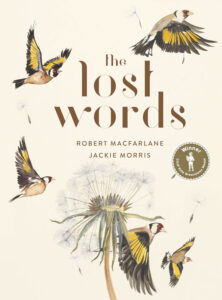

The Lost Words is a collaboration between Robert Macfarlane and Jackie Morris, seeking to ‘summon what has vanished’ and celebrate a host of disappearing words relating to the natural world. This is a poetry book about preservation – of nature, of language and of childhood – and the beautifully illustrated over-sized hardback volume is in itself a book to preserve and treasure. Inside the book, readers will find acrostic ‘poem-spells’, with each one intending to preserve a nature word that has disappeared from the dictionary as well as to evoke the unique sounds, sensations and moods associated with the experiences of encountering wildlife firsthand.
Inspired by the removal of a number of nature words from children’s dictionaries while the same plants and animals are in very real decline, this magnificent book will please children and adults alike. Each word is accompanied by a breathtaking illustration and poem (or ‘spell’ – the authors encourage you to sing them). Children with an interest in the natural world will discover new words along the way.

A twist on the traditional Little Red Riding Hood story with a clear message about environmental sustainability. When Little Red is invited in for tea at the Last Wolf’s house, which also happens to be the home of the Last Lynx and the Last Bear, she soon comes to empathise with her new friends as she learns how the destruction of their natural habitat is the cause of the endangering of a number of wonderful forest species. After she is chaperoned home, Little Red sets about to make a plan to help restore some of the damage and learns how to plant new trees to repopulate the forest for the future. Humorously detailed illustrations, timely themes and a link to traditional tales make this a great book for the whole school to get their teeth into.

This impressive hardback is the closest thing you can get to a museum in book form. Suited to more mature readers in KS2, the book exhibits aspects of marine biology, diverse ocean habitats and environmental conservation. This is a beautiful large-sized non-fiction with full-page colour illustrations to pore over and plenty of scientific detail and vocabulary to learn. Oceanarium is a book to treasure and for readers who want even more, there’s an accompanying activity book available too.
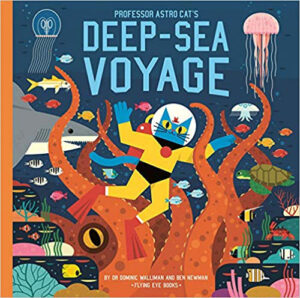
We are huge fans of this series at BooksForTopics HQ. Take a dive through the different layers of the ocean to the deepest trenches below with our favourite feline scientist, Professer Astro Cat. Each double-page spread offers a highly visual array of facts themed around a different stage of the sea voyage. Starting with fun on the seashore (did you know that most of the white sand in Hawaii is actually parrotfish poop?), we then join Professor Astro Cat as he boards a sea vessel and takes a crash course in navigation and ocean weather. The animals don their diving gear and explore the kelp forests and continental shelf of the shallow zone (find out how the torpedo ray can kill small fish with a 200-volt electric shock) before progressing deeper to discover a host of creatures including sharks and cephalopods. Going deeper still, Professor Astro Cat explores how the bigger and smaller creatures are connected via the food web before heading into the very darkest zones and deepest trenches (where you’ll find out how zombie worms got their name). Every page is highly visual down to the tiniest detail and the selected information is at once interesting and informative, allowing readers to delight in their newfound knowledge and quickly feel like an expert. The book is well suited to children in terms of reading level, design style and interest range.


A hilarious books of animal interviews with underwater creatures, from ocean giants like blue whales and orcas to deep-sea dwellers like anglerfish and conger eels. The interviewer quizzes his oceanic guests on life in the deep blue sea – from what they eat and how they swim, to dangers they face and where their names come from. True to style, Andy Seed packs a lot of humour into the interviews and the creatures’ personalities shine through hilariously. The Q&A format breaks the information into bite-size chunks, making it a brilliant choice of book for readers to dip into at their leisure and to find some interesting facts to take away each time they do. With lively colour illustrations by Nick East, this is a highly enjoyable information book that will be sure to make a splash with readers in lower KS2.
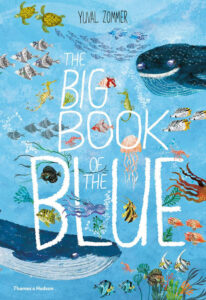
This large-sized informative compendium about ocean life is the kind of non-fiction that children like to come back to again and again to pore over its pages.
Each double-page spread dives into a different sea-themed question, such as ‘Are jellyfish made of jelly?’ or ‘Why do crabs run sideways?’.
There is never too much text on each page, but what you find is accessible chunks of information cleverly interspersed into each ocean scene. The illustrations are stunning and come together to make wonderful spreads that serve as a treasure trove of visual delights for young eyes, as text and pictures work together to build an understanding of underwater habitats and the life they hold.
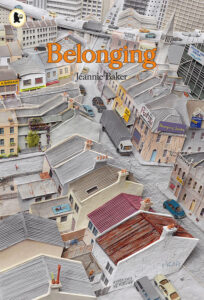
Belonging is a wordless picture book created by Jeannie Baker in her distinctive collage style. The story is told through a series of suburban scenes viewed through a window and starts with the birth of a baby girl following her life up to the birth of her own child. Gradually we watch the re-greening of the landscape and the growth of community spirit as people come together to improve their surroundings. A book to be read on several levels but one that creates a hopeful feel, encouraging readers to think about how they can create a similar improvement in their own environment.
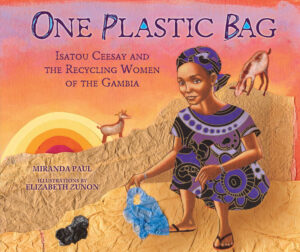
A picture book telling the true story of how one woman in Africa began a movement to recycle the plastic bags that were polluting her community. In Isatou Ceesay’s village was becoming cluttered up with discarded plastic bags, causing problems for animals (who choke on them) and attracting disease-bearing insects. Determined to bring about positive change, Isatou finds a way to put the bags to a new use. A highly recommended picture book to use across the whole primary age range.
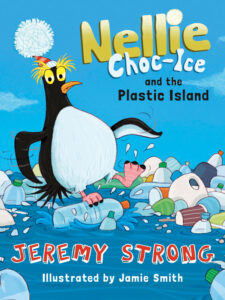

Nellie Choc-Ice is a well-travelled penguin, who also happens to be slightly accident-prone. While attempting to get home via a series of mishaps, she comes across an island that blocks her path. The island is entirely made of plastic rubbish in the ocean. The story makes it clear that the plastic is putting wildlife in danger and that it must be cleared up. This is a funny and accessible first chapter book addressing an important issue, with a super-readable and child-friendly format that makes it perfect for newly independent readers.
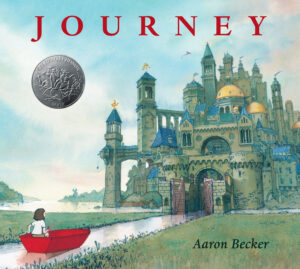
A beautiful, award-winning wordless picture book. It follows the journey of a young girl who draws a magic door in her bedroom and travels through fantasy worlds by boat, balloon and magic carpet. Highly recommended for pupils across the whole primary range.
review
Year group(s) the book is most suitable for:
Year group(s) the book is most suitable for:
Does the book contain anything that teachers would wish to know about before recommending in class (strong language, sensitive topics etc.)?
Does the book contain anything that teachers would wish to know about before recommending in class (strong language, sensitive topics etc.)?
Would you recommend the book for use in primary schools?
yes
Curriculum links (if relevant)
Curriculum links (if relevant)
Any other comments
Any other comments