Recommended children's booklists sorted by age or topic

Topic: Literacy

This book contains three child-friendly play scripts of The Tempest adapted for different sized groups. The plays use modern language with some lines from the original Shakespeare play mixed in. Other Shakespearean plays are also available in the same series.

The story of Romeo and Juliet has been retold in narrative form, using simple language to make it accessible for children. This series, which includes other Shakespeare titles, provides an excellent way to introduce the plot and characters from each play in a way that young children can follow.

This is an exciting story from award-winning author Malorie Blackman that is suitable for mature readers in upper KS2. The plot is inspired by Shakespeare’s Othello, but the setting is space and the main character Othello is recast as a teenage girl. This is a thrilling science-fiction story that would make for an interesting project to compare it to Shakespeare’s original play.

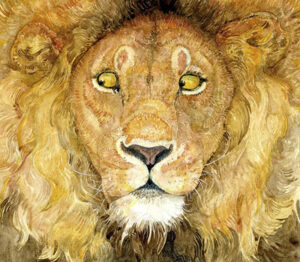
In this stunning picture book, which is wordless except for the odd animal sound, Aesop’s famous fable gets a reworking in an African Serengeti setting. The pictures tells the story of a ferocious lion who is freed from a hunter’s trap by a little mouse, whom the lion had spared from being eaten once before. This is a book that will have children of all ages hooked through its timeless themes of friendship and kindness as well as its incredibly vivid artwork bringing deep human emotions into the world of nature.

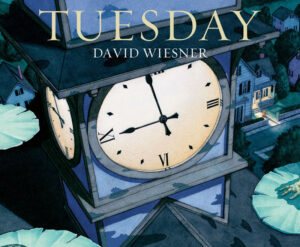
Award-winning author David Wiesner has the incredible ability to draw the reader into a world where the strangest and most magical of events take place as if they are completely normal. On this particular Tuesday, a small group of frogs take flight from their lily pads and go on a whimsical adventure that will invite children to let their imaginations run free and complete the fantasy by deciding what unlikely events will occur next Tuesday.

Picturebook

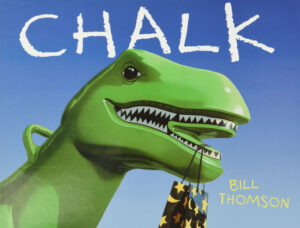
The intensely detailed illustrations guide the reader through the story of three children who discover some enchanted chalk on a rainy day. Whatever they draw magically comes to life and the children are filled with delight at their creations, until one of the boys draws a Tyrannosaurus Rex and the children need to figure out a way to escape the dilemma they now face. This book lends itself well to drama and story-making, particular if you provide a few chalks and a clear playground!

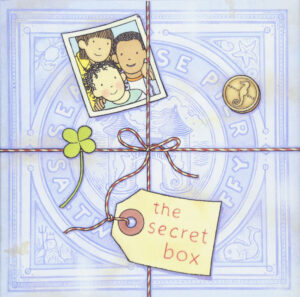
Three children find a time capsule and as they look through its contents they find a secret underground path to another world called Seahorse Pier. There are lots of details in the distinctive illustrations and the concept of this book is great for inspiring new story plots.

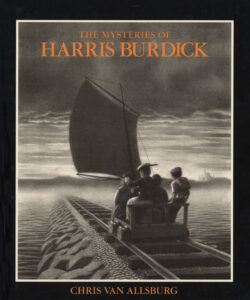
“His disappearance is not the only mystery left behind. What were the stories that went with these drawings? There are some clues…”

Who is Harris Burdick? Where did he disappear to? And how was he going to finish his stories?

Chris Van Allsburg presents a series of loosely related drawings each accompanied by a title and a caption which the reader may use to make up his or her own story.
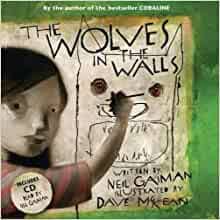
When Lucy hears noises from behind the wall she tries to warn her parents that there are wolves banging about. But her parents don’t listen. When the wolves finally take over the house and Lucy and her family are evicted to live in the garden, her parents realise perhaps they should have listened. But Lucy is no shrinking violet and pretty soon she has the wolves out and the family back in the house. So what was that noise Lucy heard coming from behind the wall? This is a brilliant, witty and inventive picture book with cutting-edge art, which is sure to be a hit with existing fans of Neil Gaiman as well as young readers.

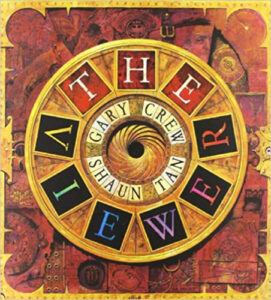
An intriguing picture book for older readers, The Viewer has a sparse amount of words and plenty of fantastically detailed, curious and thought-provoking illustrations. This is a good choice for a picture book to study with Year 6.

The story follows a boy called Tristan who stumbles across a mysterious box filled with strange objects when he is browsing around for interesting things in a scrap yard. Inside the box, Tristan finds a viewing device with lenses and discs, filled with dramatic and sometimes disturbing images past and present – from prehistoric beasts to modern-era war and pollution.

Imagery or circles and spirals reflect the repeated cycles of progress and destruction through history, where the imagery of eyes might cause readers to wonder about the ‘lenses’ through which we come to understand human history. The ambiguous ending invites open-ended discussion. The intricate illustrations by Shaun Tan, the darker themes, the broad historical sweep and the curious repeated motifs make this a perfect picture book for older readers who appreciate a more philosophical book to pore over, and there’s certainly something new to wonder at on every reading.

Subscribe to our newsletter

Your Review

Stone Girl Bone Girl

review

Year group(s) the book is most suitable for:

Year group(s) the book is most suitable for:

Does the book contain anything that teachers would wish to know about before recommending in class (strong language, sensitive topics etc.)?

Does the book contain anything that teachers would wish to know about before recommending in class (strong language, sensitive topics etc.)?

Would you recommend the book for use in primary schools?

yes

Curriculum links (if relevant)

Curriculum links (if relevant)

Any other comments

Any other comments