Recommended children's booklists sorted by age or topic

Topic: Literacy

Close your eyes and you can probably imagine the cities of London, Paris and New York -but what about Buenos Aires or Singapore or Mumbai?
With a globetrotting penguin as our guide, in The Big City Atlas we embark on a world tour to 28 different cities. With each city offering something completely new, whether it be showing the local cuisine, traditions or landmarks, readers are given a taste of what life might be like there. As a geography-enthusiast and fan of maps in general, this book appealed to me from the outset. The wealth of information included on each page paired with the bold and colourful designs make for such an enjoyable read. I was also drawn in as this book focuses solely on cities within countries rather than the countries as a whole…

We often get asked about books to support the ‘Awesome Earth’ or ‘Natural Disasters’ topics for schools and we think we may have just found the perfect one.

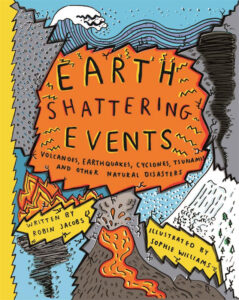
Earth Shattering Events explores geological and meteorological disasters, with each page dedicated to a different natural event from volcanoes and tsunamis to cyclones and wildfires. Each event is explained in a way that is easy to understand for junior children without compromising on presenting the underlying scientific facts.

A real strength of the book is how highly visual the design is, with appealing diagrams, large illustrations, maps and charts contributing greatly to the reader’s understanding of each topic. Also of high interest are the explanation boxes showing what to do if you get caught in the various disasters and the charts that show how each one is measured.

This is a wonderful book with a high level of appeal and certainly one to recommend for classrooms as a topic book or a really interesting read for pleasure.

We’re all a bit fascinated by our brains – after all, the brain is central to the way our bodies function, how we make decisions and how we think and feel in response to the world around us. Brains also look funny, and many children are just as amused as they are fascinated by the strange little organ inside our heads. The Usborne Book of the Brain is a delightful non-fiction book that uses simple language and cartoon-style diagrams to describe how the brain works. Written by neuroscientist Betina Ip, the book takes curious young readers on a journey through the brain’s many functions, exploring how it operates, what it does, what is looks like and how it is connected to the rest of our body…

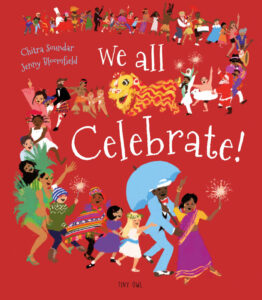
We All Celebrate is a brightly coloured non-fiction book about communal festivals and celebrations. The book explores all kinds of celebrations from around the globe, including well known special festivals like Eid-al-Fitr, Diwali and Dia de los Muertos and less well-known traditions, such as Nowruz (the Persian New Year) and Inti Raymi, which is the Winter Solstice festival in Peru.

The author showcases the joyfulness of community celebrations, the comfort of traditions and the excitement of preparing for planned festivities. The last part of the book explains that in many cultures, the way things are celebrated evolves over time, and that there are vast variations in the way people and places acknowledge festivals that to many children may sound familiar (like ‘New Year’).

Jenny Bloomfield’s uplifting illustrations highlight people gathered together and show some of the food, places, musical traditions and clothing associated with each festival.

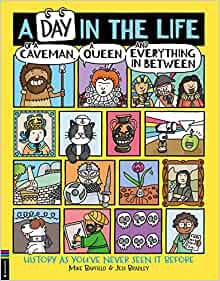
This colourful, cartoon-style reference book brings history to life with humour and fun. Following on from the enormous success of its award-winning predecessor ‘A Day in the Life of a Poo, a Gnu and You‘, this book is packed full of information and facts, presented in an entertaining comic style that is a joy to read.

The book is divided into three main sections – Ancient History, The Middle Ages, and The Modern Age. Within each section, relevant ‘day in the life’ comics describes certain aspects of history. We learn about the typical day of a Neanderthal, an Inca Farmer, and a Gladiator, as well as the more unexpected daily routines of a wheel, a Samurai sword, and a stick of chalk!

Additional ‘bigger picture’ pages give extra details and more in-depth information – for example on Civil Rights, the Terracotta Army, and the world map. ‘Secret Diaries’ provides a wider viewpoint over a larger timescale – we find out from Isaac Newton’s cat that he got stuck in an apple tree, dislodging one of the fruits; The diary of a wooden board from Leonardo da Vinci’s studio stretches over four hundred years and sees the board end up in an art gallery in Paris. ‘Newsflashes’ are interspersed throughout the book and give more context to the ‘days in the life’ and ‘secret diaries’ by filling you in on what else was happening in the world at the time, and there is also a world map and a glossary for easy reference.

Readers will enjoy the variety of historical information, which feels like a balanced view of different areas of the globe. This is a great book to sit and read individually, or to dip into when exploring related topics.

A fun non-fiction book with a difference.

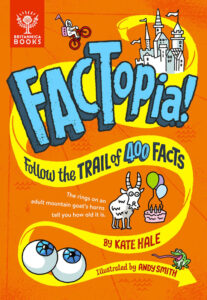
Choose your own path through this hilarious world of 400 facts, all of which are verified by Encyclopaedia Britannica. Every fact in the book is connected to the next in an ingenious trail of information – making it a kind of ‘choose your own adventure’ of the fact world.

From the attention-grabbing orange cover to the final record-breaking endings, this book is a winner. It has an index, it has sources, it has picture credits, it has information about the author, illustrator and designer, and it has a content page. But more, much more than these useful additions, it has facts, 400+ of them, presented so that readers can choose their own way through the book on the basis of what intrigues them most…

Loads of fun!

From bats inspiring humans to invent radar detection to shark skin being mimicked for swimsuits and submarine coatings, this book is a real celebration of animals often being steps ahead of humans when it comes to technology. It is written in the first person, from the animals’ point of view as they patiently explain how helpful they have been to humans and how much more we still have to learn. For example, looking to the future, the earwig tells us how its wings are being investigated for their incredible properties, which could help design new space probes. This style of writing is an engaging twist on non-fiction texts about animals. The bright, playful artwork does a great job of capturing the imagination and complementing the written words…

This fun, dynamic book introduces children to the world of competitive sports! It covers some of the world’s most popular games, including football, tennis and volleyball. Packed with action flaps and simple facts, this book is perfect for curious minds.

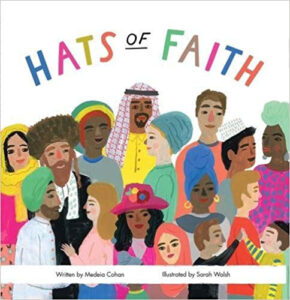
This book is a beautifully illustrated introduction to the shared custom of head covering. Using accurate terminology and brightly coloured imagery, Hats of Faith helps educate and prepare young children for our culturally diverse modern world. Encouraging an early and open dialogue between parents and children.

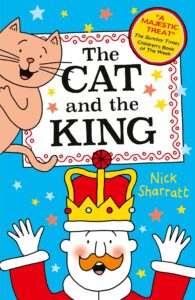
This story from well-loved author-illustrator Nick Sharrat is full of warmth and humour. After a fire at the castle, the King and his cat move to 37, Castle Close where life is very different. Normal tasks like shopping and setting the table for dinner are unfamiliar to someone used to having servants at their beck and call. Fortunately, the king’s loyal cat is close by to lend a hand. A funny book with a wide appeal, especially written for emergent readers.

Subscribe to our newsletter

Your Review

Stone Girl Bone Girl

review

Year group(s) the book is most suitable for:

Year group(s) the book is most suitable for:

Does the book contain anything that teachers would wish to know about before recommending in class (strong language, sensitive topics etc.)?

Does the book contain anything that teachers would wish to know about before recommending in class (strong language, sensitive topics etc.)?

Would you recommend the book for use in primary schools?

yes

Curriculum links (if relevant)

Curriculum links (if relevant)

Any other comments

Any other comments