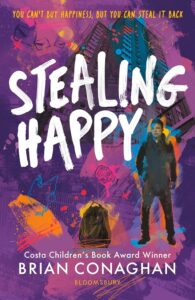
Loan shark Chick Lennon is notorious around Sonny Gilmour’s way, and not for anything good.
So when Sonny discovers his mum has borrowed money from Chick to pay the rent, he finds himself in need of the quickest of get-rich-quick schemes.
With the help of best mate Jonah and quiet genius Carolina Swift, he hatches a plot – to pay back what Mum owes using Chick’s own ill-gotten gains. It’s not a fool-proof plan, and it’s not helped by Sonny’s Tourette’s making him blurt out ‘ROB CHICK LENNON!’ at the top of his lungs every time things get dicey.
But with his dad suffering from long Covid and his mum already struggling to cope, Sonny knows it’s down to him to keep his family out of Chick’s clutches …
An authentic, funny and heartfelt contemporary YA by multi-award-winning author, Brian Conaghan. Perfect for fans of Frank Cottrell-Boyce and Elle McNicoll
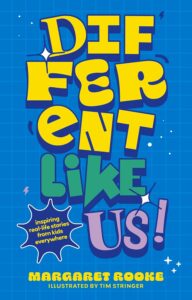
Welcome to Different Like Us!, the book that explores how being different helps shape our world.
Sharing the stories of more than 40 children from across the globe, this book celebrates their strength and joys, without shying away from the tough stuff that’s part of the package. Reading their words will help you identify your own strengths and work out how your unique qualities and experiences can drive you forwards.
Along the way you will meet · Cora, aged 10, whose painful medical condition has led to a special bravery that has shaped her life. · Afua, aged 14, who has sickle cell, and explains how she came to accept her condition. She talks about the tips and tricks she uses to stay positive. · Jensen, aged 10, who has hearing loss and has taught his school sign language. · Kais, aged 9, who escaped from two wars, and has grown to see his new friends as a second family. · Aidan, aged 13, who talks about dealing with the grief of losing his father.
Plus others who have been bullied, who stammer, who have sight loss, who are autistic, have ADHD, dyslexia, Tourette’s or epilepsy, who have parents in prison, and many more.
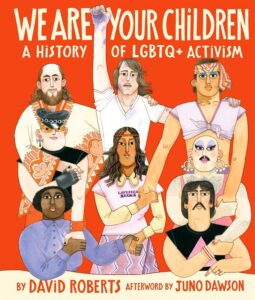
A gorgeously illustrated history of queer activism, by the creator of the award-winning Suffragette, David Roberts. With an afterword by Juno Dawson.
Touching on major moments in the story of the fight for LGBTQ+ rights including the Stonewall Uprising, the first Gay Pride Rally and the dazzling history of drag and the ballroom scene, We Are Your Children is a wide-ranging and inclusive account of a multifaceted movement, with detailed and characterful colour artwork.
This book showcases figures from queer history like Harvey Milk, Julian Hows, Carla Toney, Crystal LaBeija, We Wha, Vincent Jones, Marsha P. Johnson, Alan Turing, Sylvia Rivera and many more.
From the secret slang adopted by gay Londoners in the 60s, to the decades of sit-ins and marches, there are countless fascinating stories to be told: stories of resistance, friendship, love, fear, division, unity and astonishing perseverance in the face of discrimination and oppression.
We love this glorious, high-interest non-fiction choice! Blood, Guts, and Nasty Cuts explores the history of medicine through the lens of the grisly, the gore-soaked and the cleverly inventive. Spanning from the ancient world to modern times (and even a glimpse into the future), readers in Upper KS2 will enjoy building on their knowledge from history units like Ancient Egypt, Ancient Greece, and World War Two, whilst being treated to a host of eye-popping new facts.
Formatted in classic DK style, each double-page spread focuses on a different subtopic and shares information via accessible bite-sized paragraphs, visual timelines, colour illustrations, diagrams and photographs. A helpful glossary and index are also included. Stylised with blood splatters and an explicit focus on the weird and wonderful, the ‘gruesome’ framing serves as a high-interest gateway into what actually turns out to be a hugely informative and comprehensive overview of medical history for children.
The book is written by public historian Dr Alanna Skuse, known for work on health, medicine and the body in the sixteenth and seventeenth centuries. The text balances the gross-out humour many children will come looking for with genuinely interesting scientific and historical context. Readers flick between topics on the earliest recorded surgeries, the evolution of prosthetics, wacky cures, germs, food used as medicine, blood transfusions and medical technology.
I expect many readers, like me, will enjoy most the fascinating sections on Medieval maladies, plague, and pestilence (bound to capture fans of Horrible Histories), while later chapters cover wartime wound treatment, modern medical innovations and the future of medicine, including AI and robot surgeons.
As Dr Skuse notes in her engaging introduction, medics through time simply did their best with the knowledge they had – leading to bizarre healing attempts like hanging toads around necks, doctors diagnosing by tasting patient urine and trepanning (making holes in skulls to let headaches out!). Ultimately, though, history’s trials and errors have paved the way for life-saving breakthroughs like vaccines, antibiotics and anaesthetics. And, as the section on the future of medicine encourages, we’re by no means finished!
This is the kind of non-fiction book that KS2 classrooms will want to invest in, as children will certainly pick it up to dip into time and time again.
This vibrantly coloured graphic novel whisks readers into a fantasy world of dreams and nightmares.
This fantasy adventure quickly hooks readers with its rapid pace. On her way to visit her mother in a Scottish hospital, Wilomina’s trip takes a strange twist. Wilomina somehow boards a spooky train and becomes separated from her Dad and brother. Instead, she finds herself alongside a talking cat named Mephisto. They are bound for the Land of Nocturna – a surreal realm where dreams and nightmares come to life.
To complete her quest and return to her family, Wilomina is faced with navigating bizarre landscapes (everything seems to have teeth or tentacles!), hunting down monstrous creatures, solving surreal puzzles and, ultimately, confronting the monster within.
The visuals in this graphic novel are wonderful. I loved how the palette of dynamic purples, pinks and blues highlights the dreamlike atmosphere, darkening in shade as Wilomina encounters deeper fears but also never losing those glimmers of lighter accents.
In keeping with the illustrations, the plot balances satisfyingly spooky elements with humour and heart, definitely feeling more like a charming fantasy than horror. Readers will find themselves smiling away at various points – whether due to the appearance of a flatulent dragon and comically tentacled creatures or the magnificent library that serves as a gateway to other worlds (hurray for libraries!). These touches keep the narrative playful without diluting the immersiveness of the fantasy.
Wilomina herself is brave and positive. Her spirit drives the plot forward, pulling readers along with a sense of optimism over fear.
Don’t get me wrong – there’s more than a touch of the gothic, plenty of peril and a hint of Spirited Away too. And it’s precisely the coming together of elements that will give this visual feast its wide appeal. It will be devoured by graphic novel fans as well as readers who enjoy the reality-meets-fantasy shifts found in popular KS2 books by Jennifer Killick and Polly Ho-Yen.
The physical book carries a satisfying weight and thickness. At the same time, the story itself is captivating and some readers will power through it in just one or two sittings, eagerly anticipating the promised sequel.
Definitely one to add to your KS2 graphic novel collection. A joy and a thrill!
How to Train Your Zombie is a laugh-out-loud, line-illustrated chapter book for readers aged 7–11. This hilarious new adventure from award-winning horror writer and film journalist Josh Winning pairs the readability of Wimpy Kidwith the spooky-themed humour of Goosebumps.
The story follows Preston as he attempts to teach his recently zombified best friend how to go completely undetected by adults (and, most importantly, how to stay out of the clutches of the villainous monster hunter Vincent Valiant). The narrative is loaded with entertaining appeal – including kids making YouTube videos, zombie-based slapstick, tricksy little brothers, a healthy dose of toilet humour and Wimpy Kid-style stick-figure illustrations that will instantly draw in reluctant readers.
While on the surface this is a book about zombies and monster hunters, the story is far more silly than scary, keeping the scare factor at bay in favour of giggles. I enjoyed how right beneath the whimsical comedy lies a layer of emotional warmth. At its core, this is a heartwarming story about a boy grieving the loss of his best friend, learning how to rediscover fun and hope after heartbreak and coming to terms with that feeling of not wanting to let go.
A brilliant addition to Key Stage 2 bookshelves, this accessible book balances good-humoured spooky antics with genuine heart. Sure to be a winner with many children!
If Halloween had a heart, this would be its heartbeat.
The neon orange against that dark blue cover had me immediately on edge. A secret seemed to be whispering that I should enter, cautiously. Naturally, my eyeballs were already in halfway through the door!
In Something in the Darkness, a girl’s journey home on Halloween night becomes increasingly unsettling as she senses something watching and following her. Getting home ought to mean feeling safe, but her suspicion follows her all the way home, up the stairs and straight into bed with her!
John Dougherty’s rhyme gives the creeping concern its pulse. Sensory, evocative language and wonderfully ambitious vocabulary offer children substantial words to sink their teeth into. I love a book that trusts its readers’ intelligence. The rhythm practically begs to be performed, letting those creeping concerns crescendo into a few shrieks!
Matt Schu’s illustrations make the space around the girl feel vast and ominous. Bare branches and long shadows surround the small figure, while the restricted palette, silhouettes and lithographic-style appearance are a feast for the spooky senses. Panels and changes in typography help build the tension; I wanted to linger and look, but I also desperately needed to know what was coming so I could escape! Quite the predicament for a nosy creature with a nervous disposition.
There are visual clues worth returning to on a second reading, inspecting how the surprise was prepared while we were busy worrying. And what a tantalising twist! I’m keeping that surprise behind the curtain, but the release into laughter completes my eerie trifecta of horror, hope and humour.
Disclosure: This round-up contains advertisement features and affiliate links
Celebrate 20 years of Lulu!
Here at BooksForTopics, 2026 is a very special milestone. We celebrate 10 years of supporting primary schools with expert, teacher-tested booklists this year – an anniversary that happily runs side by side with the National Year of Reading. Coincidentally, a favourite character of ours is also celebrating a milestone birthday this September! Anna McQuinn’s iconic Lulu picturebook series, published by independent publisher Alanna Max, turns twenty!
From the very beginning, Lulu has been a small but mighty hero in primary classrooms, school libraries and Early Years settings. What’s wonderful about the series turning 20 is that while two decades have passed, Lulu herself hasn’t aged! She stays forever in early childhood. Through the series, Lulu captures everyday milestones and these are the exact reasons so many younger readers connect with her, from becoming a big sister and starting preschool to finding simple pleasures in planting flowers, making a den or having a sleepover.
Much loved by teachers, librarians and parents, the twenty-years-strong series features Lulu (also known as Lola in some countries) – a child who enjoys everyday, joyful moments. Celebrating ordinary childhood experiences has at times become more political than intended, and readers might be surprised to hear of its overseas book ban. But it’s the celebration of the ordinary that makes these books as special asthey are and helps to account for the longevity of the series’ popularity.
Here at BooksForTopics, we love how warmth and friendliness emanate from the pages. Combined with Rosalind Beardshaw’s gorgeous illustrations, each Lulu story is packed with the kind of everyday awe and wonder that young children genuinely love. By focusing on the minutiae that matter to a four-year-old – like taking time to choose a library book or getting used to the sensory feel of a first pet – Lulu helps little readers see the world with curiosity and joy. The stories are also hugely reassuring. Our review panel said of the books, “We recommend the whole Lulu series, which gently reassures preschool children about all sorts of relatable scenarios from getting a pet and planting flowers to starting school and shows them how to tackle new challenges head-on.”
Lulu’s appeal is pretty universal. Published around the world in countries including the USA, Sweden, China, Korea and Denmark, Alanna Max proudly shares that every single Lulu title remains in print today. To make the 20th anniversary celebrations even better, a brand-new title – Lulu’s Perfect Hideout – publishes on 19th October! We were thrilled to get an early read of this gorgeous new story about finding cosy spaces, and we cannot wait to share more with you soon.
This week, BooksForTopics director Alison Leach had the chance to interview Lulu author Anna McQuinn. Read on as Anna tells us more about the books, the anniversary, representation, the collaborative process and the power of writing about everyday moments. We’ve also got a very special giveaway for you at the end of this post.
Q&A with Anna McQuinn, author of the Lulu series
Over the last two decades, we’ve watched Lulu grow, become a big sister, go to preschool, enjoy books and flowers, get a pet and explore the world. Which is your favourite of her adventures and why?
Up to today I would have said Lulu Gets a Cat. Around the time I wrote it, a little stray cat (very gradually) adopted us – so she inspired the story. She was VERY shy, so we had to learn to let her take her time, and I liked the idea of having Lulu learn that too (which she does). So while the story is about the excitement of getting a cat, it also looks deeply at how we learn to put others’ needs first.
Most advice is to keep new cats in a utility or spare bedroom to help them feel safe – so I also wanted to explore how a family who don’t necessarily have extra space can do this (it turns out a little corner behind the sofa can work just as well).
As of today, however, the newest title in the series – Lulu’s Perfect Hideout – is competing for my favourite story. I think we all loved tiny spaces as children (I certainly did) so this story has real resonance for me and I hope will have for young readers too.
How have you seen representation in children’s publishing change in the time since Lulu was first published, and how does it feel to know that Lulu has played a role in that change?
To answer the first part of the question – sadly, I think real change has come way too slowly. When I was volunteering with The Working Group Against Racism in Children’s Resources in the 1990s, we were quite optimistic; there were a number of waves of positive activity and initiatives in the early 2000s; then things seemed to go backwards for a while, then forwards again…
I think publishing, and I would add bookselling (people too often point the finger solely at publishers) has been slow to do the work that’s needed to really change the industry. Too often publishers want easy wins. So, for example, they will publish an ‘own voice’ author but without backing that up with a decent marketing budget or working with their sales staff so they really promote the book; or thinking about how to best reach the audience for the book or grow new audiences…
Too often, these books then fail to do well, but instead of blaming themselves, they will blame the book. I think independent publishers and booksellers are doing great work (not just publishing inclusive books but growing diverse editorial, design, sales and marketing teams) but the rest of the industry needs to engage fully to really bring about change.
Speaking to the second part of the question, I’m flattered you feel Lulu has had a role in bringing about positive change! Honestly, my focus has always been on the child reader versus ‘publishing’. So, my objective was to give little readers someone to relate to. More than anything I hope that the Lulu stories made a positive difference for little black girls and their reading choices.
I’ve been very influenced by Verna Wilkins (who founded Tamarind Books and with whom I worked for some time). While stories about tackling racism, or celebrating something special about a particular culture, for example, are important, Verna always felt that they should not be the only stories that little children saw themselves represented in.
I believe that it’s vital that any minoritized child doesn’t feel that they need a reason to be in the story (most especially not to teach other children not to be prejudiced). So, I feel passionately that all children should be represented in all kinds of stories (most especially ordinary stories about pets, or gardens, or sleepovers). I feel that ‘seeing’ themselves is not just skin deep – they need to be able to relate to the characters, to feel that the characters are ‘real’ and that the stories are concerned about things that really matter to little children. THAT’s when they feel fully represented.
So, I hope Lulu (and little brother Zeki) are delivering that for child readers and in that way hopefully bringing about change.
Verna also used to say that children needed to see themselves in books before they could dream of writing or illustrating (or editing or working in publishing). So, first steps are important and Lulu was one such a step. My hope was that in seeing this little book-lover, children might be inspired not just to love books but perhaps even to write them, edit them, sell them… that will really move the needle.
Rosalind Beardshaw’s vibrant, warm illustrations are inseparable from Lulu’s identity. What has the collaborative process been like between the two of you to keep Lulu’s world feeling so fresh yet familiar over time?
Because of how the Lulu series came together, I actually worked more collaboratively with Ros than an author usually does (that’s usually the art director’s job). I was able to send photos of the little girls who inspired me and who I imagined Lulu might look like… and then we discussed it together and created Lulu!
I worked hard to make space for Ros to be really creative, and I can take NO credit whatsoever for the beautiful colour palette or Lulu’s clothes (I think she needs her own clothing line!). I particularly loved having the opportunity to write multiple stories about the same character – so I was able to introduce wider family and also re-introduce characters from one story in another – so in the latest one Lulu’s Perfect Hideout, Lulu’s cousin Hani (from Lulu’s Sleepover) comes to play. I think that makes the world feel real.
While I was developing the series, I was working almost full-time as a Sure Start librarian, so I got a LOT of input from the mums in my Baby Groups and Rhymetimes. That really helped us to get so many details right and to keep the stories fresh – I knew what was concerning mums of children who were Lulu’s age (and younger). All of that helped us to create a character and a family and a world that feels like it really exists somewhere, and that has been special.
One of the most beautiful things about the Lulu books is how they celebrate ordinary, everyday magic, such as going to the library, planting a garden, visiting the park. How do you choose which moments to capture next?
Thanks for this comment. You’ll see from the answer above how much it matters to me to celebrate the ordinary everyday. I also feel that young children’s worlds are often very small, so I like to focus on the tiny things that really matter to them.
Deciding on the next story is a mix of things, really. Sometimes the publishers suggest a topic they would like me to cover; sometimes (like Lulu Gets a Cat or Lulu Moves Home or Lulu Meets the Bees) it will come out of what’s going on in my own life. Other times, I will feel that, for example, there’s practically a whole genre of new baby stories but too few with a black family… or that there are lots of ‘eco-themed’ stories but too few with a black character, so I’ll write that (Lulu Reads to Zeki or Lulu Meets the Bees).
Whatever the starting point, I always park any politics and try to really get inside what a little girl might be concerned about, or dream about, and explore that. Usually that means getting down to the small details that matter to young children, and trying to get them right.
Was there a real-life inspiration for Lulu and her family, or is she purely imagined?
Like most characters, I suspect, Lulu is a mix of real-life inspiration (mine and others) and imagination.
I was working as a Sure Start librarian when I wrote the first story, so she’s an amalgam of a few little girls I knew and loved then: Sharifo, Angel and Layla. As the years went by and other stories developed I was influenced again and again by wonderful little girls (Bella Jean, Carla and Laurel, Anais and Alexa to name a few) in my toddler groups and nurture groups (and many of the books are dedicated to them). Sometimes, something they said or did would spark a story and then I’d delve into my own childhood memories for more…
A few years into the series, the Danish co-publisher remarked, “You know she’s really you, don’t you?” and that’s when I realised how much of my own childhood self comes through in Lulu too. I was a reader and a booklover from VERY young, reading everything in sight (including the back of shampoo bottles while sitting on the loo, or the back of the cereal box while eating breakfast – my poor mother!).
I lost and found myself in books and they were also the inspiration for many activities, my play and imagination (and SO often I wanted to do things myself – and that’s a big characteristic of Lulu’s). So, it’s all a mix of inspiration, true life, memories and imagination.
One little girl called Kathelene, who came to my library groups as a child, went on to study at SOAS (yes, I’m THAT old). And in a wonderful life-circle, she acted as a consultant for Lulu’s Nana Visits.
Books are clearly very important to Lulu! Tell me about your own favourite children’s books – either from your own childhood or among those published now?
Growing up in the depths of rural Ireland, my reading material was quite limited because not that much was available. At that time, it was hard for such a small country to fund children’s publishing (other than a few folktales) so everything I read was imported from the UK. I read (and re-read) a lot of Enid Blyton, which I loved, but everything was SO removed from my experience. I was very confused that the children were allowed to drink Ginger Beer for example (which I thought was alcoholic) and one year (how Lulu of me) I grew radishes to see if they really could be that delicious (reader, they were not!).
Happily, the wonderful local librarian, Mrs Downey, realised that I had read every book in the children’s section many times. She gave me an adult card (then monitored what I checked out – which suited me just fine).
A pivotal moment for me was reading Walter Macken’s Flight of the Doves. It was the first time I saw someone like me in a story: someone who called their mother Mammy, someone who had a granny in Galway (wow – I’d heard of Galway); someone who called the police Gardaí. Somehow the earth shifted and I realised that, much as I enjoyed reading as an escape and a window into other worlds, stories could also feature someone like me that I recognised. It changed how I thought about reading and so is my favourite book.
The first book, Lulu Loves the Library, was published in 2006. We are now at a point where children who read the very first Lulu books 20 years ago are entering adulthood, and may soon be having children of their own. How does it feel to think about Lulu becoming an intergenerational tradition passed down from parent to child?
I’ve been thinking about this too… it’s amazing to me that young women who read Lulu as a child might want to share the stories with their children. I think the first time I hear this has happened I’ll feel I’ve peaked and I’ll be so overcome, I’ll have to go and lie down!
If someone were to describe the essence of the Lulu series in just three words, which three words do you hope they would choose?
Curious, determined and, of course, a reader!
Alanna Max has championed Lulu from day one, and vice versa! If you could raise a glass to your publishing team for this 20th anniversary, what is the achievement you are proudest to have shared with them?
What I love most about the team at Alanna Max is how much space they give me to create. They comment of course as they should, but they are SO open to exploring any theme or idea I come up with. We have done lots of books together, so there’s a great deal of trust but I don’t take it for granted – in fact, I feel grateful every day for their trust in me and in my writing. It’s SO liberating and I think makes for better stories – so when we get to the end of the process, I’m really proud of every bit of every book we publish. THAT is so special and I feel so blessed.
Exclusive 20th Anniversary Class Set and Book Bundle Giveaway
To celebrate the milestone anniversary of this wonderful character, we’ve teamed up with Alanna Max to offer our BooksForTopics community some incredible prizes!
We are giving away:
1x Class Set of 20 copies of the foundational title Lulu Loves the Library for one lucky school.
Newly announced – The Line-Up of £1 books for World Book Day 2027!
World Book Day 2027
World Book Day will be celebrated on Thursday, 4th March 2027, and it provides an opportunity for schools and families to celebrate books and reading, and of course, the opportunity for children to get a book of their own using their free book token. This week, our friends at World Book Day have announced their line-up of £1/€1.50 books for 2027, and we at BooksForTopics are so excited to share the news!
World Book Day 2027 will mark 30 years of the charity’s work to help children discover reading for fun, and once again children were involved in selecting this year’s titles. The 2027 range of £1/€1.50 books appeals to a whole range of readers, from beginners to fluent, to ensure the celebration is accessible to all, and children will also be able to exchange their World Book Day £1 book token for any of these 18 books. The National Literacy Trust reports increasing numbers of children enjoying reading in their free time, but with inequalities in enjoyment remaining across age, genders and socio-economic backgrounds, helping find the joy in reading is just as important as ever.
Supported by long-term sponsor, National Book Tokens, and working alongside publishers and booksellers, this year World Book Day will continue to build on its work to improve access to books, encouraging everyone to give children the choice and chance to develop that lifelong habit of reading for fun. The £1/€1.50 books are also available in braille, large print and audio via Guide Dogs, Vision Ireland, RNIB and Calibre Audio, and more information about this can be found on the World Book Day website.
Introducing the 2027 World Book Day Books
This year’s line-up includes a new story from the popular children’s TV show Numberblocks, an official guide to breaking records from Guinness World Records, and a story set in the magical world of the award-winning Greenwild series. Farhana Islam’s The Misadventures of Mina Mahmood series, which appeared on our National Year of Reading booklist this year, also features in this year’s World Book Day books with a short story called Bake It Till You Make It!
We’re especially pleased to see some BooksForTopics favourite authors featured, including Ken Wilson-Max,MC Grammar and Steve Cole. Some of the books are exclusive stories by popular authors, while others are based on well-loved characters or existing bestselling series.
Steve Cole’s hilarious Astrosaurs are ready to save the day in Turbo Time Twist, and there’s a spin-off story for Isaac Hamilton-McKenzie’s Alex-Rider-meets-Spider-Mansecret agent Jamaal Target in Mission: DNA.
You’ll also find a loveable dog in Ken Wilson-Max’s Norton Follows His Nose, a double-bill of adventures in Neil Coslett’s Kid Potato: Chip-tastic Tales, and The Castle Under the Mountain, a magical mystery set in Pari Thomson’s Greenwild universe.
Finally, fans of non-fiction will be delighted to see fact-packed options at all reading levels, with Guinness World Records’How to be a Record Breaker featured alongside an uplifting celebration of our world in Happy Times by Find Your Happy author Emily Coxhead.
Fiona Hickley, Executive Director of World Book Day, comments:
“Choice has always been at the heart of World Book Day, and this year’s £1/€1.50 books reflect that, offering a wide range of stories, characters, facts and adventures to help every child find something they’ll enjoy, in a way that works for them.
This year also marks the first time we’ve offered £1 books in Scottish Gaelic, alongside our titles in Irish and Welsh, helping even more children discover the fun of reading through books in their languages.”
The Full List of World Book Day 2027 £1 Books
Here is the full list of World Book Day books for 2027:
World Book Day Books for Beginning Readers
This is My Music by Selina Brown, illustrated by Maxwell A. Oginni, published by Puffin
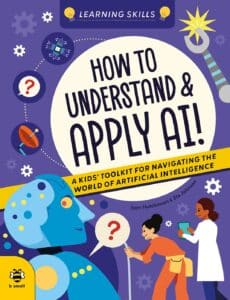
Each section within the book is tagged under one of three categories: AI in the world, How AI works, and Types of AI. This makes it easy to navigate if there is a particular aspect of AI you want to learn about. Key terminology is explained as it comes up, including bias, analyse and machine learning and is also included in the glossary at the back of the book.
The book clearly explains how AI works and talks about both positive and negative uses and impacts of AI – this is extremely important given how exposed to AI children are, even if they don’t realise it. The explanations throughout are clear without being patronising and it also includes further questions to be discussed such as ‘can AI feel emotions?’. The ‘rules for using AI’ section at the back is handy to refer to when considering using AI for something.
This is a great book for children interested in how AI works or to be used alongside e-safety lessons. I will be using this to support my Y6 computing unit on using AI.



 Much loved by teachers, librarians and parents, the twenty-years-strong series features Lulu (also known as Lola in some countries) – a child who enjoys everyday, joyful moments. Celebrating ordinary childhood experiences has at times become more political than intended, and readers might be surprised to hear of

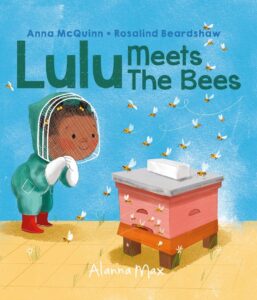


 Thank you to Anna for visiting the BooksForTopics blog this week to discuss the unique legacy of the Lulu series.
 Where next?


 This is My Music
 Numberblocks: The Big Blocks Party
 Norton Follows His Nose
 Happy Times
 The New Adventures of Stitch,
 Kid Potato: Chip-tastic Tales
 Astrosaurs: Turbo Time Twist
 The Misadventures of Mina Mahmood: Bake It Till You Make It
 The Adventures of Rap Kid: Story Slam!
 Guinness World Records: How to be a Record Breaker
 Greenwild: The Castle Under the Mountain
 Jamaal Target: Mission D.N.A.
 Oíche Mhaith, a Ghrá
 Small Magics Spellbound
 Stori bob stafell
 Grumpa agus na Nàbaidhean Ùra
 Artair sa Chaisteal
 Cèic airson Màiri