Recommended children's booklists sorted by age or topic

Topic: History

Chapter bookDyslexia-friendly
dyslexia-friendly

November 1920. The body of an unknown soldier is to be buried at Westminster Abbey. The war has claimed the lives of thousands of men whose bodies will never make it home, and the Unknown Warrior will represent them all. As hundreds of people crowd to Westminster Abbey, Daisy knows she has to make it to the ceremony. Because although they call the warrior ‘unknown’, she is sure that he is her father…

This classroom classic by award-winning Michael Morpurgo is an animal story set in World War 1. We love this new abridged edition of Morpurgo’s classic text, with colour illustrations by Tom Clohosy Cole.

This moving story explores the themes of military animals, conflict, peace and friendship. Some readers may be surprised to discover how horses were used in the war, and the mirrored experiences of the human and the animal reflect the consequences of conflict for both humanity and the wider natural world.

Older readers might like to use this as a companion to the original, longer text, or to explore it as a standalone. The combination of words and pictures is brilliantly brought together, with the use of light and dark in the illustrations bringing the story to life in an almost cinematic way.

Another Twist in the Tale’ is a rip-roaring ode-to-Dickens adventure set in the Victorian era. The ‘twist’ in the tale is given away right at the start and refers to a character rather than a plot device: what if Oliver Twist, that famous Dickensian orphan, had a twin sister? 

The reader is immersed in Dickens’ London through the sights, smells, tastes and unique characters. The story highlights the plight of girls and women during the Victorian era and sets a feminist tone, as we see the prominent, colourful, female characters strive to overcome disadvantages and find their place in a world where power so readily falls upon men.

Catherine Bruton, author of No Ballet Shoes in Syria, has a clear passion for the works of Charles Dickens and the story, settings and character depictions are a faithful tribute to his writings.

In a tunnel under the Thames, an urchin named Jenny and the young Queen Victoria dream of a wonderful new idea – underground trains! Twenty years later, the dream is finally becoming a reality. However, the construction of the Underground is tearing London apart and destroying the home of Jenny and her family. When Jenny comes face-to-face with the Queen again – will she tell her about the human cost of the ‘dream’?

Take a look at the wackier side of history!

Did the Maya really invent hot chocolate? Why did they have pointed heads? And did the Maya civilisation really disappear?

With an engaging question and answer format, this series draws young readers into the fascinating, sometimes gruesome, world of famous peoples and civilisations through history. Each spread opens with a simple question, opening up an exploration of an aspect of the life of a people or civilisation and busting some popular myths along the way!.

The lively lay-out is supported by annotated photos and cartoons, making history fun and accessible for readers aged 9+.

Mayans looks at one of the most fascinating and advanced ancient civilisations. Through structures as imposing as a sacrificial pyramid or objects as beautiful and complex as the Mayan calendar, readers aged 9 and up gain a picture of who was whom in ancient central America and how the civilisation in which they lived really worked.

Perfect for Key Stage 2, each book in Great Civilisations approaches its subject through a scene-setting spread Who/where were the… then introduces the achievements of the chosen civilisation through 12 structures or objects, each of which illustrates a key aspect or theme. Writing, architecture, industry, warfare, transport and learning are all covered in the same simple, colourful and engaging way. Fact boxes and panels present incidental information and point the reader to the importance of parallel developments in other parts of the world.

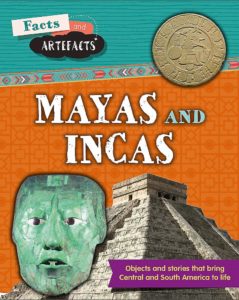
The Mayas and Incas were skilled builders, artists and inventors, and one of the best ways to discover how they lived is by studying the artefacts they made. Just as ancient objects enable us to step back into the world of the people who made them, the stories people told can reveal what they thought about their world. This book combines facts about the Mayas and Incas with photographs of the artefacts they left behind and the stories they shared with each other to present a full picture of life at the time.
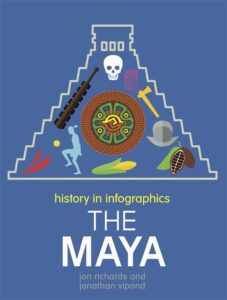
History in Infographics helps children to visualise facts and statistics using a clever and appealing mix of graphics and numbers. The colourful, high-impact design will appeal to a wide range of children, from visual learners to struggling readers, capturing and then holding their attention. Infographics are a really exciting, different way to learn about core historical topics, and are ideal for fact-hungry children, revision work, and to improve the quality of presentations.

History in Infographics: The Maya allows children to explore the Maya civilisation like never before, finding out how people lived, what they ate, what they wore, how they were ruled, the games they played and how the civilisation died out. Children can discover that the Maya were the first people to make hot chocolate, and how they did it, that they went to war to capture prisoners they then sacrificed to their gods, and all about other South American civilisations, including the Aztecs and the Incas.

Ideal for children of 9+, and fact and history lovers of all ages, the Maya have never seemed more exciting!

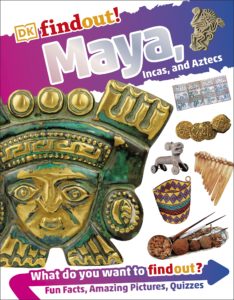
Find out about the incredible ancient civilizations of the Americas, right up until the Spanish conquest. Discover the monumental pyramids and mountain cities of the Maya, Inca, and Aztec people. Explore the sites of Chichen Itza, Machu Picchu, and Tenochtitlan, learn the pictures of the Mayan language, unearth the history of chocolate, and find out how naughty children were punished with chillis!

Peer into the past with amazing illustrations, see some of the most impressive ancient structures in the world, and stock up on facts to amaze your friends with. Packed with information, artefacts, and colourful illustrations, DKfindout! Maya, Incas, and Aztecs brings their worlds to life.

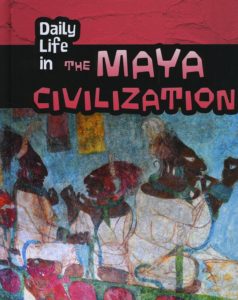
This book explores what life was really like for everyday people in the Maya Civilization. Using primary sources and information from archeological discoveries, it uncovers some fascinating insights and explodes some myths. Supported by timelines, maps and references to important events and people, children will really feel they are on a time-travelling journey when reading this book.

Subscribe to our newsletter

Your Review

Stone Girl Bone Girl

review

Year group(s) the book is most suitable for:

Year group(s) the book is most suitable for:

Does the book contain anything that teachers would wish to know about before recommending in class (strong language, sensitive topics etc.)?

Does the book contain anything that teachers would wish to know about before recommending in class (strong language, sensitive topics etc.)?

Would you recommend the book for use in primary schools?

yes

Curriculum links (if relevant)

Curriculum links (if relevant)

Any other comments

Any other comments