
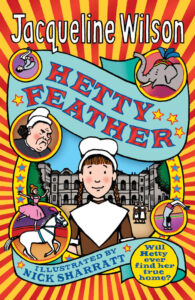


This story by the popular children’s author Jacqueline Wilson has recently been made into a television series on CBBC.
Hetty Feather tells the story of a Victorian orphan girl called Hetty and the adventures she has under the strict rule of the matron at the Foundling Hospital, where she is sent to learn to become a maid. Also available is Hetty Feather’s Christmas.
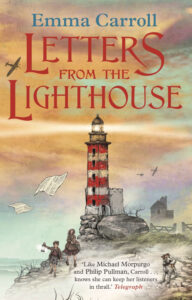

This delightful chapter book is an excellent text for encapsulating experiences of World War II from the viewpoint of children. It tells the moving story of Olive and her brother Cliff as they leave the heavily bombed streets of London and become evacuees on the coast of Devon, sent to live with an enigmatic lighthouse keeper. Soon Olive finds herself caught up in a dark mystery linking the disappearance of her sister Sukie with a strangely coded message.
Letters from the Lighthouse is an incredibly empathetic story that not only portrays the hardships of life during the war but also poignantly explores the anguishing encounters of refugees looking for safety in new places while carrying with them the heartbreak of leaving a war-torn home behind. We highly recommend this story for upper KS2 classrooms.

This is a highly recommended diary-style text by the popular author-illustrator Marcia Williams. It recounts the experiences of a nine-year-old girl during the Second World War and is presented with cartoon style illustrations, flaps, envelopes and a wealth of details about life for children during the war. My Secret War Diary, by Flossie Albright is a superb text to use to inspire recount or diary writing.
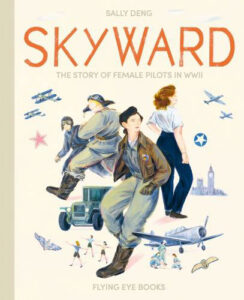
The female pilots of the Second World War are honoured in this exciting, empowering book that shows young girls can achieve anything. The year is 1927, and in America, England and Russia, three girls share a dream: to fly.
Against the odds, Hazel, Marlene and Lilya follow their hearts, enrolling in pilot courses and eventually flying for their countries in World War II. Join the adventures of these women as they display feats of incredible bravery in this beautiful book of sensitive and moving illustrations.

A collection of twelve fictionalised accounts that express the viewpoints and experiences of a range of different people during the First World War. Story themes include life in the trenches, the impact of war on those at home and medical workers trying to save lives in the midst of destruction. These short stories make interesting read-alouds for KS2.

Part of the very popular Horrible Histories series, this book allows children to uncover all of the gory and foul facts about the First World War. This edition has been redesigned in 2016, giving a fresh appeal to a classroom classic.

What do you do when you find out that your mother is a spy? This is exactly what happens to Aimee, a young French girl in the year 1918. Aimee befriends a German boy called Marius and what follows is a thrilling adventure of a friendship that survives despite the heavy shadow of war that poses danger at every turn. A gripping story suitable for upper KS2.

This is a poignant story of courage and humanity, suitable for upper KS2. In wartime France, two young girls discover in the forest a deserter soldier who has escaped from the trenches. In his hand, he clutches a little silver charm shaped like a donkey. The girls enjoy secretly helping the soldier, listening to his stories and trying to come up with a plan to help him reach home. This is a very moving story that provides plenty of opportunities to reflect on the broader themes of war and pacifism.

This classroom classic by award-winning Michael Morpurgo gives voice to a soldier on the battlefields of World War 1. This moving story explores the power of memories to provide hope in difficult situations, as well as wider themes of courage and justice. This edition also contains additional materials to explain the historical context of the story.

The tales of Sinbad the Sailor come from the famous Arabian Nights collection of folk tales compiled during the Islamic Golden Age. This dramatic story is retold in comic book style with speech bubbles and plenty of interesting details in both text and illustrations.
review
Year group(s) the book is most suitable for:
Year group(s) the book is most suitable for:
Does the book contain anything that teachers would wish to know about before recommending in class (strong language, sensitive topics etc.)?
Does the book contain anything that teachers would wish to know about before recommending in class (strong language, sensitive topics etc.)?
Would you recommend the book for use in primary schools?
yes
Curriculum links (if relevant)
Curriculum links (if relevant)
Any other comments
Any other comments