Recommended children's booklists sorted by age or topic

Format: Poetry

Meet Balam, a boy who could be a cat. Meet Lluvia, a girl who could be the dawn. Balam and Lluvia are siblings who catch fireflies, bid farewell to their pet fish in the bathroom, and wait for Raton Perez to collect their teeth.

In Balam and Lluvia’s House, the secret tastes and sounds of the everyday are waiting to be found. From the smell of crushed laurel leaves to the whispers of the peach tree in their back garden, every day is a day of discovery. Full of lively and reflective poems, this book invites the reader to run alongside Balam and Lluvia captivated by the world that surrounds them.

Lawrence Schimel’s translation brings the work of acclaimed Guatemalan author and playwright Julio Serrano Echeverria into English for the first time.

The award-winning tale of a girl who feels broken, and the dolphin who makes her whole. A powerful story of friendship, hope and self-discovery, perfect for readers aged 9+, beautifully illustrated by George Ermos.

Winner of the Eilís Dillon Award for debut children’s book at the KPMG Children’s Books Ireland Awards 2024!

Ró finds school impossible. She knows people think she’s shy – and stupid. But when she goes to the bay each afternoon to watch the dolphin leap through the water, she finds the strength to keep going. Then the dolphin disappears, and everything starts falling apart.

Can Ró overcome her fears to find him?

I watch each rise and dip of wave
know Sunny must be out there
somewhere
wonder if he’s missing me.
I remember that moment
when I touched his skin
and know that finding him
is the only thing
that can make
the aching stop
make me feel
not broken.

A brand new collection for children from beloved poet, writer and broadcaster – Roger McGough

Just when you are ready to write your first poem, along come the words and cause mayhem! ‘Poems can be like that sometimes,’ says Roger McGough.
Here Roger’s witty poems take you from school and home to places far and wide, and back again just in time to finish the poem you first started.

On Poetry Street provides 52 poems, one for each week of the year.

The book begins with Brian Moses welcoming readers with a ‘simple test’ for seeing whether they are ‘hooked on words’ and can create poetry for themselves. He then invites readers to ‘walk down poetry street’ with him, introducing them to the spectacular range of poems ahead.

In this collection, the opportunities for writing poetry or engaging children in oracy opportunities are endless. There is so much playfulness and creativity on each page. This collection of poems feels to be written with fun at its centre, while also providing scaffolding for budding poets to write their own. You can see why Brian Moses is one of Britain’s favourite children’s poets. A must for every classroom bookshelf or for a teacher to keep on their desk to read aloud and inject the joy of poetry into the classroom every day.

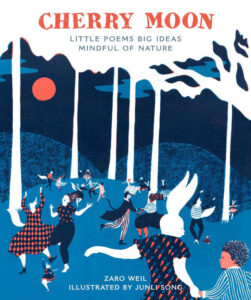
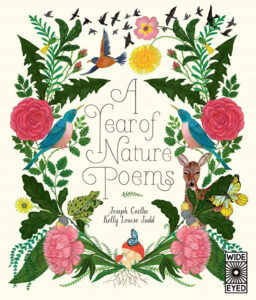
This diverse and exciting modern poetry collection celebrates nature, featuring a wide range of poets. The collection encourages children to see the natural world with fresh eyes and appreciate its awesomeness. From ponds and forests to rain and dirt, the poems sing of the wonders of the world around us in new and innovative ways

With delightful illustrations and rich verbal imagery, this book is an absolute must-have for home and classroom collections, perfect for Key Stage 2. It offers endless opportunities for enjoyment and deeper contemplation of our natural world.

Funny, thought-provoking and bursting with curiosity, Wise Up! Wise Down! is a lively conversation between two internationally renowned poets, illustrated by treasured artist Satoshi Kitamura.

How can laughter be more powerful than a sword? Why do days have names but not weeks? And do pigeons ever get a craving for cake? Two friends, internationally acclaimed poets John Agard and JonArno Lawson, take us on an inspiring, hilarious and wondrous journey through poetry, asking questions and attempting answers as they discover that life really is a forever and ever adventure.

Chapter bookPoetry
resources-available

Devon, 1941. Like her brother, Ralph, Bonnie wants to help in the war effort rather than tend the home vegetable patch. So when the mysterious Mr Fisher is billeted at their family home, Bonnie’s mission to uncover his secrets begins. Why is he here? Is he a shirker? Or worse … a German spy?

In this engaging and emotional verse novel the words dance on the page to tell the story through poetry. Digging for Victory is captivating, powerful and entertaining. The words form interesting shapes to mirror certain themes in the story, which creates the interest needed for a reluctant reader and creates a playful vibe.

While the story is about a girl in the Second World War, some will see it as a detective story, and others will latch onto the important themes running through the book. Cathy Faulkner weaves themes through the story so that your young reader will emerge with more insight into life – it tackles self-esteem, intrinsic versus extrinsic influences on identity, fitting in, bullying, rejecting stereotypes, grief and family. While being a positive and hopeful book, it is also very moving.

The verse format clearly tells the story through poetry and makes the book stand out from the crowd of WW2 stories. It is the perfect way to tell this emotional story while encouraging the reader to care about the characters.

Chapter bookPoetryVerse novel
resources-available

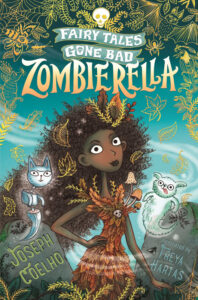
We love a fairy tale with a twist and so eagerly welcomed the arrival of this new illustrated middle-grade series from poet Joseph Coelho and Freya Hartas, with this first instalment placing a deviously dark twist on the Rumpelstiltskin – told in verse.

Coelho’s treatment of the story – which adds a Frankenstein twist to a traditional tale – is as delightfully amusing as it is deliciously dark. After years of Disneyfication and a ‘softening up’ of well-known fairy tales for a generation who often find their stories served up with a little more happily-ever-after and a little less goriness, Coehlo’s series takes a direct step in the colder and creepier direction that you might expect from Roald Dahl’s fairy tales or the original Grimm stories.

There’s plenty to shock and also an enjoyable streak of dark humour and plenty of wit in both the author’s free verse and Freya Hartas’ stylishly expressive black and white illustrations.

An eye-catching ‘bouquet’ of haiku poems. This hardback book  instantly engages with the beauty of nature with vibrant colours, where each page has people engaging with flowers or each other. The twenty-four haikus, each about a different flower, some well-known and others less so, are written where you can dip into and read a few or read the whole book in one sitting.

Every beautiful poem has a focus on at least one of the ‘five ways to wellbeing’: connect, be active, take notice, keep learning and give. The overarching theme of nature and treating it and ourselves mindfully is present throughout. I adore the floral fun facts at the end of the book, where the reader finds out interesting information about the flowers, whether it is where the name originates from or links to countries all around the world.

Perfect for all ages, it is a book to add to any collection on poetry, nature or well-being.

Benjamin Zephaniah had a huge talent for noticing and appreciating his surroundings and using his writing to make them special.

This illustrated poem is a call to appreciate the humble marvels of nature that surround us all – the woodlice, the baby daddy-longlegs, the creepy-crawlies. How easy it is to ignore or look down on what is familiar. Many children want to create settings from rainforests rather than the view from their doorstep; they prefer to describe tigers rather than the squirrels they see every day. However, I love the way this book validates the local and the ordinary and encourages children to observe proudly the small wonders of wherever they live. Even those who don’t have the luxury of a garden will recognise most of the things Zephaniah zooms in on.

I also enjoyed the deceptively simple rhymes that subtly emphasise the humming, the buzzing and the flowering that is all around us all the time. The accompanying illustrations have plenty of details for young children to have fun spotting, and the style does seem to define it as aimed at Nursery, Reception and Year 1 rather than older children.

It would accompany any work on minibeasts beautifully and could lead to both practical investigation of the outdoors and interesting creative work on observational writing, rhyme work, drawing and painting.

Subscribe to our newsletter

Your Review

Stone Girl Bone Girl

review

Year group(s) the book is most suitable for:

Year group(s) the book is most suitable for:

Does the book contain anything that teachers would wish to know about before recommending in class (strong language, sensitive topics etc.)?

Does the book contain anything that teachers would wish to know about before recommending in class (strong language, sensitive topics etc.)?

Would you recommend the book for use in primary schools?

yes

Curriculum links (if relevant)

Curriculum links (if relevant)

Any other comments

Any other comments