The yucky things your brother does, the annoying things your parents say, the funny things you feel.
Michael Rosen knows all about YOU!
A much-loved classic of family life from the brilliant Michael Rosen & Quentin Blake.
Poetry
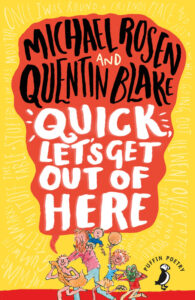
The yucky things your brother does, the annoying things your parents say, the funny things you feel.
Michael Rosen knows all about YOU!
A much-loved classic of family life from the brilliant Michael Rosen & Quentin Blake.
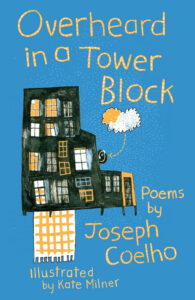
Gazing at the stars from five storeys up,
smelling the bins from five storeys below.
Overheard arguments,
overheard laughter.
A disappearing father and a Mermaid-Queen mother; statues that sing for flesh and blood; bullies who kick you under the table; perfect red trainers – and the things that lurk in the library….
Award-winning poet Joseph Coelho’s astonishing new collection is a powerful and moving poetic narrative about growing up in the city.

A new poetry collection from renowned performance poet Benjamin Zephaniah, celebrating the diversity of British society. A unique portrait of British children, Benjamin has written 12 poems, each one about a child in his or her home environment. The children are from a range of backgrounds and cultures and the book challenges traditional perceptions of the way children live. It shows that despite their differences, children have many similar preoccupations whatever their cultural background. We Are Britain springs from the rich interaction between many peoples which characterises modern Britain. Illustrated with Prodeepta Das’ vibrant photographs, this is a fascinating and fun collection which children will love.
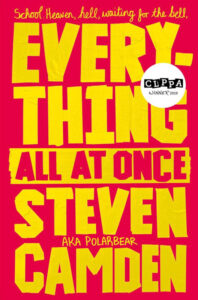
An achingly beautiful collection of poems about one week in a secondary school where everything happens all at once. Zooming in across our cast of characters, we share moments that span everything from hoping to make it to the end of the week, facing it, fitting in, finding friends and falling out, to loving lessons, losing it, and worrying, wearing it well and worshipping from afar.
In Everything All At Once, Steven Camden’s poems speak to the kaleidoscope of teen experience and life at secondary school.
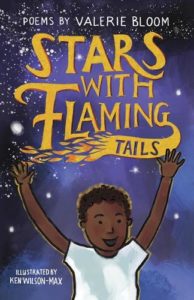
I travelled once around the world
On stars with flaming tails,
And touched the colours of my dreams
Along some silver trails.
Look out for best friends, pancakes, and Grandad singing; discover a river dolphin, a poison dart frog and the most dangerous animal in the world; imagine a talking nose, meet the Zimbats of Zingley Dell and find the colour of your dreams.
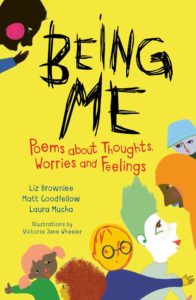
Read about the Land of Blue, where it’s OK to feel sad, find ideas for what to do with worries or how to slow down when your head is full of hurry. Give yourself time to chill out, find quiet voices in noisy places and discover kindness in yourself and others. Then maybe your own special thought machine will tell you, ‘This is going well. You’re doing great. You’ve got this!’ And you have!
This important and unique anthology of 45 poems by three leading poets, well known for their empathy and perception, speaks to the heart of what children think and care about, offering understanding, support and encouragement.
With an endnote by leading clinical psychologist Karen Goodall.
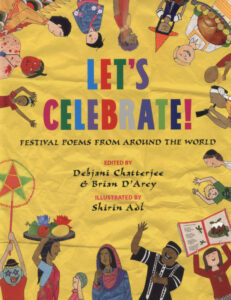
This exciting anthology of poems celebrates festivals all over the world. From Chinese New Year to Carnival, from Thanksgiving to Holi, and from Purnima to Diwali. with explanations of the festivals at the back of the book, and with colourful and atmospheric illustrations by Shirin Adl.
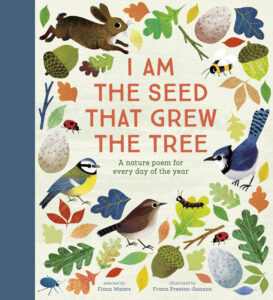
I Am the Seed That Grew the Tree: A Nature Poem For Every Day Of The Year, named after the first line of Judith Nicholls’ poem ‘Windsong’, is a beautifully illustrated gift book treasury of 366 animal poems – one for every day of the year, including leap years. Filled with familiar favourites and new discoveries, written by a wide variety of poets, including John Agard, William Blake, Emily Bronte, Charles Causley, Walter de la Mare, Emily Dickinson, Carol Ann Duffy, Eleanor Farjeon, Robert Frost, Thomas Hardy, Roger McGough, Christina Rossetti, William Shakespeare, John Updike, William Wordsworth and many more, this collection of daily poems is the perfect poetry anthology for children (and grown-ups!). Whether you are 8 or 88, you’ll find poems to share at the beginning of the day, or at bedtime, or just to dip into whenever you might like.
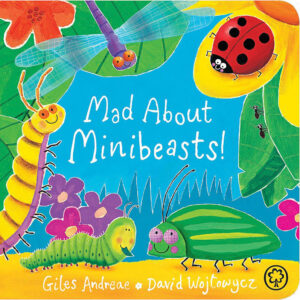
Come into the garden for lots of rhyming minibeast fun in this colourful read-aloud picture book!
Little ones will love joining in with all the noisy sound words and looking at the colourful pictures, as they discover all sorts of minibeasts. From slithery snails and buzzing bees, to wriggly worms and munching caterpillars!
Each page introduces a different animal, with a short read-aloud rhyme.

© BooksForTopics 2015-2024
review
Year group(s) the book is most suitable for:
Year group(s) the book is most suitable for:
Does the book contain anything that teachers would wish to know about before recommending in class (strong language, sensitive topics etc.)?
Does the book contain anything that teachers would wish to know about before recommending in class (strong language, sensitive topics etc.)?
Would you recommend the book for use in primary schools?
yes
Curriculum links (if relevant)
Curriculum links (if relevant)
Any other comments
Any other comments