Recommended children's booklists sorted by age or topic

Topic: Wordless Picture Books

The Best Wordless Picturebooks for Primary School Children

Wordless picture books are like portals to imaginative worlds where stories unfold without a single written word. Instead of relying on text, these books let the illustrations do all the talking. There’s a superb variety of wordless picturebooks available for children in KS1, Ks2 and EYFS, and we’ve picked out some of the best wordless picturebooks for primary-aged children.

More and more teachers are discovering that wordless picture books can inspire incredible literacy learning across the primary age range, right up to Year 6. Books that tell stories through pictures alone can help develop visual literacy, expand the imagination, start discussions about interpretation and give children space to add spoken or written narratives of their own.

From EYFS right through to Year 6, the role of wordless picturebooks in literacy development and imaginative enjoyment is hugely valuable. Wordless picturebooks help to break down language barriers and invite readers of all ages to craft their own stories based on the pictures before them. Curious details and intriguing clues in the illustrations enable the narratives of wordless picturebooks to be open to a range of interpretations – levelling the playing field for every reader to be the storyteller.

From whimsical wordless delights like the adventure of flying frogs in David Wiesner’s award-winning Tuesday to deeper discussion-starters like Duncan Annand’s Caged, this booklist features a selection of the best wordless picturebooks for children aged 4-11. 
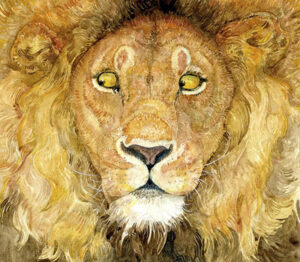
In this stunning picture book, which is wordless except for the odd animal sound, Aesop’s famous fable gets a reworking in an African Serengeti setting. The pictures tells the story of a ferocious lion who is freed from a hunter’s trap by a little mouse, whom the lion had spared from being eaten once before. This is a book that will have children of all ages hooked through its timeless themes of friendship and kindness as well as its incredibly vivid artwork bringing deep human emotions into the world of nature.

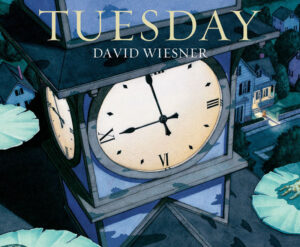
Award-winning author David Wiesner has the incredible ability to draw the reader into a world where the strangest and most magical of events take place as if they are completely normal. On this particular Tuesday, a small group of frogs take flight from their lily pads and go on a whimsical adventure that will invite children to let their imaginations run free and complete the fantasy by deciding what unlikely events will occur next Tuesday.

Picturebook

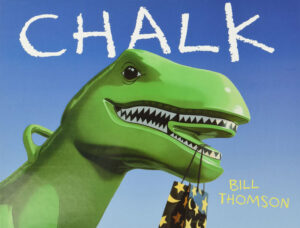
The intensely detailed illustrations guide the reader through the story of three children who discover some enchanted chalk on a rainy day. Whatever they draw magically comes to life and the children are filled with delight at their creations, until one of the boys draws a Tyrannosaurus Rex and the children need to figure out a way to escape the dilemma they now face. This book lends itself well to drama and story-making, particular if you provide a few chalks and a clear playground!

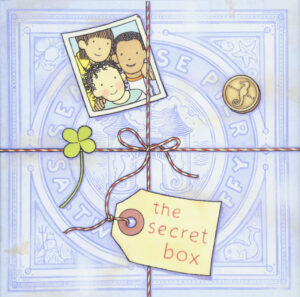
Three children find a time capsule and as they look through its contents they find a secret underground path to another world called Seahorse Pier. There are lots of details in the distinctive illustrations and the concept of this book is great for inspiring new story plots.

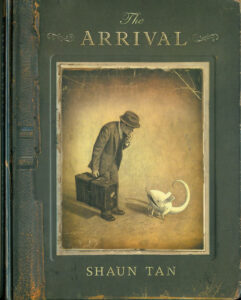
A very topical migrant story told through textless images. When a man leaves his family to search for a better life for them far away, he finds himself in a strange city with all sorts of unfamiliar people, bizarre animals and floating objects. Nothing is familiar, and owning only a suitcase and a little bit of money, the immigrant must navigate his way through his sense of deep displacement and find a way of connecting with the people he meets. This compelling book captures the brave act of leaving everything behind and searching for a future in another world.

Picturebook
resources-availableteachers-favourite

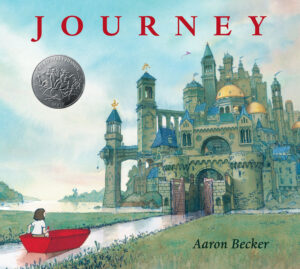
A beautiful, award-winning wordless picture book. It follows the journey of a young girl who draws a magic door in her bedroom and travels through fantasy worlds by boat, balloon and magic carpet. Highly recommended for pupils across the whole primary range.

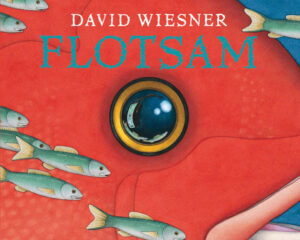
This award-winning wordless picture book offers endless opportunities for discussion and creative writing. A beach-combing young boy finds a washed-up camera on the shore, and when the film is developed it reveals a fantastic new world of creatures from the ocean. Incredible illustrations that speak for themselves. Read our blog for inspiration from one talented teacher who brought a Flotsam literacy unit to life.

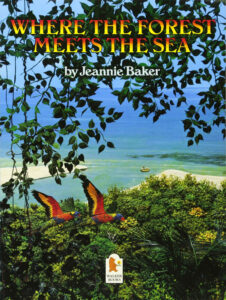
Where the Forest Meets the Sea is a hauntingly beautiful picture book that forces the reader to consider what is really lost when humans build upon previously untouched landscapes. The story follows a boy and his grandad as they explore a largely untouched wet-tropical rainforest that meets the sea. The pictures contain hidden images depicting past inhabitants, teaching the reader how the forest has supported life beyond just the modern snapshot. The question mark that hangs over this beautiful landscape is saved for the very last image. As a reader, this book manages to make me feel innocent and guilty at the same time and, in a very accessible way, forces the reader to consider the natural environment and how it should be protected and not just for the sake of the future, but for the sake of the past.

If you are looking for a book to stimulate discussion and debate about the effects human beings can have on the natural world, this is the one for you. The illustrations are so incredibly detailed (there is also a big book edition available on Amazon that is perfect for detail-spotting) that you might be forgiven for thinking that some of them are photographs. The book has won multiple awards and is sparking deep consideration of the past, present and future of the rainforest.

Subscribe to our newsletter

Your Review

Stone Girl Bone Girl

review

Year group(s) the book is most suitable for:

Year group(s) the book is most suitable for:

Does the book contain anything that teachers would wish to know about before recommending in class (strong language, sensitive topics etc.)?

Does the book contain anything that teachers would wish to know about before recommending in class (strong language, sensitive topics etc.)?

Would you recommend the book for use in primary schools?

yes

Curriculum links (if relevant)

Curriculum links (if relevant)

Any other comments

Any other comments