

Aeriel is autistic and would love nothing more than to have proper friendships with people at her new secondary school in London, having had to move down from Scotland, which she misses keenly.
When her mum becomes Prime Minister, Aeriel is catapulted into the public eye, with both her school and her Mum’s aides trying to mould her into being an online role model for other children. As Aeriel’s reluctant videos go viral, she tries desperately to control her autistic behaviours and understand why she is still so lonely when she is trying so hard to fit in. It takes being compelled to join a new group, alongside a huge shift in family dynamics, to mend relationships and help her manage her life.
This is a fairly short book at 170 pages, but it packs a real emotional punch. The author states that there is much personal content from her childhood and adult life in this story, and it shows. It’s told in the first person, emphasising Aeriel’s vulnerability and the challenges she faces in her daily life, which are only exacerbated by her mother’s new position as PM. There are themes of resilience, courage, friendship, family and bullying, and Aeriel’s story should evoke a huge amount of empathy for autistic peers; it’s a thought-provoking read and would make a great class read-aloud.
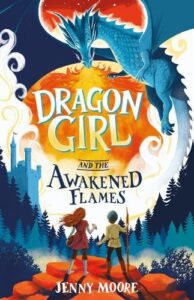

This is the first book in the series about Emba Oak. Originally called Emba Oak and the Terrible Tomorrows, the book has undergone a name change. This book is full of jokes and slightly gross humour (all right, very gross humour in places) and it is delightfully silly.
With dragons and quests being ever-popular story themes, I can see many lower KS2 children absolutely loving this, with its fast-paced plot and amusing characters. It has the feeling of someone chatting to you and telling you this story; the voice is so clear and individual.
There are strong themes of friendship and courage, as well as this being a really fun and easy-to-read book. David Dean’s cover and internal illustrations are a delight, and many will appreciate the great dragon pictures! The chapter heading font and the layout also add to the feeling of a book about a quest, which is exactly what this is.
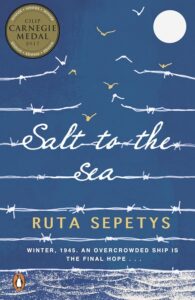
A compelling historical novel set in 1945.
Salt to the Sea follows a small group of refugees who are desperately fleeing the Russian army. As they make a dangerous journey across the country, their destination is a German evacuation ship, the Wilhelm Gustloff. Each chapter is told from a different character’s perspective as the group strives to flee to safety.
Based on meticulous research into the real-life maritime disaster, Ruta Sepetys weaves a masterfully crafted narrative that is both beautiful and sad. Told as a multiple perspective narrative, this story explores topics of survival and unity during the final months of the Second World War, as well as wider themes of refugee experiences, learning to trust others and the power of finding hope and human connection in difficult times.
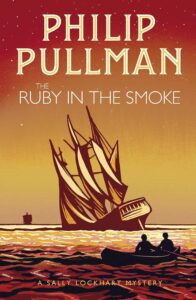
The first in Philip Pullman’s thrilling Victorian mystery series for teens and young adults.
Sally Lockhart finds herself embroiled in a perilous adventure after her father’s unexpected death at sea. When Sally moves to London to live with her cousin, an anonymous letter leads her to the city’s dangerous underworld. Determined to uncover the truth about her family’s past, Sally is soon at the centre of a plot involving murder and deceit.
This mystery adventure story, inspired by Victorian melodrama, is full of suspense, excitement and historical insights into the injustices of the era, making it a rich and compelling read.
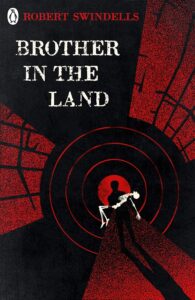
Robert Swindells’ Brother in the Land is a much-loved story of survival, first published in 1984, with a post-apocalyptic setting.
This powerful story plunges the reader into a world shattered by nuclear war, tapping into public fears that are still as prevalent today as they were when it was first published during the Cold War. The story follows Danny Lodge and his younger brother as he navigates the grim aftermath of a nuclear bomb, his hometown now a scene of devastation and emptiness.
Without the comforts and safety of civilised society, Danny contends with a landscape where danger abounds – including the impact of radiation and the inevitability of human selfishness. Meanwhile, his efforts to protect his sibling are admirable as he strives not to give up hope. The narrative is an unflinching look at human responses to the fight for survival.
Brother in the Land is a stark and highly memorable adventure, recommended for Year 9.
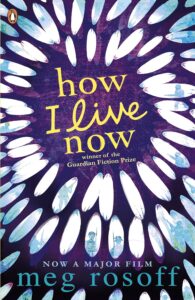
This is a deep and celebrated book dealing with maternal grief, displacement, the backdrop of war and emerging relationships. The gripping story deals with some difficult themes around war and survival and also touches on eating disorders. I think it would really appeal to older children in KS3 who like something a bit more serious.
There’s lots in it that could lead to some good discussion too. Best suited to more mature readers.
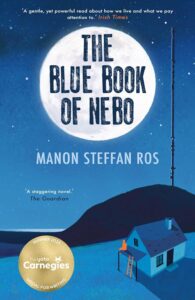

I can entirely see why this book was garlanded with awards. It is a beautifully written story (originally in Welsh), told in two voices, Dylan and his mother. Each voice is starkly different, experiencing the world differently. The nebulous End, is explained but left deliberately vague and is all the more menacing for that.
The story forces you to think about what you might do if the worst happened and the end of life as we know it appeared on the horizon. It might be an awful time, and yet it is also an extraordinary time, allowing both mother and son to experience things as they never would otherwise. This is a dystopian novel with a difference, because although it contains literally world-shattering events, it is remarkably calm and low-key in tone and surprisingly uplifting despite the tragedy.
It is a story that will stay with me for a long time. The content, themes and language of the book are best suited for mature KS3 readers and above.
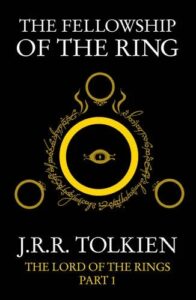
This first book in J.R.R. Tolkien’s epic Lord of the Rings saga, first published in 1954, introduces hobbit Frodo Baggins, who inherits the all-powerful One Ring forged by the dark lord Sauron. To prevent Sauron from dominating Middle-earth, Frodo must embark on a perilous journey to destroy the Ring.
Joining forces with a wizard and various travelling companions, he begins his quest towards Mordor.
This series is considered a foundational work of epic fantasy, earning its place in the literary canon for both adult and teen readers.
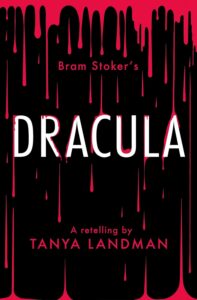

Dracula: A Retelling by Tanya Landman is an engaging and accessible reimagining of the classic Gothic tale, well-suited to Upper Key Stage 2 and KS3 readers. This version retells the story of Dracula in a clear, fast-paced way that keeps the suspense while making it approachable for younger audiences. It is printed in an accessible, dyslexia-friendly font. I particularly enjoyed the vivid atmosphere and the way tension is built without becoming overwhelming, making it a great introduction to classic horror.
Teachers will find plenty of opportunities for links to English learning, especially when exploring classic texts, storytelling and genre. Extracts would be incredible to use in writing lessons as modelled pieces and to unpick and discuss vocabulary and authorial intent.
The text could also support discussions about bravery, good versus evil and how traditional stories are adapted for modern readers.Overall, this is a compelling and manageable retelling that would appeal to pupils who enjoy mystery and a hint of spookiness. It would be a valuable addition to an Upper Key Stage Two primary classroom or library.
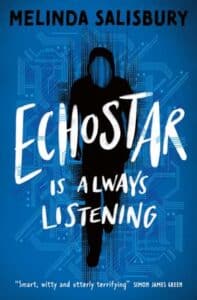
Aimed at a teen market, Echostar is a short pacey novel which could appeal to more reluctant readers or be easily digested in one sitting by more prolific ones.
A useful conversation starter regarding internet safety, use of social media and apps, Melinda Salisbury covers themes of cybercrime, assault, bullying and grooming through the use of characters who seem unlikely to be caught up in such difficulties – widening the accessibility of the story.
An absorbing ready, this is highly relevant to the teen generation who often seem keen to identify shortcut to success. Echostar might serve as a timely reminder that if something appears to be too good to be true, it often is.
review
Year group(s) the book is most suitable for:
Year group(s) the book is most suitable for:
Does the book contain anything that teachers would wish to know about before recommending in class (strong language, sensitive topics etc.)?
Does the book contain anything that teachers would wish to know about before recommending in class (strong language, sensitive topics etc.)?
Would you recommend the book for use in primary schools?
yes
Curriculum links (if relevant)
Curriculum links (if relevant)
Any other comments
Any other comments