Recommended children's booklists sorted by age or topic

Format: Chapter book

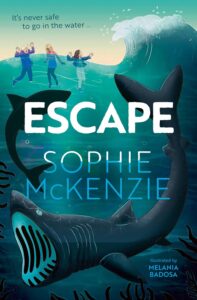
Bernice has been looking forward to her school trip to the sea-life sanctuary and when a work-experience opportunity arises, she wants to find out as much as she can about all of the creatures to support her application.

Unfortunately, her friend Molly and Rylan, the boy that Molly likes, have no plans to take the trip so seriously and soon put all three of them in intense danger. Can Bernice save her friends and how will they explain their actions to Mr Willis?

This Barrington Stoke publication is a high level interest, accessible reader suitable for pupils age 10+. The accessible font, wider spacing and tinted pages make the text readable for all. The book covers themes of friendship, loyalty, responsibility and water-safety and allows for discussions around decision making and risk taking with pupils who are gaining their first steps of independence.

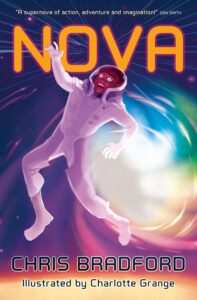
When Max’s life-craft is pulled into a wormhole, he needs a whole galaxy of luck to return to safety … Chris Bradford crafts Interstellar for kids in this space-bending survival story.

Max Nova is headed to Mercury with his father, a space trucker, when their ship is suddenly diverted. They have a new urgent mission. An abnormal gravity reading has been detected near the sun.

There are fears that this could signal the start of a supernova! But what Max and his father discover is much more dangerous – and far stranger – than any supernova.

Flung to the outer reaches of the universe, Max must navigate a galaxy of dangers to find his way home before time runs out!

Particularly suitable for readers aged 9+ with a reading age of 7.

A verse novel, ‘The Treasure Seekers’ is a gentle adventure exploring important themes.

Set in a small village struggling in the aftermath of the First World War, the story follows Martha, daughter of the local vicar and landowner, and Stanley, who’s family have always lived on her grandfather’s land and worked for him. When Spanish Flu reaches the village Stanley believes that the if only the stained glass windows hidden from the enemy by Martha’s family can be found, the curse will be lifted. Martha, grieving and resentful, is his only hope.

Their unlikely friendship develops through the story as they seek the treasured windows. Faulkner does a brilliant job of casting light on frequently forgotten history as she focuses in on the impact of the flu – or ‘The Soanish Lady’- on communities already downtrodden in the years after the war.

Set in Yorkshire (some of the dialogue is written to reflect the accent), the story explores the industrial past of the area, and children’s interest may be piqued by Martha’s fascination with stained glass, and historical ruins and the clues they give to our shared past.

The novel also deals sensitively and honestly with the experience of grief, and depression, and exposes the ugliness of class divides and prejudice. There is a lot for children to learn as they read, both about the past, and about what it is to experience human emotion.

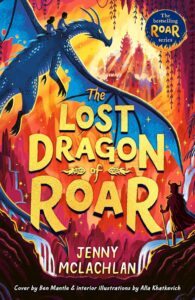
Rose and Arthur are back in Roar, after dodging another one of Mum’s walking holidays. They have been summoned by the Headteacher of the Dragon Rider Academy (DRAc) to return back to school by the next day’s sunrise to complete a very special mission. They excitedly rush back through the camp bed and are happy to reunite with their friends and their dragons, although the weight of their fight with the missing Witch King Jago Skau still plays on Arthur’s mind. They are required to deliver a message to a witch in The Deeps and soon find themselves among lots of witches, some who are secretly hoping that the Evil Witch King returns and empowers Roar. Will Arthur and Rose be able to get out of trouble when they come face to face with Jago Skau again?

This is the fifth book in the Land of Roar series, which sees the stories that Rose writes about a magical land come true when they go through the portal in the camp bed. I have enjoyed reading the previous four books and was excited to be able to read the latest adventure. The stories are told really well and can be enjoyed even if the previous ones have not been read due to snippets of the previous storylines woven through the story. The story is illustrated through the book and adds to the description of the made up creatures and characters. The books are a wonderful read and really spark the imagination of the readers. I am now left hoping that a sixth book is being written!

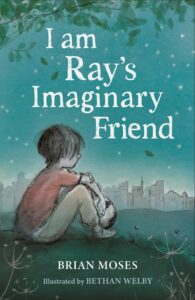
Brian Moses, a prolific and much-loved children’s poet, ventures into new territory with I Am Ray’s Imaginary Friend, his first verse novel.

From the outset, the gentle cover, light humour, and engaging narrative voice quickly draw readers in. The story is told from the perspective of Jacob, an imaginary friend created by Ray, whose warm and witty narration establishes an immediate emotional connection.

Ray’s life in his village is turned upside down when he overhears his parents discussing a potential move. Distressed and unsettled, he invents Jacob as a source of comfort. Through their conversations, Jacob helps Ray build resilience and confidence, guiding him through feelings of anxiety and uncertainty. The story sensitively explores themes of change, empathy and emotional growth, presenting them in a way that is both accessible and reassuring for young readers from 6 years upwards. It also covers the topic of a Ukrainian refugee mother and child coming to live in Ray’s new family home.

The book’s verse format enhances its accessibility.  While it is a relatively quick read, the structure encourages moments of reflection. I Am Ray’s Imaginary Friend is a comforting and thoughtful story about coping with change. Its uplifting conclusion leaves room for the return of Jacob, offering a reassuring sense of continuity and hope.

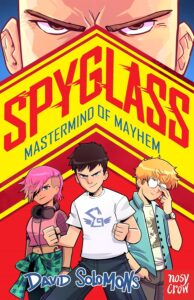
Spyglass: Mastermind of Mayhem is a fast-paced and highly entertaining spy adventure that would be a huge hit with upper Key Stage 2 readers. Packed with gadgets, humour and action, the story follows Adam and his friends as they become caught up in a dangerous mission involving an ex-MI6 inventor, a supervillain and a series of wildly inventive gadgets.

The book’s humour is one of its biggest strengths, with plenty of puns, silly moments and comic inventions that keep the tone fun and engaging throughout. At the same time, the story has enough suspense and action to keep readers hooked, making it especially appealing to children who enjoy adventurous, fast-moving plots. The illustrations also help break up the text and add to the energy of the story. Themes of friendship, teamwork, bravery and problem-solving run throughout the novel and the likeable group of main characters make it easy for readers to become invested in the adventure.

The book would work well as a class read for Years 5 and 6, particularly for readers who enjoy spy stories, comedy or gadget-filled adventures in the style of James Bond or Johnny English. This would also be an excellent choice for reluctant readers thanks to its accessible style, short chapters and constant sense of excitement. Overall, it is a funny, imaginative and highly readable adventure that is likely to become a popular addition to classroom and library shelves.

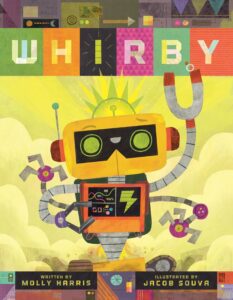
Whirby is a clever and engaging picture book with an important message for young readers. The first thing that stands out is the striking front cover, which uses bold and unusual colours not often seen in children’s books. It immediately catches the eye and creates excitement before the story even begins, especially if you adore robots (which many girls and boys do!).

The story follows Whirby, a lovable and energetic character who forgets to recharge overnight. As a result, when it is finally his turn in an important competition, his battery reaches 0% and he falls asleep at the worst possible moment. This simple but relatable storyline gives children a strong message about the importance of bedtime, sleep and taking time to rest properly. Many children struggle with going to bed on time, so the idea of ‘recharging’ makes the lesson feel modern, fun and easy to understand.

Whirby is a fantastic character who children will quickly warm to and the story feels fresh and relevant for today’s young readers. It is quite a long picture book (40 pages) so was enjoyed in class over a few days, although everyone wanted to keep reading! It became one of my favourite picture books to share immediately!

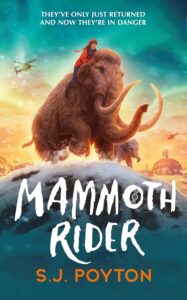
“They’ve only just returned, and now they’re in danger . . “

Ash Grimes, born and raised at the Arctic Research Centre, dreams of becoming a Mammoth Rider, just like her dad. But is this dream a step too far, because mammoths are wild animals. And how can a human be trusted when they cause so much harm to our plane? Ash meets a rare white mammoth calf, and makes it her mission to protect it. Adamant to do anything to protect her new friend, she shows strength, determination and courage.

A beautifully written book full of grit and determination, proving the importance of standing up for what you believe in.

Chapter book
book-of-the-month

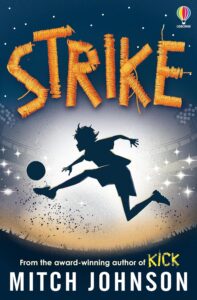
I found Mitch Johnson’s first novel for teens, ‘Kick’, impossible to put down, and with ‘Strike’ he’s done it again! ‘Strike’ is a follow on from ‘Kick’ but can equally be read as a stand-alone story.

Challenging, gripping, and perfectly pitched for boys who love football, this book should be on every secondary school library bookshelf! Relatable characters, best friends Owen and Teddy are scouted for the local club and join the football academy. Owen’s dedicated single parent Dad buys Owen a pair of new boots to mark the occasion, but what Owen finds hidden inside one of his boots sends him spinning and turns his football crazy world upside down: a note from a factory worker reading ‘PLEASE HELP US’.

Owen has a choice to make – will he keep his head down and pursue his dreams, or will he speak out and risk losing everything he has longed for?

Mitch Johnson puts the question of integrity and the plight of modern slaves front and centre in this brilliant book that never feels preachy and just draws the reader in.

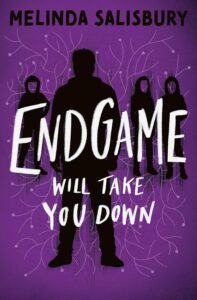
Bestselling YA author Melinda Salisbury delivers a hair-raising thriller as Ruby, Freya and Ivy team up to take down the Ash Tree Foundation once and for all.

Ruby, Freya and Ivy are all survivors of the Ash Tree Foundation, an organisation that claimed to help teenagers deal with technology addiction but which was a front for a dangerously addictive augmented-reality platform, Novo Reality.

Novo Reality was the brainchild of tech-baroness Dagmar Nilsson, who disappeared without trace when the Foundation was busted. But now, a year later, just as the girls are all preparing to start a new chapter of their lives, it becomes clear that Dagmar is continuing with her aim of world domination.

Can the three friends draw her out of hiding and shut down the Foundation for good, or will Dagmar’s dream of controlling the world finally come true?

Because the Endgame is coming, and someone is going down …

Particularly suitable for readers aged 11+ with a reading age of 8.

Subscribe to our newsletter

Your Review

Stone Girl Bone Girl

review

Year group(s) the book is most suitable for:

Year group(s) the book is most suitable for:

Does the book contain anything that teachers would wish to know about before recommending in class (strong language, sensitive topics etc.)?

Does the book contain anything that teachers would wish to know about before recommending in class (strong language, sensitive topics etc.)?

Would you recommend the book for use in primary schools?

yes

Curriculum links (if relevant)

Curriculum links (if relevant)

Any other comments

Any other comments