Recommended children's booklists sorted by age or topic

Topic: Refugees & Immigration KS1

Recommended Children’s Books about Refugees and Immigration 

We’ve put together a list of recommended books about refugees for primary school-aged children. The children’s books on this list can help to explore the refugee experience and the topic of immigration in an age-appropriate way.

NB: This recommended booklist is aimed at children ages 4-7 (KS1). If you are looking for older children’s books for this topic, we have a separate KS2 refugee booklist here.
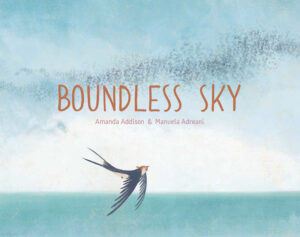
A gentle and lyrical picturebook exploring what it means to undertake a long journey to find a peaceful place to settle. The story creates a clever mirroring between the tale of a tiny swift’s mighty migration journey to find a safe nesting site with the story of Leila, a young girl who flees her home in Northern Africa and who also must travel thousands of miles in order to find a safe place of refuge.

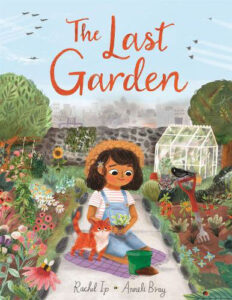
A picturebook story to open up conversations about war and migration with little ones, anywhere in the world. In a war-torn city, a little girl tends to the last garden. But everyone is leaving and soon the girl has to leave too. The garden is all alone now but soon the seeds scatter throughout and the roots take hold. Inspired by true events in Syria and war gardens around the world and throughout history, The Last Garden is a thoughtful, tender story of hope, touching on issues of conflict and migration, from a talented debut picture book pairing.

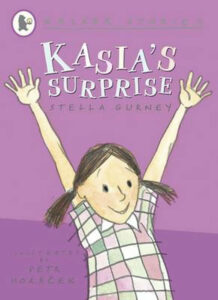
An uplifting book that represents one Polish girl’s experience of migration to the UK. Kasia misses her old home in Poland, especially her friends and family, and finds it hard to like her new home in England. When her grandparents arrive from Poland for a surprise visit, Kasia finds delight in showing them around her town and realises that she is fonder of her new home than she thought. This is a short chapter book of 64 pages, designed forearly readers.

Picturebook

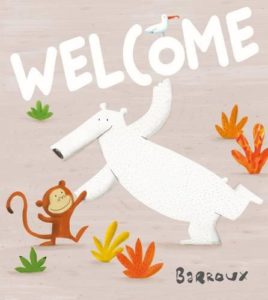
When Polar Bear and his friends are swept away from their icy home, they hope to find refuge in a new land. But when they are turned away from one new place after another, they start to doubt that they will ever find somewhere they will be made welcome. Author-illustrator Barroux has crafted a powerful story with a twist ending about hugely important and current issues. A great opportunity for educators and parents to discuss with children the plight of migrants and refugees, as well as global warming, in a gentle, open-ended way.

Who are refugees? Why are they called that word? Why do they need to leave their country? In this simple, graphic and bold picture book for young children, author and illustrator Elise Gravel explores what it means to be a refugee. This book is the perfect tool to introduce an important and timely topic to young children.

This is a moving picture book, that shares of the initial unwelcome refugees can sometimes face when arriving in a new place. The story tells of the love of children in a class, naive to the politics of the world, inviting other children into their world by giving up their own chair in the classroom and opening up their community to refugees. Emotive in its nature, with a potent message about the power of kindness and hope, the book ignited a campaign where people posted images of empty chairs as symbols of solidarity with children who had lost everything to war in their home countries. Published in association with Help Refugees, it is a powerful tool for opening up discussions about the ongoing refugee crisis to younger readers.

A simple, powerful way to introduce the idea of kindness to strangers to young children. School librarian Tanya says, “The Suitcase had an immediate impact on pupils in our library, who were moved to perform it, as the various characters, to classes throughout the school. This empathy-building story of the arrival of a refugee is beautiful and accessible. Chris Naylor-Ballesteros’ illustrations have the simplicity to appeal to a young audience, but tell a deeper tale in their detail, which the older children recognised and respected.”

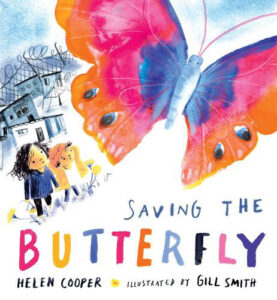
A poetic, powerful story about a little brother and a big sister finding a new home and new hope after being rescued from a boat lost in the dark sea. A little brother and his big sister try their best to settle in a new home, where they have nothing left from before except each other. The little one makes new friends and quickly learns to laugh again but his sister remains haunted by the shadows of their past and hides away in their broken house. Trying to help his sister, the little one catches a butterfly for her and brings it inside the house. His sister knows that she needs to set the butterfly free … but that would mean going outside. In taking the first steps to face her fears and save the butterfly, she also begins the process of saving herself.

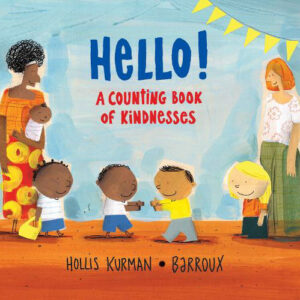
This is a counting book with a difference – the counting is a context for a story about forced migration. We follow a family who are forced to flee a war-torn country. They board a boat and travel to safety in another country where the children go to school and make new friends. It’s a hopeful and positive story which promotes kindness. Each page counts through different acts of kindness that helped the family in their difficult situation; 2 hands lifting the children to safety from the boat, 3 donated meals to fill the children up, 4 beds in a temporary shelter, 8 welcome gifts in the new home, 10 new friends to play with, etc. The simple format leaves plenty of space to think about and discuss the pictures, providing opportunities to discuss ways to be kind and to imagine what life might be like as a refugee.

Subscribe to our newsletter

Your Review

Stone Girl Bone Girl

review

Year group(s) the book is most suitable for:

Year group(s) the book is most suitable for:

Does the book contain anything that teachers would wish to know about before recommending in class (strong language, sensitive topics etc.)?

Does the book contain anything that teachers would wish to know about before recommending in class (strong language, sensitive topics etc.)?

Would you recommend the book for use in primary schools?

yes

Curriculum links (if relevant)

Curriculum links (if relevant)

Any other comments

Any other comments