Recommended children's booklists sorted by age or topic

Topic: Picturebooks Upper KS2

It’s night and the dark is filled with strange sounds as Shane makes his way home. On a fence he finds a stray cat that at first growls and spits at him. But Shane talks and strokes the kitten to calmness, and decides to take the ‘Spitfire, Kitten Number One,’ home with him. No gang of boys, or avenue of dense traffic, or fierce dog can stop Shane carrying his new found friend to the place he calls home. Greg Rogers’ sensitive use of charcoal and pastel create Shane and his cat in splendid city-at-night time scenes.

The Barnabus Project is a unique and beguiling picture book that will intrigue KS2 children, with magical illustrations and an original storyline.

Barnabus lives in a lab for genetically engineered pets, but is left hidden away in a jar as a ‘failed project’. He dreams to escape, and calls on an eclectic group of fellow rejects to put his escape plan into action.

If you are familiar with the work of the incredible Fan brothers, you’ll know to except stunning illustrations with details designed to intrigue, delight and challenge. There’s plenty of peril and suspense in the story, and KS2 children will love getting stuck into this ‘older’ picturebook. Ultimately the messages are of teamwork, acceptance and not giving up on dreams – with scope for some deeper discussions about the ethics of genetic engineering and animal captivity, as well as conversations about celebrating difference.

This stunning book is a Key Stage 2 picturebook must-read.


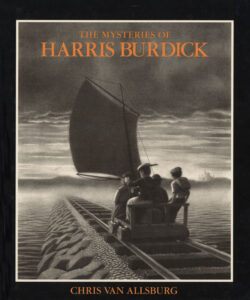
“His disappearance is not the only mystery left behind. What were the stories that went with these drawings? There are some clues…”

Who is Harris Burdick? Where did he disappear to? And how was he going to finish his stories?

Chris Van Allsburg presents a series of loosely related drawings each accompanied by a title and a caption which the reader may use to make up his or her own story.

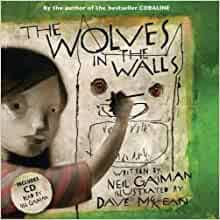
When Lucy hears noises from behind the wall she tries to warn her parents that there are wolves banging about. But her parents don’t listen. When the wolves finally take over the house and Lucy and her family are evicted to live in the garden, her parents realise perhaps they should have listened. But Lucy is no shrinking violet and pretty soon she has the wolves out and the family back in the house. So what was that noise Lucy heard coming from behind the wall? This is a brilliant, witty and inventive picture book with cutting-edge art, which is sure to be a hit with existing fans of Neil Gaiman as well as young readers.

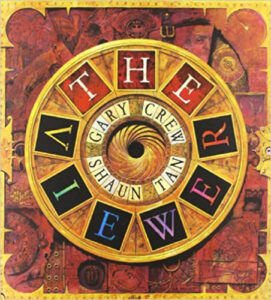
An intriguing picture book for older readers, The Viewer has a sparse amount of words and plenty of fantastically detailed, curious and thought-provoking illustrations. This is a good choice for a picture book to study with Year 6.

The story follows a boy called Tristan who stumbles across a mysterious box filled with strange objects when he is browsing around for interesting things in a scrap yard. Inside the box, Tristan finds a viewing device with lenses and discs, filled with dramatic and sometimes disturbing images past and present – from prehistoric beasts to modern-era war and pollution.

Imagery or circles and spirals reflect the repeated cycles of progress and destruction through history, where the imagery of eyes might cause readers to wonder about the ‘lenses’ through which we come to understand human history. The ambiguous ending invites open-ended discussion. The intricate illustrations by Shaun Tan, the darker themes, the broad historical sweep and the curious repeated motifs make this a perfect picture book for older readers who appreciate a more philosophical book to pore over, and there’s certainly something new to wonder at on every reading.

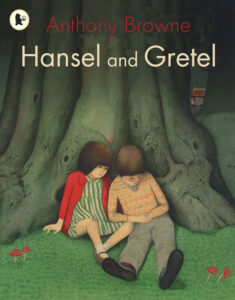
A retelling of this famous, dark fairytale from award-winning author-illustrator Anthony Browne.

Hansel and Gretel is perhaps the darkest and greatest of the fairytales from the Brothers Grimm. This extraordinary book brings the classic childhood tale to a new generation courtesy of one of the world’s greatest picture book artists, Hans Christian Andersen Award-winner Anthony Browne.

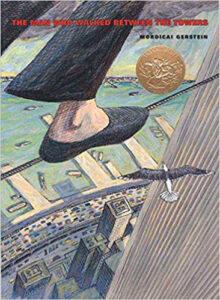
In 1974, French aerialist Philippe Petit threw a tightrope between the two towers of the World Trade Center and spent an hour walking, dancing, and performing high-wire tricks a quarter mile in the sky. This picture book captures the poetry and magic of the event with a poetry of its own: lyrical words and lovely paintings that present the detail, daring, and — in two dramatic foldout spreads — the vertiginous drama of Petit’s feat.

Based on a real life story!

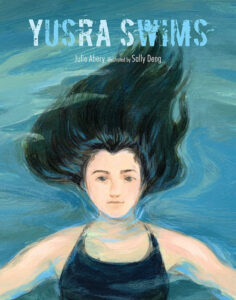
Yusra Mardini loves to swim. Growing up in Damascus, she is just a girl with a dream: to swim for her country in the Olympic Games. But when war erupts in her country, she is forced to flee.

In spare, rhyming verse, Yursa Swims tells the true story of one girl’s journey from her beloved home in Syria to Germany.

We follow her to the Turkish coast, where she boards a small, crowded boat across the Aegean Sea to Greece. When the boat begins to sink, Yusra swims, helping to push the boat and all of her fellow refugees safely to shore. Her journey continues from Greece, through Europe, on foot, by car, bus and train, all the way to Germany. Here Yusra swims again, and is able to realise her dreams.

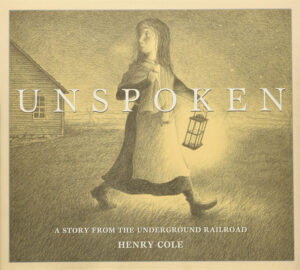
A young girl’s courage is tested in this haunting, wordless story.
When a farm girl discovers a runaway slave hiding in the barn, she is at once startled and frightened. But the stranger’s fearful eyes weigh upon her conscience, and she must make a difficult choice.Will she have the courage to help him?Unspoken gifts of humanity unite the girl and the runaway as they each face a journey: one following the North Star, the other following her heart. Henry Cole’s unusual and original rendering of the Underground Railroad speaks directly to our deepest sense of compassion.

Subscribe to our newsletter

Your Review

Stone Girl Bone Girl

review

Year group(s) the book is most suitable for:

Year group(s) the book is most suitable for:

Does the book contain anything that teachers would wish to know about before recommending in class (strong language, sensitive topics etc.)?

Does the book contain anything that teachers would wish to know about before recommending in class (strong language, sensitive topics etc.)?

Would you recommend the book for use in primary schools?

yes

Curriculum links (if relevant)

Curriculum links (if relevant)

Any other comments

Any other comments