Recommended children's booklists sorted by age or topic

Topic: Picturebooks Upper KS2

Best Picturebooks for Years 5 and 6 

Picturebooks are brilliant for all ages in primary schools and are not to be left behind in EYFS and KS1 libraries alone. Shared with older children, the best picturebooks can allow children and adults to share a reading common experience made up of the interplay between the visual and the written word.

In Upper KS2, picturebooks are excellent for opening discussions on important issues like Varmints, for exploring philosophical or political concepts like The Island, for developing empathy and for challenging thinking like I Talk Like A River. Sometimes they simply provide an imaginative reading experience that caters to a visual appetite that is excluded from chapter books offered at this age, like The Midnight Fair. We’ve picked out a list of the best picturebooks that are suitable for children aged 9-11….

NB: If you are looking for more KS2 picturebook recommendations, try Picturebooks for Lower KS2 or Wordless Picturebooks. For even younger readers, head to Storytime Favourites for EYFS.
An ordinary boy in an ordinary world. With no words, only illustrations, Small Things tells the story of a boy who feels alone with his worries, but who learns that help is always close by. A universal story, told simply and with breathtaking beauty, about dealing with sadness, anxiety, depression, heartache or loss, and finding your way in the world.

Based on the author’s own experiences of having a stutter,  this picturebook story captures the experience of coming to terms with speech disfluency and explores themes of self-acceptance, family support, nature and embracing difference.

It’s a beautiful and empathic book that charts a ‘difficult speech day’, when the narrator feels like his words are stuck. He describes hiding in class, hoping not to be asked a question. Sometimes he chooses not to talk. The boy’s father is beautifully supportive, helping him to find a quiet place and showing him that his speech is like the natural movements of a river – bubbling and churning – but that the river is nothing short of a beautiful display of nature’s power. In the author’s note at the end of the book, the author relates his own experience, writing that ”Stuttering is terrifyingly beautiful”.

The power of the father’s supportive words makes a fantastic impact on the boy, demonstrating the impact of positive support and encouragement for others.

The onomatopoeic free verse depicts the stuttering sensation while the lyrical river descriptions express the freedom of self-acceptance. Meanwhile, the stunning watercolour illustrations swirl with life – with patterns that reflect both the disjointed speech and the powerful, sparkling river.

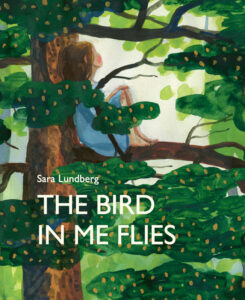
Berta is a young girl with an artistic soul growing up on a farm in the Swedish countryside at the beginning of the 20th century. Her father doesn’t understand her and her mother is dying. But Berta longs to be an artist and can’t stay on the farm forever.

Based on the life of Swedish artist Berta Hansson, this is the story of a young woman with the bravery to live her own truth and follow her own path, despite the protests of her father and society at the time.

A universal story of longing and imagination, the perfect refrain for a young rebel.

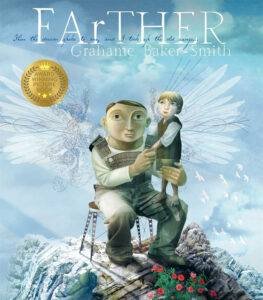
A young boy, bewitched by his father’s unrelenting passion to fly; a desperate craving that absorbs his every waking minute, finds himself entranced by the dream. When his father goes to war and does not return it seems the spell is broken.

Much later, the boy, now a young man finds himself drawn once more to his father’s drawings and failed experiments. Finally able to make his father’s dream a reality, he flies. Will his own son be visited by this unrelenting passion?

Picturebook

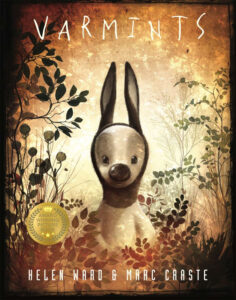
Varmints is an intriguing and mysterious picture book, with an environmental theme, and images that play with concepts of light and dark. This is not a story to enjoy in the traditional storytime sense, but an intriguing picturebook to offer reward to those willing to ponder over, consider and reflect upon the multi-layered offerings on each page. The ideal age of the audience for this book is Upper Key Stage 2 children.

A once peaceful place becomes darker when varmints turn up. They destroy the bees and plants and bring with them grey buildings and too much noise to think. Peace and tranquillity become lost – as does thinking – and the environment gets darker and more ominous with each page turn. Some of the images are stark and haunting – almost cinematic at times. In one tiny moment, a creature restores hope by nurturing a pocket of wildlife and a little bit of wilderness grows once again.

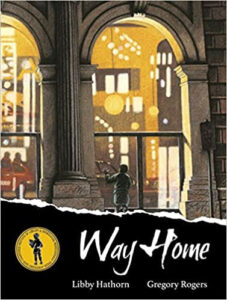
It’s night and the dark is filled with strange sounds as Shane makes his way home. On a fence he finds a stray cat that at first growls and spits at him. But Shane talks and strokes the kitten to calmness, and decides to take the ‘Spitfire, Kitten Number One,’ home with him. No gang of boys, or avenue of dense traffic, or fierce dog can stop Shane carrying his new found friend to the place he calls home. Greg Rogers’ sensitive use of charcoal and pastel create Shane and his cat in splendid city-at-night time scenes.

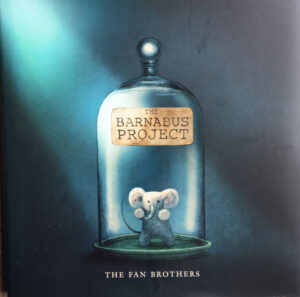
The Barnabus Project is a unique and beguiling picture book that will intrigue KS2 children, with magical illustrations and an original storyline.

Barnabus lives in a lab for genetically engineered pets, but is left hidden away in a jar as a ‘failed project’. He dreams to escape, and calls on an eclectic group of fellow rejects to put his escape plan into action.

If you are familiar with the work of the incredible Fan brothers, you’ll know to except stunning illustrations with details designed to intrigue, delight and challenge. There’s plenty of peril and suspense in the story, and KS2 children will love getting stuck into this ‘older’ picturebook. Ultimately the messages are of teamwork, acceptance and not giving up on dreams – with scope for some deeper discussions about the ethics of genetic engineering and animal captivity, as well as conversations about celebrating difference.

This stunning book is a Key Stage 2 picturebook must-read.


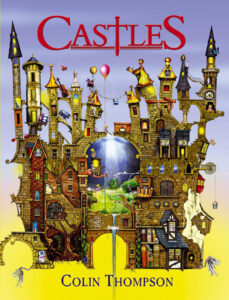
A wonderfully visual exploration of fantasy castles, this book contains wonderfully detailed illustrations of imaginary castles to pore over, each hiding a royal family as well as many inventive puzzles, mazes and visual puns woven into the details. From castles that float on clouds or hide under these to castles made of musical instruments, this is a popular choice for stimulating fantasy writing.

Picturebook

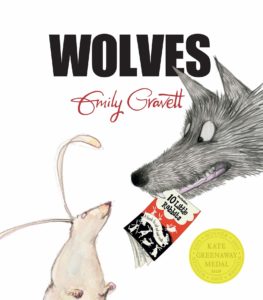
Rabbit borrows a book about wolves from the library. He can’t put it down! But soon a sinister figure with sharp claws and a bushy tail starts to creep right off the pages. You won’t believe your eyes – but if you’re a rabbit, you probably should.

Brilliantly witty, ingeniously constructed, and with amazing artwork throughout, Wolves has thrilled critics and booksellers alike. Wolves was Emily Gravett’s debut book, winning her the Macmillan Prize for Illustration and her first CILIP Kate Greenaway Award.

This edition of Wolves features an additional mini book to cut out and keep; it’s called 10 Little Rabbits , and it’s Wolf’s favourite book…

Subscribe to our newsletter

Your Review

Stone Girl Bone Girl

review

Year group(s) the book is most suitable for:

Year group(s) the book is most suitable for:

Does the book contain anything that teachers would wish to know about before recommending in class (strong language, sensitive topics etc.)?

Does the book contain anything that teachers would wish to know about before recommending in class (strong language, sensitive topics etc.)?

Would you recommend the book for use in primary schools?

yes

Curriculum links (if relevant)

Curriculum links (if relevant)

Any other comments

Any other comments