Recommended children's booklists sorted by age or topic

Topic: Oceans & Seas (KS2)

Graphic novel
book-of-the-month

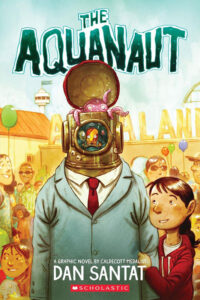
A 245-page graphic novel by Caldecott Medal winner and New York Times bestselling author-illustrator Dan Santat. Sophia’s father, a marine biologist, was lost at sea when his research vessel sank. At the mercy of investors, the ‘Aqualand’ marine reserve he founded to protect sea life and continue their research is getting slowly but surely turned into a money-making theme park. One day, a strange being in an old fashioned diving suit emerges from the ocean searching for ‘Aqualand’. When they meet Sophia there, it is revealed that the suit is piloted by four friends from the ocean who, having found her father’s journal near his shipwrecked vessel, are wowed by the promise of a safe haven where they can be protected from the dangers of the ocean. Sophia becomes firm friends with these brave little creatures, and in their humorous adventures not only do they help Sophia with her science project, but together they save ‘Aqualand’ and make it into the haven it was always supposed to be.

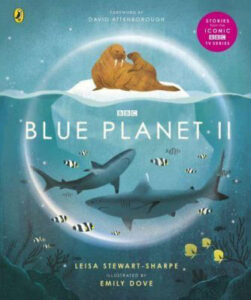
“This is Planet Earth: A beautiful blue marble suspended in a sea of stars. Unlike billions of other planets in the Milky Way, 71 percent of Earth is covered by ocean. In collaboration with BBC Earth and based on the Blue Planet II TV series, this illustrated non-fiction book is designed to help children to dive into the beautiful wilderness beneath the waves and to emphasise the unique importance of ocean life to our planet.

The book is structured as a journey through different ocean settings – starting with The Deep, where we meet the weirdest and most wonderful creatures that look like something from a sci-fi movie but are – the book assures – as real as you or me. From there we move through shimmering coral reefs, to learn about the secret coral cities in shallow, tropical waters that are filled with a delicate ecosystem like no other. The next section covers ‘green seas’ – so-called due to the underwater forests and seagrass meadows that populate them. Interestingly, these areas form some of the most crowded underwater worlds and together they help to feed marine life across our blue planet. Here the book cleverly draws out the interdependent nature of the vastly varied but thoroughly interconnected parts of our blue planet. The author calls these green areas the ‘superheroes’ of the sea, and emphasises that, just like our forests on land, these precious ecosystems need our protection. After this we visit the world of coastlines, where human and ocean worlds collide and the theme of environmental protection is further drawn out. The final stop of the ocean tour is the big blue outback – an oceanic desert that is seemingly empty but is the home to majestic giants like sperm whales and great white sharks. The book ends with a call to action – a plea for ocean heroes to safeguard our seas by heeding the advice of scientists and taking everyday actions that can help to protect our Blue Planet.

With a foreword from David Attenborough and beautiful illustrations by Emily Dove, this informative book offers a fascinating insight into the wonder and fragility of the oceans.

Washed up on Turtle Island as a toddler, Ariki has always felt different from the other children. But there’s somewhere she belongs heart and soul: the sea, where she plays with dolphins, sharks, whales and turtles. One day Ariki catches sight of a strange creature in the water, bigger than any she’s seen before – soon after, an enormous shark tooth is found on the sand. When a group of giant sharks start circling the shore, the island’s fishermen are too afraid to go out to sea. Without fish the people will starve… Can Ariki save the day? An atmospheric chapter book enjoyed by lower KS2.

Subscribe to our newsletter

Your Review

Stone Girl Bone Girl

review

Year group(s) the book is most suitable for:

Year group(s) the book is most suitable for:

Does the book contain anything that teachers would wish to know about before recommending in class (strong language, sensitive topics etc.)?

Does the book contain anything that teachers would wish to know about before recommending in class (strong language, sensitive topics etc.)?

Would you recommend the book for use in primary schools?

yes

Curriculum links (if relevant)

Curriculum links (if relevant)

Any other comments

Any other comments