Recommended children's booklists sorted by age or topic

Publisher: Thames & Hudson Ltd

Fans of Yuval Zommer’s Big Book series may have been guessing which alliterative topic was next to come after poring over the previous Big Book of the Blue, The Big Book of Birds, the Big Book of Bugs and the Big Book of Beasts. I wonder how many – if any – correctly landed on ‘Belonging’ as the theme of the latest large-format hardback in this much-loved collection.

The Big Book of Belonging aims to unite young readers from around the globe under one banner – of belonging to planet Earth. In his foreword, the author says, “The Big Book of Belonging is my way of celebrating the wondrous connections between us humans and the natural world. From the air that we breathe, the food we eat, the adventures we seek, to the joy we experience, you will find a connection to nature in every single part of our being. And the more we can reconnect with nature, the more we can reconnect with ourselves.”

Illustrated in full colour in Yuval Zommer’s iconic style, the book is packed with natural history facts that draw out just how much a part of the natural world humans are. Readers may be surprised to discover that sea otters hold hands just like humans do, or that scientists believe that listening to bird song can boost the hormones in our bodies that help us to concentrate and focus better, and that butterflies also have bedtimes. They’ll learn that just as humans have unique fingerprints, zebras have different stripes, cowrie shells have distinct spots and that no two snowflakes are identical.

As well as a host of interesting facts, readers will come across a range of familiar knowledge too – like how leaves fall from trees in Autumn or how frogs start life as frogspawn. Each page of facts is presented as part of a connection between humans and nature – the leaves fall off trees just as human hair falls out when we brush it or male fallow deer shed and regrow their antlers every year.

The book’s uplifting tone, super-short snippets of facts and full colour illustrations make it suitable for younger children looking to collect information without becoming overhwhelmed as well as for older children looking to dive into the connections between the facts they know. This is a lovely book for sharing and discussing, making it a highly suitable choice for primary classrooms.

The Big Book of Birds is a delight for readers young and old. This visually appealing information book showcases the splendour of all sorts of birds, from flamingoes and kingfishers to red-crowned cranes and hoopoes.

Part of a series that also includes The Big Book of Bugs and The Big Book of the Blue, this is the kind of book that is magnetic in drawing in readers in a primary classroom. Yuval Zommer’s winning formula combines vibrant and quirky illustrations with short bursts of accessible text, united in a large-sized compendium that is perfect to gather round and pore over.

Each double-page spread dives into a different avian-themed question, such as ‘Why can’t some birds fly?’, ‘Is a bald eagle really bald?’ and ‘Why does a bird have a beak instead of lips?’. There is never too much text on each page, but what you find is accessible chunks of information interspersed into each illustrated scene. There are interactive aspects too, with extra elements to spot throughout the book. The illustrations are filled with visual delights for young eyes, with text and images working together to build an understanding of the amazing diversity of the bird family tree as well as well-explained insights into their fascinating behaviours and habitats.

A winner of a book to treasure and share, this is highly recommended for readers across the whole primary school.

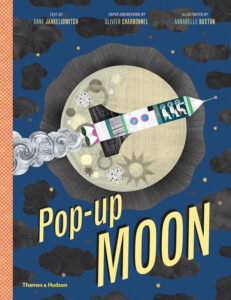
Here at Booksfortopics HQ there were “oohs” and “aahs” aplenty as we pored over this delightful pop-up information book. Packed with impressive pop-ups constructed from intricate paper-engineering, this is a book that brings to life the topic of the solar system and makes it appear to jump off the page.

Through the small chunks of text, well-placed captions, stunning illustrations by Annabelle Buxton and delightful pop-ups by paper engineer Olivier Charbonnel, this book explains how the moon is formed and what the different phases are. Other topics include eclipses, tides, gravity and the moon’s mysterious effects on creatures on Earth. Our favourite page of all covers the first moon landing, including a brilliant pop-up television that makes you feel like you are watching through a real screen.

Impressive and delightful but also informative, this is the kind of non-fiction book that adults and children alike will savour and enjoy. It would make a very popular addition to KS2 classroom libraries or to book collections for the Earth & Space topic.

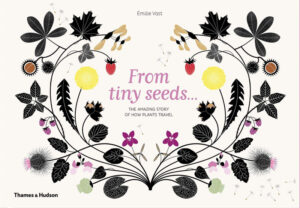
This is a unique non-fiction book exploring the wonderfully varied ways that plants spread their seeds.

With each section dedicated to different types of seed journeys, from explosions to hitchhikers to bouncers, this is the kind of book that makes you stop and think about just how amazing our natural world is.

Ten different seed dispersal methods are covered, each one explained through a wonderfully visual story of its process. Some of the dispersal methods will be familiar to children and they may recognise their own part in the process too, such as blowing dandelion seeds. Other methods will capture children’s interest and amusement, such as the seeds being digested by birds and animals (many young readers will no doubt enjoy the images of the berries passing through animal digestive tracks and returning to the ground in droppings). Some of the methods are rarer, such as the water lily seeds floating along in the water until its fruit rots and the seeds sink to the bottom. The images are striking and explain each step of the process clearly, with the seeds retaining centre position each time as the stars if the show.

This delightful non-fiction book with a storytelling feel and stylised images has something to offer readers at different stages throughout the primary age range.

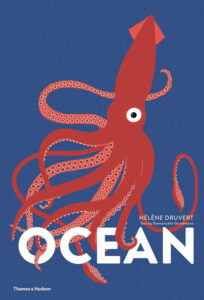
This is a beautiful large-format hardback with laser-cut pages, all about the world of the ocean. It is the kind of book that makes you gasp as you open it up to find delicately cut illustrations shaping the pages like intricate coral reefs or underwater creatures.

From shoreline habitats to the deepest depths of the ocean, this book explores the fascinating array of life to be found in the sea. The pages are striking in their beautiful design – but the book at its heart is an information text designed to take the reader on a journey through the huge variety of habitats under the waves. As well as wildlife, the book also looks at movements of waves, the water cycle, oceanic volcanoes and global warming, offering a comprehensive tour of what you might find if you were to dive into the ocean and travel its depth.

The laser-cut pullouts are cleverly designed to demonstrate the hidden depths to what appears as you look at the ocean – there are ways many more layers beneath what the human eye first sees. Move a reef and there is a whole ecosystem beneath it; lift a pebble and you see crabs and winkles; open up a shark’s body and you see the food chain to which it belongs; pull down the iceberg and see the huge depths revealed at its underwater base. The ocean is full of marvels and here is a book designed to reveal some of its wonders to young readers. The laser-cuts are sumptuously intricate and at times theatrical – just make sure little hands are gentle with them!

A stunning hardback that will delight and inform, highly recommended for curious minds interested in learning about the ocean.

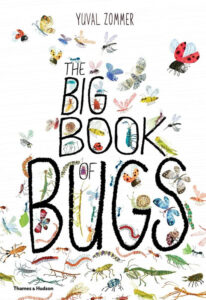
This large-sized informative compendium is the kind of non-fiction that children like to come back to again and again to pore over its pages. Each double-page spread dives into a different bug-themed question, such as ‘How does a butterfly flutter by?’ or ‘Where does the name praying mantis come from?’. The illustrations are stunning and come together with the accessible chunks of text to make wonderful and informative spreads that children love exploring.

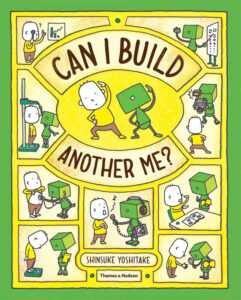
This is a wonderful picturebook about the nature of individuality, perfect for building a classroom or school culture where the uniqueness of each person is celebrated.

The book invites readers on a whimsical journey that follows a young boy’s desire to create a robot clone of himself. However, before he can bring his cloned self to life, he must embark on a quest to uncover the essence of his individuality. What is it, exactly, that makes him who he is?

Younger classes will enjoy imagining what a robot close of themselves might look, act and feel like, while older children can get philosophical about the factors that have come together to make them who they are, or even about the potential ethics of cloning oneself (I’m sure overly busy teachers may also be tempted to wish for a clone!).

Either way, this is a really fun focal point for classrooms and one that works best if children are given enlarged or close-up access to the illustrations.

Non-fictionPicturebook

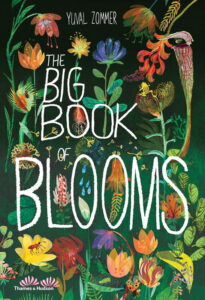
What does a venus fly trap eat?
How strong is a giant water lily?
Does a cactus flower?
The newest addition to Yuval Zommer’s bestselling series answers these questions and more as it introduces young children to all kinds of colourful, carnivorous, weird and wonderful flowering plants from around the world. It opens with introductory spreads on how to be a botanist; how to recognise different types of flowers; the life-cycle of a plant; flower anatomy; and the seven types of animal pollinators including bats, birds and beetles. Subsequent spreads, illustrated within various habitats, are dedicated to specific varieties of plants, including the carnivorous venus flytrap, the giant water lily and the weird and wonderful corpse flower. Readers will enjoy learning about different edible flowers and why flowers are fragrant or colourful, not to mention grisly details about carnivorous and poisonous flowers.

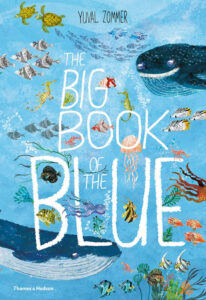
This large-sized informative compendium about ocean life is the kind of non-fiction that children like to come back to again and again to pore over its pages.

Each double-page spread dives into a different sea-themed question, such as ‘Are jellyfish made of jelly?’ or ‘Why do crabs run sideways?’.

There is never too much text on each page, but what you find is accessible chunks of information cleverly interspersed into each ocean scene. The illustrations are stunning and come together to make wonderful spreads that serve as a treasure trove of visual delights for young eyes, as text and pictures work together to build an understanding of underwater habitats and the life they hold.

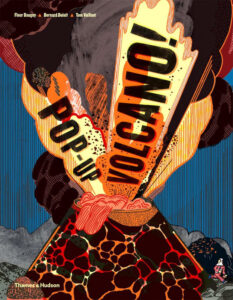
Open this book and step into the fiery world of volcanoes! Find out why they erupt, what scientists can learn from them and which animals call them home. Explore volcanoes at the bottom of the sea, gaze upon the volcanoes of Mars, and travel back in time to find out what happened to the city of Pompeii…

Subscribe to our newsletter

Your Review

Stone Girl Bone Girl

review

Year group(s) the book is most suitable for:

Year group(s) the book is most suitable for:

Does the book contain anything that teachers would wish to know about before recommending in class (strong language, sensitive topics etc.)?

Does the book contain anything that teachers would wish to know about before recommending in class (strong language, sensitive topics etc.)?

Would you recommend the book for use in primary schools?

yes

Curriculum links (if relevant)

Curriculum links (if relevant)

Any other comments

Any other comments