Recommended children's booklists sorted by age or topic

Publisher: Barrington Stoke Ltd

Chapter bookDyslexia-friendly
dyslexia-friendly

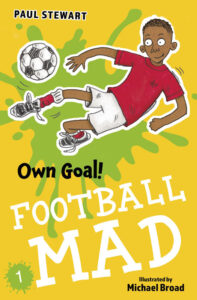
Lewis loves football more than anything else in the world, so he’s thrilled when his talent is spotted by a local coach.

But there are some big obstacles in his way. His mum doesn’t want him to have anything to do with the game because of what happened to his dad on the pitch. And even if Lewis can persuade her to let him give it a go, there’s no way they can afford the kit.

Can Lewis beat the odds to have a chance of following his dream?

Chapter bookDyslexia-friendly
dyslexia-friendly

Everyone’s always telling Will to stop making so much noise. That is, until he meets music teacher Mr Brand. He thinks Will’s not just noisy but that he has a gift and must learn to play the violin. But Will doesn’t feel special . He can never find peace to practice at home and carrying a violin around school is too embarrassing. There’s also the small matter of his stage fright … Can he really become the star Mr Brand believes in? Beloved and award-winning author Anne Fine returns with a touching, musical story of patience, practice and courage. Particularly suitable for struggling, reluctant or dyslexic readers aged 8+.
In Saxon Kent the law says thieves should be executed, and soup made from a stolen sheep has been found in the Medway house. Young Edward takes the blame, but does his father know more than he’s letting on? And can he find a way to save his son from hanging?

Join master storyteller Terry Deary for a trip back in time to Saxon times and an exciting adventure.

Chapter bookDyslexia-friendly
dyslexia-friendly

November 1920. The body of an unknown soldier is to be buried at Westminster Abbey. The war has claimed the lives of thousands of men whose bodies will never make it home, and the Unknown Warrior will represent them all. As hundreds of people crowd to Westminster Abbey, Daisy knows she has to make it to the ceremony. Because although they call the warrior ‘unknown’, she is sure that he is her father…

On 4 November 1922, a young Egyptian boy working on Howard Carter’s archaeological dig in the Valley of the Kings stumbled across a strange piece of rock. On closer inspection it turned out to be a stone step that would lead Carter to a long-lost tomb – and to treasures beyond his wildest dreams.

The tomb belonged to boy pharaoh Tutankhamun and was packed full of priceless artefacts. It had been largely untouched for over 3,000 years and remains one of the most important archaeological discoveries of all time. But did the opening of the tomb trigger a deadly curse?

David Long’s fact-filled account shows how Carter’s amazing discoveries told us so much about life in Ancient Egypt.

Edda lives in the occupied Netherlands in the 1940s. It is a scary time, as German soldiers are taking young men from the streets and forcing them into hard labour in Germany. Edda has already lost an uncle to this brutality, and she has two brothers, one already in hiding to avoid being taken by the Nazis. Edda is also secretly working for the Resistance, at great personal risk. She even wonders if it is worth it, until things in her hometown get much, much worse.

The story of Edda is based on the early life of the film star Audrey Hepburn, who was half British and half Dutch. Whilst fictional, it contains many true events in Audrey Hepburn’s life, including the killing of her uncle, actually mentioned in Anne Frank’s diary. Aged only fifteen Audrey/Edda worked for the Resistance and showed incredible courage in the face of unimaginable cruelty and horror. As the war dragged on, people were slowly starving to death, as well as facing brutality on the streets of their towns. According to the information at the end of the book, more than 22,000 Dutch people died of starvation during this period, something I never knew.

Teachers teaching about World War 2 will find this book an invaluable resource to add to the plethora of books written about the period.

Chapter bookDyslexia-friendly
resources-availabledyslexia-friendlyguided-reading-choice

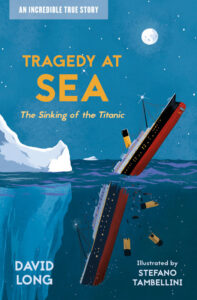
Nearly everyone has heard of Mount Everest. Towering over the Himalayas, it is probably the most famous mountain in the world. Equally, Edmund Hillary and the Sherpa, Tenzing Norgay, became household names when they became the first climbers to reach the top and descend safely again in May 1953. But what of all the climbers who tried and failed? What are the challenges and obstacles facing a team trying to reach the 8,849 metre-high summit of the ‘Peak of Heaven’?

This fascinating book by the award-winning David Long looks at the history of the race to reach the top. It is packed full of fascinating information about the challenges climbers face on the mountain, about the differences between modern climbing equipment and that used in the past, as well as the personal stories behind some of the attempts (he goes into detail about the failed attempt by Mallory and Irving in 1924, as well as the successful Hillary/Norgay expedition).

The illustrations by Stefano Tambellini not only help to set the scene but also provide extra information. The picture comparing Mount Everest to other well-known mountains, for example, is simple yet effective. The book ends on a thought-provoking note – apparently, Everest is now littered with rubbish. At such a high altitude doing a litter pick is dangerous, yet there are teams of intrepid people trying to safeguard Everest’s natural beauty. Even at these high altitudes, humans are still managing to leave their mark, and not always in a good way.

Chapter bookDyslexia-friendly
resources-availabledyslexia-friendly

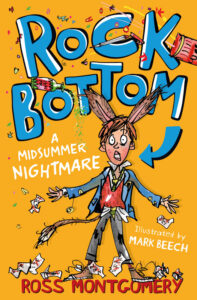
Only a sensible, level head can save the day when disaster strikes on a school trip in this hilariously slapstick introduction to Shakespeare’s The Tempest.

Frank and his drama club are off on a dream school trip to perform The Tempest at a festival. But it turns into a nightmare when their ferry is hit by a terrible storm! Half of the actors wash up on a sandy shore and they can’t believe their eyes.

Is this a desert island? Why is there strange music coming from the forest? Where are the rest of the cast? To Frank, it all sounds strangely like the plot of The Tempest and he hasn’t got a clue how they’re going to get out of this mess. One thing’s for sure … they’ve been tripwrecked!

Chapter bookDyslexia-friendly
resources-availableteachers-favouritedyslexia-friendly

Olaudah Equiano was cruelly snatched from his home in Essaka, Africa, aged only 11, in 1756. Initially taken with his older sister, Ifeoma, they soon became separated. Olaudah never heard from her again. From there he was taken to England, first enduring a long voyage where he was treated horribly, along with the other slaves. He was sold several times before being taken to America to be a house slave. The master was cruel and the slaves were too scared to even speak to each other. Next he was bought by an English naval officer and taken to sea. Here he finally made friends and began to learn to read and write, as well as experiencing many adventures and great peril.

Olaudah’s story does not end there. He is bought and sold a couple more times before he is taken to the West Indies. Here he sees a chance of freedom. It turns out he has a flair for business and becomes his master’s trusted slave. Working hard, he finally earns enough money to buy his freedom and returns to England as a free man. Here he wrote a book about his experiences and worked hard in the campaign against slavery.

This is an incredible true story, vividly brought to life by Catherine Johnson. It would be a brilliant addition to any UKS2 or KS3 classroom, especially if studying slavery. A difficult subject matter sensitively brought to life for children.

Chapter bookDyslexia-friendly
dyslexia-friendly

The queen of historical fiction has done it again! Emma Carroll’s short story about an unlikely friendship and a ghostly garden set in the days before World War One is a mysterious tale that fans of hers will thoroughly enjoy.

Fran lives and works in the grounds of Longbarrow House, where she makes a discovery that deeply unsettles her. The opening line of the book, ‘Fran found the bone in the potato patch’ is a sign of the intriguing story to come.

When Leo, grandson of the owner of Longbarrow House, breaks his leg minutes after Fran’s garden fork breaks the bone in the potato patch, Fran is worried that the two incidents are connected. Further strange coincidences occur and Fran becomes increasingly concerned.

When Leo returns from hospital, Fran is tasked with keeping him company and the two children become friends. Leo is worried about the threat of impending war in Europe and Fran is concerned about the strange coincidences. Together, they explore Longbarrow House and discover the secrets the estate has been hiding. The story edges the reader along and brings tension and suspense with it.

The Ghost Garden is an insight into the lives of children on the eve of World War One. The story reveals details about the daily lives of both the privileged and not so privileged in 1914. We discover their anxieties about (and hopes for) the future and realise that the two children have more similarities than differences when it comes to facing the prospect of war. A short read with dyslexia-friendly text, this is another treat for those readers who enjoyed Letters from the Lighthouse and When We Were Warriors.

Subscribe to our newsletter

Your Review

Stone Girl Bone Girl

review

Year group(s) the book is most suitable for:

Year group(s) the book is most suitable for:

Does the book contain anything that teachers would wish to know about before recommending in class (strong language, sensitive topics etc.)?

Does the book contain anything that teachers would wish to know about before recommending in class (strong language, sensitive topics etc.)?

Would you recommend the book for use in primary schools?

yes

Curriculum links (if relevant)

Curriculum links (if relevant)

Any other comments

Any other comments