Recommended children's booklists sorted by age or topic

Materials

Recommended children’s books about materials

This collection of children’s books about everyday materials will help young readers to learn all about the materials we use in our day-to-day lives, their properties and how we use them.

From small-scale materials in Nano to a whole house in The Mellons Build an Eco House, and from questions like Why Do We Wear Clothes? or Solid, Liquid or Gas?, these stories help children discover the huge range of materials that make up the things around them – while A Planet Full of Plastic and Rubbish? challenge young readers to consider the sustainability and environmental impact of the materials that we use every single day.

Quick links on our Book List: Materials

Add to Favourites
Please login to bookmark Close

Visit our booklists on Amazon

Support independent bookshops

SAVE 20% with Peters

Children's stories about everyday materials

Picturebook
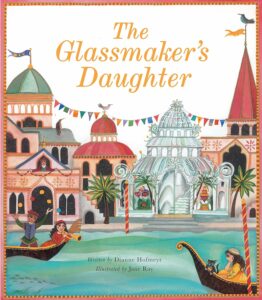
Daniela the glassmaker's daughter is grumpy and never smiles. Her father promises a beautiful glass palace to anyone who can make her laugh. People come from far and wide to try their luck in amusing Daniela. But mask makers, lion tamers and magicians cannot raise a smile from the princess. It is only when a young apprentice makes the first looking glass that Daniela learns to smile – at her own grumpy reflection! This beautiful fable set in sixteenth-century Venice features stunning illustrations from award-winning artist Jane Ray alongside a poetic text.
Picturebook

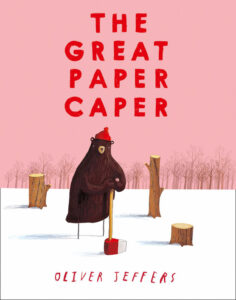
Many people and creatures lived in the forest, sharing its sanctuary. But they began to notice that something was not quite right. Branches were being cut off. So they set out to investigate. Eventually, they discovered Bear as the culprit. He was so determined to win a paper airplane competition and, needing more paper, he used the wood for the paper to practice. The forest community was not entirely without sympathy, but the chopping of trees had to stop and something done to make up for it. After the Bear started planting new trees to replace the old, his new friends perfected the optimum paper plane to enable him to win the competition and all was well. Oliver Jeffers’ simple, effective drawings portray expression on all his characters with just a few strokes of his pen yet add so much to the message of the book.

Children's books about changing materials, chemistry and states of matter

Picturebook Poetry

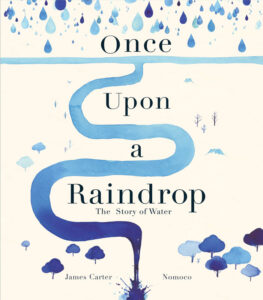
Publishers are spoiling us at the moment with a wealth of non-fiction titles for children that are presented with creativity and a high visual appeal. Once Upon a Raindrop: The Story of Water by James Carter and Nomoco immerses the readers into the wonderful world of water; from the tiny raindrops that drip and drop onto hills to the waves roaring mightily in the oceans and then to the wispy evaporations of steam and clouds.

More than a simple explanation of the water cycle, this book uses gentle and poetic verse to evoke the transient flow of water through its different forms, accompanied by swirling, meandering watercolour illustrations. Sometimes the shape and sizes of the words on the page seamlessly blend with the images to further bring life to the poetry.

The book is certainly informative when it comes to learning about water, but also offers something more. The gentle poetry of the words, the elegant illustrations and the high quality production of the book itself work together to pass on a key message about the beauty and importance of water as a life-giving element.

Non-fiction
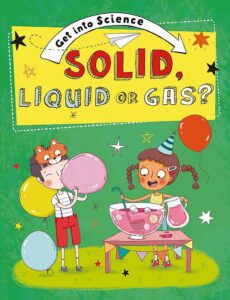
This first science book exploring the science behind materials and matter provides a great foundation for scientific knowledge. From topics such as melting and dissolving to natural or man-made materials, the book has clear information and fun illustrations. It also has plenty of interactivity such as challenges to think about and activities to try.Get into Science is a series of eight books for children aged 6+ that explore the science that surrounds them in their everyday world. Each page is full of things for the reader to notice, talk about and try for themselves. The simple text is accompanied by fun illustrations. Why not discover all the titles: Light and Dark Machines We Use Forces Around Us Full of Energy Solid, Liquid or Gas? The Five Senses Time You and Your Body
Non-fiction
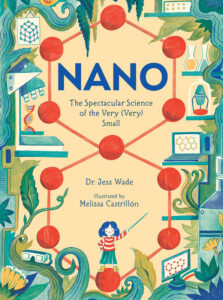
Everything is made from something - but the way we make things, from the materials we use to the science and technology involved, is changing fast. Nano offers a fascinating narrative introduction to this cutting-edge area of STEM, better known by the name "nanotechnology". With words by Dr Jess Wade - a highly skilled physicist and trailblazing campaigner for diversity in STEM fields - and beautiful, dynamic pictures by award-winning artist Melissa Castrillon, this is the perfect book for budding young scientists and engineers.

Children's books about materials and their properties

Non-fiction
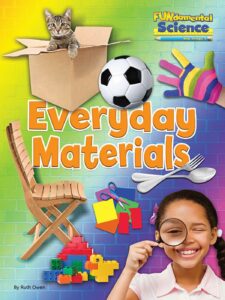
In this title, readers will investigate materials (including wood, metal, plastic, glass, rock and wool) and everyday objects using science. What are trainers, footballs, coins, drink cans and even skyscrapers made of? What properties make different materials suitable for different jobs? And how are paper, steel, glass and rubber made? Look for the download button throughout the book. It shows there are free downloadable worksheets and other resources available for that topic.
Picturebook
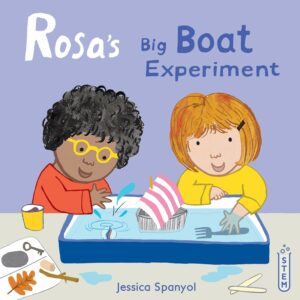
Rosa and her friends want to build boats! But how will they keep them from sinking? Through observation, trial and error, the group of children learn about density. They predict outcomes and make notes about whether they were right! After they have finished experimenting, they use what they have learned to have an exciting boat race!
Non-fiction
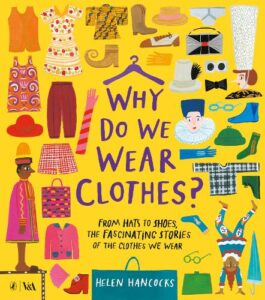
Do you know why a chef's hat has 100 pleats? Or how many ways there are to tie a tie?Packed full of whacky facts and stunning clothes from designers and cultures around the world, as well as glorious illustrations featuring objects from the V&A, this book is a must-have for anyone who has ever wondered why we wear the clothes we do. 

Children's books about building materials

Chapter book

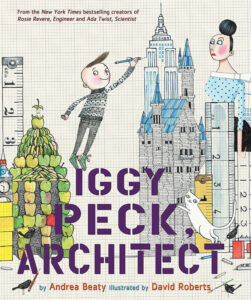
Iggy Peck is a young boy with a passion for building. No matter what materials he has to hand (from apples to nappies), he manages to use them to construct another new amazing creation. When Iggy’s new teacher bans building, Iggy will have to find a way to convince her that his architecture skills are very useful indeed. There is also an accompanying STEM activity book.

Non-fiction

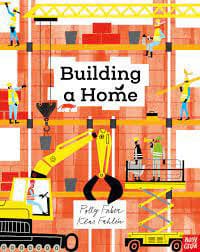
A beautifully illustrated book with real design qualities that even children who are not already interested in cranes or diggers will be fascinated by. Those who do love cranes and diggers will be in raptures as the details of a large-scale building project are explored with real authority.

The lively illustrations are beautifully created, and the small details, such as the bird’s nest on top of the crane and the mysterious cat (or is it a fox?) watching from afar, mean that multiple readings will reveal new things each time. 

The book also has a glossary and a list of tools at the back, which means teachers can use these to teach useful non-fiction reading skills and develop vocabulary. However, this is also a book to be read, enjoyed, talked about and shared by children. I can see it becoming one of the favourite books during reading time, and I daresay it will be included on many children’s present lists.

Picturebook
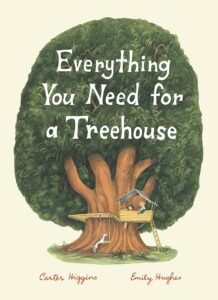
This lyrical text from author Carter Higgins gives life and meaning to all the requisite elements of a treehouse, from time, timber, and rafters to a rope of twisted twine, so you can sprawl out on a limb and slide back down again. Higgins's text, filled with beautiful images and an incredibly readable assonant cadence, captures the universal timelessness of the treehouse and celebrates all the creativity, poignancy, and adventure inherent therein.
Picturebook

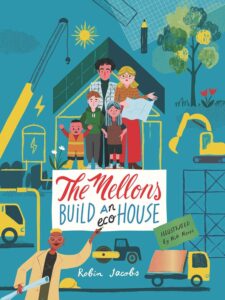
The Mellons are a family of five who live in a small flat and have had enough of not having enough space so decide that they need a bigger family home. They look around some different houses but none of them are quite right so they decide to build their own house. Each family member has a request for something that the new home should have: a study, a big kitchen and even a pool. With the help of architect Masha, they set off creating their dream home, but with a bigger picture in mind – their impact on the environment.

This book follows the journey of designing and building a new house and how this can be done in a more ecological way thinking about each step and its impact on the environment – making it stand out from the array of books about more traditional houses and homes. A range of tradespeople are introduced, who are represented by a range of men and women. At each step, the green way is discussed and how this is better for the environment than the traditional building method – for example using solar panels and a green roof. Every aspect of the building process is examined and made more friendly for the planet.

The book was enjoyable to discover and included interesting facts and lots of technical vocabulary – with enough science to capture older children as well as younger primary pupils who will enjoy the visual information and narrative frame. New topic words are either explained in the text or included in the glossary at the back.

Picturebook
The boy loves his grandmother - a retired prize-winning architect - very dearly. He especially loves to snuggle up and look at photographs of her famous projects and listen to her promises to build him an extraordinary house. When his grandmother passes away, the boy is heartbroken. He looks in her garden at the building materials and sets about to build a new, enormous metal grandmother, who joyfully seizes his hand and takes him on an amazing journey to reach a beautiful house, where he finds the perfect space for grandmother at its heart. A gentle story about loss and ways to celebrate the legacy of those who pass away.

Picturebook

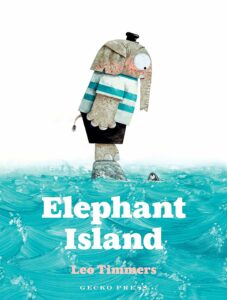
Elephant Island is a peculiar tale!  At the heart of the book is the theme of community. When Elephant’s ship capsizes, he has to resort to inventiveness to fix it. Children will love his quirky approach to problem-solving solving and wild engineering attempts, and the illustrations will be pored over as, with each look, there is something new to spot. Arnold the elephant has a very positive outlook on life and no matter what, he believes that he can fix things. His perseverance and determination result in a home for all where everyone is welcome.

Seemingly aimed at a younger audience but really well suited to the whole primary range, this picture book makes references to The Rime of the Ancient Mariner poem with the line “Alone, alone, all all alone, Alone on a wide wide sea!” The vocabulary used within the story is ambitious ‘salvage’, ‘seafaring’, ‘catastrophic’ and ‘expanding’ for example and so this will lend itself to discussion about the meaning of new words. For these reasons, it is a picture book that would be better placed in an older classroom or, if to be shared with younger children, to be read alongside an adult.

Readers will laugh at Arnold’s unusual approaches to fixing problems – his solutions are never the easy, obvious ones! The pictures contain things to find, things to count and each character is full of expression. This is a great book for sharing and for chatting about. Children will delight in Arnold’s creative contraptions and Leo Timmers’ detailed illustrations.

Picturebook

This delightful book has become an instant favourite. The eye-catching cover gives clues to the reader and after reading, be prepared for your younger readers to begin to build fantastic creations out of boxes. It is a dream story for children (and adults to read!) and most people remember a time when, on a receiving a gift, the child wants to play with the box!

The main character, Meg, is marvellous and feels very special on being the first ‘boxitect’ in her class. When another child joins, who is also a boxitect, this causes competition and resentment as to who is the best. As the story progresses, the message of working together and building on each other’s successes is key, as well as celebrating other children’s achievement. A message of friendship and teamwork is clear.

At the end of the story it, there is a section about ‘Why is cardboard so extraordinary?’ and instructions on how to make a tunnel and a castle. It really was inspirational and the day after reading this as a bedtime story my 5 year old daughter made a robot out of cardboard which she wore over her head and arms- be prepared for this to inspire young crafters!

Children's books about recycling, sustainability and waste

Picturebook

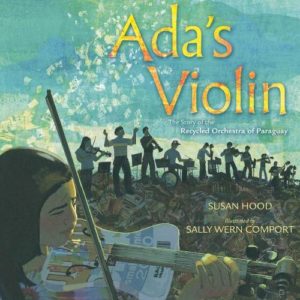
Every now and then you find a picture book that is so much more than just a book with pictures. This is one of those books, telling the true story of the Recycled Orchestra of Paraguay through words and quite breathtaking illustrations. This book is complex enough for older children and deals with extreme poverty as well as the joy of music while the pictures, showing both light and shade, stay in the mind long after reading. The faces of the children linger; the contrasts of colour making everything vivid and snatching you into the book, giving the reader the tiniest glimpse of what life is like in one of the poorest slums on Earth. The problem is solved with the use of rubbish, turning something that is clearly blighting their lives into something of huge benefit. The reader is left with a sense of the enormous ingenuity that must have gone on to recreate the instruments the children needed to play. The very end of the book takes you into reality as the author explains the true story and there is even a photo of the children with their instruments.

This is a remarkable book because it has the scope to be used as the basis for so much different work in schools. The story alone is unusual, the illustrations show notable use of colour and shade. The topic of the book could be used in music or Geography, or recycling topics. I’d never heard of the Recycled Orchestra of Paraguay before, but this book has made me glad to learn that such a wonderful organisation exists.

Non-fiction Picturebook

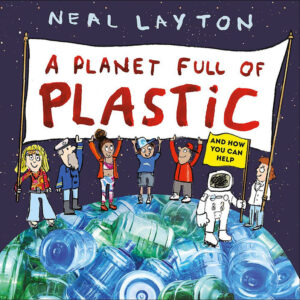
This is an information-packed picture book that draws attention to just how many everyday objects are made of plastic. From plastic straws and food wrapping to ketchup bottles and cat toys, there is no denying that plastic is all around us. The book walks through the history of plastic production and introduces the problem with materials that are not biodegradable. What’s more, through photographs, illustrations and child-friendly diagrams, the author explains that much of the plastic ends up in the ocean in enormous garbage patches (the most famous of which is currently three times the size of France!).

Picturebook

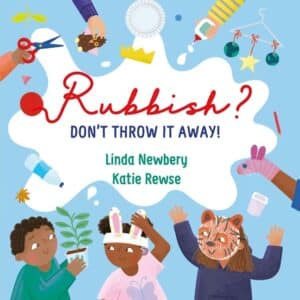
“Rubbish? Don’t Throw it Away” is a delightful, innovative book for early years education in the 21st century. It is a wonderful resource to introduce concepts of recycling and sustainability to children. It’s a story that invites young readers to think differently about the ‘stuff’ around them, fostering an early respect for the environment and teaching the value of resourcefulness and creativity.

Linda Newbury’s narrative skillfully introduces young readers to the Dragonflies Nursery, a group of industrious children who brilliantly transform what most consider ‘trash’ into treasured items. The book’s lively prose is peppered with imaginative ideas, showcasing how everyday waste items can be repurposed and brought to life again. It’s a testament to the power of creativity and problem-solving, underpinned by a clear, essential message about recycling and reducing waste.

Katie Rewse’s vibrant illustrations perfectly complement Newbury’s text, adding depth, character, and life to each page. Each illustration is eye-catching and detailed, offering opportunities to explore and engage with the transformation of pine cones into decorative owls or turning old curtains into amazing costumes.

“Rubbish? Don’t Throw it away” is a must-have addition to any preschool library or classroom. Parents and carers, too, will find the book enjoyable and inspirational. It’s not just about telling children what they can do with their ‘rubbish’ – it’s about sparking their imagination to develop their own ideas. It’s about laying the foundation for a generation that sees not waste but potential, reinforcing that every object, no matter how seemingly trivial, has potential value if approached with creativity and ingenuity.

Picturebook

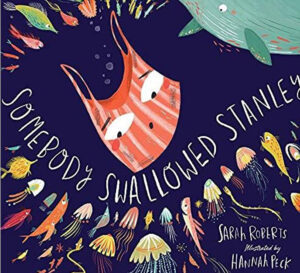
This is a wonderful book that follows the cycle of a mysteriously individual jellyfish-like creature named Stanley as he travels through the ocean. As he meets other sea creatures, differences between him and them start to become apparent – like his two handles and colourful stripes. Various creatures swallow Stanley as he tenaciously continues on his journey until he is found by a human, on the shore, who chooses to put Stanley to much better use. A fun and brightly illustrated picture book with a clear message that plastic does not belong in the sea.

Poetry

This book showcases a James Carter poem about inventions. The rhyming text takes the reader through the range of inventions we now have in our modern world. It is the colourful and vibrant illustrations that jump out at the reader in this book. They complement the rhyming text which focuses on the range and types of inventions from the start of time.

The end pages of this book should not be ignored and could provide an interesting discussion point for predictions about what this book will be about and for trying to make connections between the different items shown.  The font size and text layout guide the reader as it moves in and around the colourful illustrations. Teachers who are focusing on the topic of materials will find lots to explore in the text, particularly thinking about which everyday objects and items are made from – children may not be aware that glass is made from sand for example.

The end of the book has a nod towards the need for recycling the many things we create, and this may be a useful jumping-off point to talk about sustainability. The book also encourages children to be inventive and to create something new out of something old.


Picturebook
A brilliantly topical and delightfully funny picture book from internationally bestselling author M.G. Leonard, which shows children what happens to their plastic toothbrushes after they're thrown away.Children use their toothbrush each morning and evening, and get new ones every few months. That's billions of toothbrushes! What happens to them all when they're no longer needed? And if toothbrushes take thousands of years to break down, what does that mean for our planet?With a fun cast of plastic characters, from pirate-ship bottles to dancing shampoos, and even an inquisitive albatross, The Tale of a Toothbrush is a positive and heart-warming story to help children explore the impact their choices have on our planet.

SAVE 20% with Peters

Visit our booklists on Amazon

Support independent bookshops

Booklists you might also like...

Subscribe to our newsletter

Your Review

Stone Girl Bone Girl

review

Year group(s) the book is most suitable for:

Year group(s) the book is most suitable for:

Does the book contain anything that teachers would wish to know about before recommending in class (strong language, sensitive topics etc.)?

Does the book contain anything that teachers would wish to know about before recommending in class (strong language, sensitive topics etc.)?

Would you recommend the book for use in primary schools?

yes

Curriculum links (if relevant)

Curriculum links (if relevant)

Any other comments

Any other comments