Recommended children's booklists sorted by age or topic

Topic: Y6 50 Recommended Reads

Discover how to train your brain and become the best you can be in this empowering and inclusive guide by the nation’s favourite doctor, Dr Ranj.

If you want to learn how to make the most of YOUR brain, this is the book for you. It doesn’t just explain how the brain works. It’ll teach you how to train your brain to get better at stuff you find difficult. It’ll show you how different people think in different ways and why that makes each person so special. It’ll help you keep your mind happy and healthy. Because when that brilliant brain of yours is in tip-top condition, you can be the BEST version of you.

Emmy is brilliant at the computer game, Illusory Isles. Her avatar is a powerful fire elemental with magma claws and flaming breath. When Emmy’s gaming video gets a front-page feature, thousands of devoted fans flock to watch her battle the ultimate online baddie, the Mulch Queen herself. Life at school is the exact opposite. Emmy is friendless and bullied by Vanessa AKA the Queen of Mean. To Vanessa and her gang, Emmy is a weirdo with bad handwriting, horrible fashion sense and no dad.

But if Emmy can take on the Mulch Queen online, perhaps she can also find a way to take on Vanessa too? Emmy decides to level up and solve this challenge alone. But then Emmy discovers that Mulch Queens and Mean Queens are much easier to face when you have a little help from new friends…

I Go Quiet is the exquisite story of an introverted girl, struggling to find her place in a noisy world. Through the power of books, creativity and imagination, she begins to see possibilities for herself beyond the present, to a future where her voice will finally be heard.

The Murder Most Unladylike books form a series of children’s murder mystery novels written by Robin Stevens. Popular with children aged 9-12, the stories follow the adventures of two schoolgirls who set up their own detective agency.

Fans of the Murder Most Unladylike series enjoy the stories’ unfolding mysteries told through Hazel’s witty case notes. Readers also love the fast-paced plots with clever twists, the character-centred drama and also the 1930s boarding school setting. The stories deal with important themes like friendship, diversity, loyalty and social class against the backdrop of the murder investigations. Additionally, many children enjoy the collectibility of the series with their rainbow-hued covers and sprayed edges.

As with Nizrana Farook’s other books, The Girl Who Lost a Leopard is set on the island of Serendib (the old Persian name for Sri Lanka). In this adventure, we met Selvi, who lives with her mum and who’d rather spend time in the mountains than in school. Her uncle helps the family out but disapproves of Selvi’s lifestyle.

Selvi befriends Lokka, a rare golden leopard who lives in the mountains behind her home. One day on her visit to Lokka, she encounters poachers who are desperate to capture him. While escaping the poachers, Selvi comes across Amir, a boy in her class, who hides her. Can they become friends and work together to save Lokka from the poachers?

This is a story of adventure and friendship. The relationship between Selvi and Amir takes a while to build and shows that friendships take work to succeed. The setting of the Serendib mountains will transport children to a place that many are likely to know very little about and provide an opportunity to introduce them to different lifestyles and cultures.

The issue around animal hunting is interesting to explore and would make the basis for a good class discussion. The relatively short chapters help to keep the story moving at a good pace and make it an easy book to dip in and out of. This will make it all the more appealing for children who are daunted by longer chapters and books.

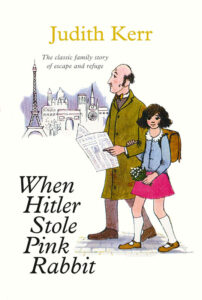
This semi-autobiographical classic, written by the beloved Judith Kerr, tells the story of a Jewish family escaping Germany in the days before the Second World War. The book has become a classic story for Year 5 or 6 children or for primary classes learning about World War 2.

In 1933. Anna is too busy with her schoolwork and tobogganing to listen to the talk of Hitler. But one day, she and her brother Max are rushed out of Germany in alarming secrecy, away from everything they know. Their father is wanted by the Nazis. This is the start of a huge adventure, sometimes frightening, very often funny and always exciting.

Judith Kerr wrote When Hitler Stole Pink Rabbit fifty years ago, based on her own journey, so that her own children would know where she came from and the lengths to which her parents went to keep her and her brother safe. It has gone on to become a beloved classic that is required reading for many children all over the world and is an unforgettable introduction to the real-life impact of the Second World War.

Chapter book

It’s tough fitting in when you’re born to stick out!
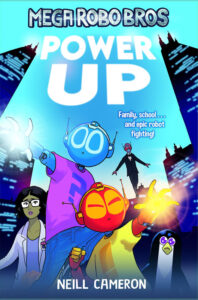
From the moment Stick Boy and his family move to Little Town, there is way more to worry about than being the new kid. There’s a mysterious plot involving Baron Ben’s new Mega Mall, pop star Jonny Vidwire and the highly suspicious HomeBots that are infiltrating every home in town. Can Stick Boy and his friends uncover the evil plan behind it all before it’s too late?

It’s basically the worst school detention ever. When classmates (but not mate-mates) Hallie, Angelo, Gustav and Naira are forced to come to school on a SATURDAY, they think things can’t get much worse. But they’re wrong. Things are about to get seriously scary.

What has dragged their teacher underground? Why do the creepy caretakers keeping humming the tune to Itsy Bitsy Spider? And what horrors lurk in the shadows, getting stronger and meaner every minute . . .? Cut off from help and in danger each time they touch the ground, the gang’s only hope is to work together. But it’s no coincidence that they’re all there on detention. Someone has been watching and plotting and is out for revenge . . .

The life-affirming ‘You are Here,’ on the first page is a wonderful introduction and sets the positive and optimistic tone for the poems to come with the final line; ‘You are Here! You are Here!’ The book is jam-packed with original verse; all of them perfectly written for reading aloud – well suited for both pure enjoyment and also as a base for children’s own poetry within their English lesson. Each poem explores different aspects of a child’s life; from rainy days in ‘Puddle Ocean’ to wandering around a house at night in ‘Tiptoe’. ‘Helping Hands’ touches on the complexity and diversity within each and every family; it really is beautiful to read and savour, while ‘Save You’ would be a really powerful poem to use as part of topic work around conservation. There’s a tone of warmth and wonder in the collection’s everyday observations that encourages the reader to find so many things to enjoy in the mundane moments that they share with those around them.

Themes of inclusion, positivity and seeing the world through the eyes of others weave through the collection as well as a sense of humour and playfulness that sees puzzles and riddles mixed in with the poems. Belonging Street would be a great investment for every Key Stage Two classroom reading area.

A stunningly illustrated tribute for train lovers of all ages, Locomotion celebrates the ingenuity of trains past, present and future.

Subscribe to our newsletter

Your Review

Stone Girl Bone Girl

review

Year group(s) the book is most suitable for:

Year group(s) the book is most suitable for:

Does the book contain anything that teachers would wish to know about before recommending in class (strong language, sensitive topics etc.)?

Does the book contain anything that teachers would wish to know about before recommending in class (strong language, sensitive topics etc.)?

Would you recommend the book for use in primary schools?

yes

Curriculum links (if relevant)

Curriculum links (if relevant)

Any other comments

Any other comments