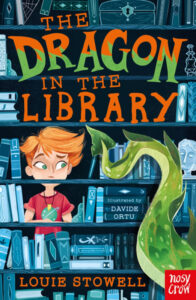
The Dragon In The Library is a thoroughly enjoyable story that combines libraries, dragons, wizards and aliens with some very pertinent messages of friendship, inclusion and diversity. The story focuses on three friends (Kit, Josh & Alita) and their quest to stop evil businessman Mr Salt from expanding his property empire.
With a thoroughly engaging plot and a likeable and diverse set of characters, this book would sit perfectly in a lower KS2 classroom. The book contains a broad range of characters from a mix of ethnic backgrounds. With a short haired female protagonist who loves getting muddy, Stowell has shown readers that they can be whatever and whoever they want to be and provided a wonderful role model in Kit to highlight just this.
There is a heavy emphasis on the magic of books and the wonderful (and often crazy) places they can take you, an important message to portray to readers. With library closures aplenty across the UK, this book serves to highlight just what wonderful places they can be and adds a little intrigue into just what might be found if you pay them a visit!
A strong mention must go to Davide Ortu, illustrator of The Dragon In The Library. His wonderful illustrations are showered throughout the book and really bring the characters and settings to life.
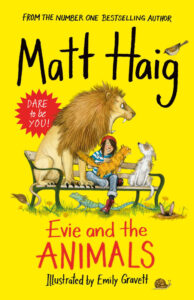
Evie and the Animals is a delightful book with a high appeal to readers who love animals as well as fans of mystery. Matt Haig weaves a plot that explores family dynamics, the importance of friendship and listening to the feelings of others, including animals.
Evie Trench is not a normal girl. She has the ‘talent’ of being able to hear animals and talk to them through mind-chat. While she loves talking to all sorts of animals and helping them whenever she can, she has to do it in secret. Her dad, a hard-working but reserved man, does not want anyone knowing about her talent. He is still too traumatised by the death of Evie’s mum, who also had the talent, and wants to keep Evie safe.
As the tale develops, we learn more about Evie and the people in her life and her friendships, good and bad. We also meet the menacing Mortimer J Mortimer – the villain of the story. Mortimer also shares the talent for communicating with animals, but unlike Evie he does not use it for good. What follows is a thrilling adventure as Evie attempts to escape from Mortimer’s control and rescue both her family and all the animals he is using to gain power.
This is an enjoyable story that is able to open discussions around emotions, bereavement, conservation and animal cruelty. The illustrations by Emily Gravett are interspersed throughout and beautifully bring the various animals and their emotions to life. A winner of a book for fans of The Truth Pixie and The Boy Called Christmas series who enjoy Haig’s brand of gently humorous, poignant and child-centred prose.
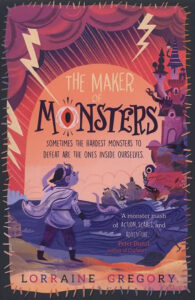
A wild, romping adventure with nods to Frankenstein, The Maker of Monsters is a joyfully imaginative children’s story with very human themes of friendship and acceptance at its heart.
Young Brat lives as a servant in Lord Macawber’s castle. Having been on the castle’s remote island ever since he was washed ashore as an orphaned baby, Brat is quite used to his master’s strange experiments. Without human friends around, Brat’s only company is Lord Macawber’s army of ‘creations’; stitched-together creatures brought to life through the act of necromancy. Most of the monsters are terrifyingly dangerous and locked in cages on the various floors of the castle, but Brat forms loyal friendships with a couple of the more placid mini monsters.
When Lord Macawber brings to life his most fearsome monster ever and intends to send his army on a vengeful attack of a nearby city, it falls to Brat to find a way to warn and save the inhabitants. What follows is a fast-paced adventure as Brat races against the clock (and against a whole heap of other obstacles, including prejudice, imprisonment and a city that creates outcasts at every opportunity) to stop the monsters wreaking havoc.
I enjoyed the mix of magic and mayhem, the harmless humour and the breadth of imagination poured into the characters and setting. But the real heart of the story is Brat’s own journey to face the metaphorical monsters within himself. Never having been met with true acceptance or kindness before, Brat’s story demonstrates the transformative power of positive human connection for both individuals and wider society.
A fun, gothic adventure filled with thrills and imagination, The Maker of Monsters will surely be a winner for readers in Years 3-6.
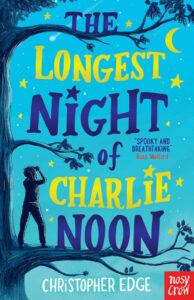
Atmospheric, intelligent and thought-provoking, this is the kind of story that loves to surprise you every time you feel sure you have a handle on it. At less than 200 pages, it is a quick but intriguing read in a similar format to Edge’s other recent science-themed books like The Infinite Lives of Maisie Day and The Jamie Drake Equation.
The initial premise of the plot is a basic one: three children get lost in the woods and desperately try to help each other to find their way home before the legendary Old Crony, whom they say eats children, makes an appearance.
Tapping into the natural world around them and putting their code-cracking know-how to good use, the children find clues in the rhythm of birdsong and shapes of the sticks on the floor. As the story unfolds, so do a series of surprises and layers of philosophical depth as metaphysics are questioned and explored in a child-friendly manner. Suspense builds with every page, and the usual rules of time seem to become increasingly distorted as the story progresses.
The Longest Night of Charlie Noon is highly recommendable to readers who like their stories served with plenty of intrigue, puzzles to solve and a good dose of metaphysics thrown in.
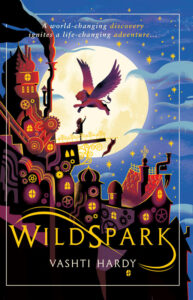
Fans of Brightstorm will be delighted to see a more challenging offering from Vashti Hardy. I just loved being immersed in the world of Wildspark, with imaginary worlds that are as inventive as they are thrilling.
Prue Haywood is an inventive and curious girl who lives on a remote farm. Her aptitude for engineering gains her entry into the exciting world of Medlock and its secretive guild of inventors – but only because she poses as her brother, who really passed away not too long before. I loved following Prue’s journey on the Gigantrak train into the great metal city of Medlock and I read on with wide eyes, as Prue – a farm girl – acclimatises to the bright amber lights and towering structures of the city and the advanced systems and technologies waiting for her at the guild. With the brightest minds developing ways of placing human spirits into animal-like machines, the work of the guild is completely alluring for budding young inventors like Prue.
Prue is driven by a desire to bring her brother to life again, but it’s her warm nature, natural creativity and loyalty to friends and family that really help her the most as she navigates the complex issues of using technology responsibly. The narrative provides plenty to think about; many of the issues raised will resonate with readers growing up in the current generation that’s used to the pace of technologies advancing faster than the Gigantrak itself. I’m sure the book will raise fascinating discussions in many classrooms.
review
Year group(s) the book is most suitable for:
Does the book contain anything that teachers would wish to know about before recommending in class (strong language, sensitive topics etc.)?
Would you recommend the book for use in primary schools?
yes
Curriculum links (if relevant)
Any other comments
Any other comments