Recommended children's booklists sorted by age or topic

Topic: Maths

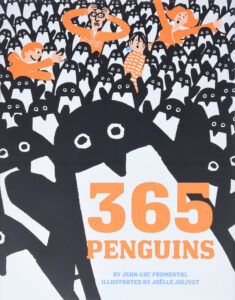
A funny story about a family who, on 1st January, start receiving a penguin each day through the post. There are mathematical challenges along the way that are suitable from Year 2 up to Year 6. Children will love listening to the story and pausing to calculate questions on a whiteboard too. With quirky and fun illustrations, this will quickly become a class favourite.

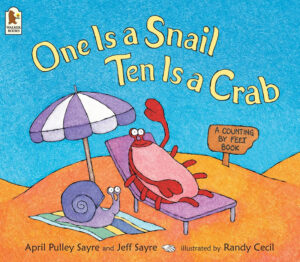
One is a snail, two is a human, three is a snail and a human… The classroom possibilities are endless for this book, from simple counting activities all the way up to algebraic equations. A fun maths book that is accessible to all and a popular choice for independent reading time in KS1.

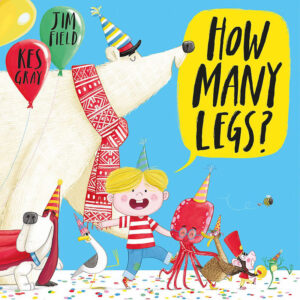
This fantastic author-illustrator duo always bring laughter into the classroom with their books and this time you get a helping of maths at the same time.

Starting simply, the reader is asked to add different numbers of animal legs. The difficulty level increases as the book progresses and children love comparing their results at the end (with big cheers from those who get it correct).

A brilliant maths-themed picturebook with hilarious animal characters, perfect for KS1.

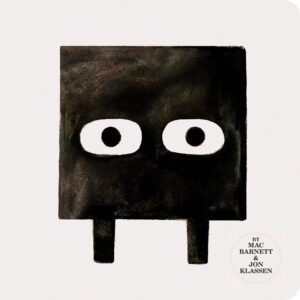
From the award-winning team behind Sam and Dave Dig a Hole, and illustrated by Jon Klassen, the Kate Greenaway-winning creator of This Is Not My Hat and I Want My Hat Back, comes the first tale in an exciting trilogy.

Meet Triangle. He is going to play a sneaky trick on his friend, Square. Or so Triangle thinks… Visually stunning and full of wry humour, here is a perfectly-paced treat that flips the traditional concept book, and approaches it from a whole new angle.

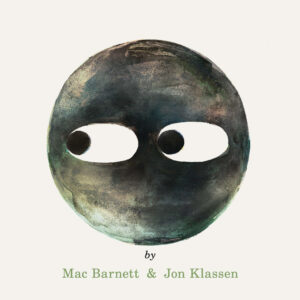
Every day, Square brings a block out of his cave and pushes it up a steep hill. This is his work. When Circle floats by, she declares Square a genius, a sculptor! “This is a wonderful statue,” she says. “It looks just like you!” But now Circle wants a sculpture of her own, a circle! Will the genius manage to create one? Even accidentally?

There are three separate books in this trilogy of sublimely illustrated picture books where the main characters are shapes; Triangle, Square and Circle. Offering a story-based opportunity to explore shapes and discuss properties, each book develops the relationship between the shapes. The trilogy ends on a cliff hanger, with a mysterious shape appearing in the shadows but it is never revealed what it is. Children will love sharing their theories about the mystery shape and the stories provide a fantastic opportunity to assess understanding of shape properties and related vocabulary.

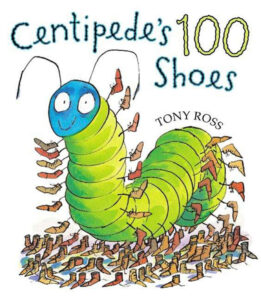
A funny tale of a centipede who gets sore feet and needs shoes and socks to help with his problem. Having always thought he had 100 feet, Centipede eventually realises that he doesn’t have that many. In the end he gives up on the footwear and redistributes them to his lesser-footed friends. This would be a great book to look at doubling and halving (pairs of shoes) or sharing (look at how many of his shoes he could give to various creatures).

A simple counting story from 1 – 10 that is written in the style of a Caribbean dialect, with stunning illustrations that will quickly grab the attention of young readers. This rhyming book written by much-loved poet Valerie Bloom introduces basic counting as well as showcasing a number of different fruits from the Caribbean. There is a glossary at the end of the book that explains the new words that readers may have encountered in the story.

Non-fictionPicturebook

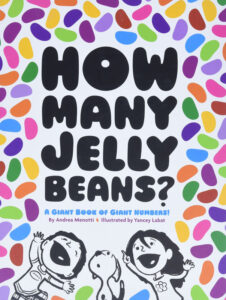
This book is full of mind-blowing facts that readers young and old will find astounding, offering interesting context to the complex topic of time as well as distance and world history. It could be used across KS1 and KS2, either being used as a book to enjoy as a read-aloud and talk about the amazing facts or to delve deeper into each page and work through some of the related calculations.

Subscribe to our newsletter

Your Review

Stone Girl Bone Girl

review

Year group(s) the book is most suitable for:

Year group(s) the book is most suitable for:

Does the book contain anything that teachers would wish to know about before recommending in class (strong language, sensitive topics etc.)?

Does the book contain anything that teachers would wish to know about before recommending in class (strong language, sensitive topics etc.)?

Would you recommend the book for use in primary schools?

yes

Curriculum links (if relevant)

Curriculum links (if relevant)

Any other comments

Any other comments