Recommended children's booklists sorted by age or topic

Topic: Growing Plants KS1

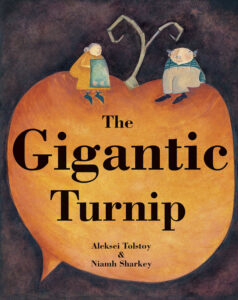
This hilarious retelling of the classic Russian tale about a farmer whose turnip is impossible to pull from the ground uses simple vocabulary and is ideal for reading aloud. Its cumulative theme will soon have young readers gleefully joining in, and Irish artist Niamh Sharkey’s wonderfully quirky illustrations will delight and fascinate all ages.

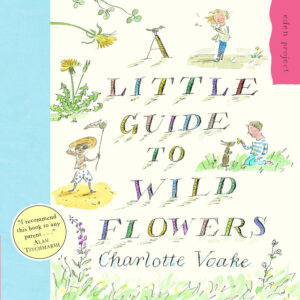
Learn how to identify different wild flowers and find out more about what is growing in your local area. The informative guide is accompanied by watercolour illustrations and is a good choice of book if you want to get out and about to do some plant-spotting.

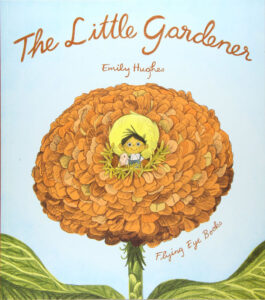
A beautifully illustrated story about a very tiny boy who works hard to tend to a struggling garden. The garden is wild and unruly and the boy works with persistence to try and make something beautiful grow there.

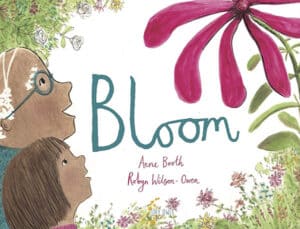
There was once a beautiful flower and a little girl who loved it. She talked to it every morning on her way to school. The owner of the flower shouted at her. The next day, the flower did not open. The angry man didn’t understand. He tried watering it. He tried giving it shade and he tried talking to it. He told it how wonderful he was, how important his job was and how lonely he felt. But it still refused to open. So, he asked the little girl. “Why don’t you tell it how wonderful it is and how much you love it?” she said. As he did so, his own heart filled with love. And the flower bloomed.

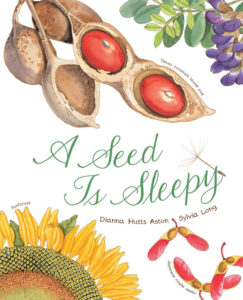
This beautifully illustrated non-fiction text showcases how amazing seeds are. Each page shows how different types of seeds are perfectly adapted to survive, spread and grow into amazing plants. The text is poetic and the botanical illustrations are beautiful and detailed. If it never occurred to you to appreciate how amazing seeds can be, it will after reading this!

Picturebook

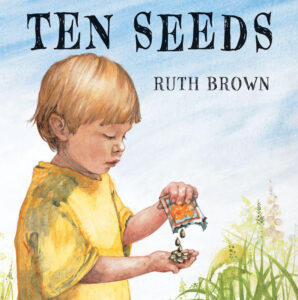
A simple story to introduce the idea of seed dispersal and life cycles. It tells the story of ten seeds, only one of which survives to grow into a lovely sunflower and produces new seeds to start the cycle again. The illustrations are full of detail and the text is an accessible introduction to seed science for young children.

This non-fiction book introduces the parts of a plant for KS1 readers. Learn all about common wild and garden plants, including flowering plants, vegetables and trees. Investigate the basic structure of plants (including roots, stems, trunks, branches, leaves, flowers, petals and fruit). This series covers theNational Curriculum programme of study for science at Key Stage 1.

Picturebook
teachers-favourite

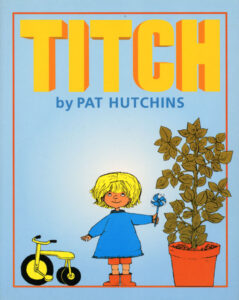
It’s not easy being the smallest in the family, like Titch. But Titch soon discovers that even something as tiny as a little seed has the potential to grow into a plant that is very big indeed. Titch is a story for anyone who knows what it is like to feel small.

Non-fictionPicturebook

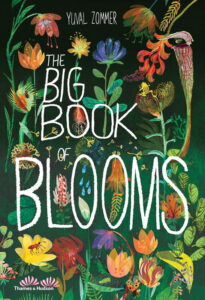
What does a venus fly trap eat?
How strong is a giant water lily?
Does a cactus flower?
The newest addition to Yuval Zommer’s bestselling series answers these questions and more as it introduces young children to all kinds of colourful, carnivorous, weird and wonderful flowering plants from around the world. It opens with introductory spreads on how to be a botanist; how to recognise different types of flowers; the life-cycle of a plant; flower anatomy; and the seven types of animal pollinators including bats, birds and beetles. Subsequent spreads, illustrated within various habitats, are dedicated to specific varieties of plants, including the carnivorous venus flytrap, the giant water lily and the weird and wonderful corpse flower. Readers will enjoy learning about different edible flowers and why flowers are fragrant or colourful, not to mention grisly details about carnivorous and poisonous flowers.

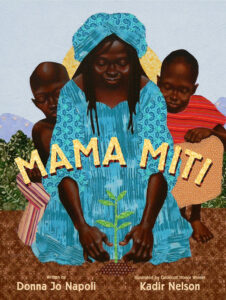
A picturebook telling the true story of Wangari Maathai, who who encouraged Kenyan women to plant trees to improve their lives and their environment. In time, the women used the branches from their trees to fence their animals, the leaves to ripen their bananas and the fruit to feed their families. As the planting movement spread, slowly the deforested Kenyan landscape became green with trees again. Today, more than 30 million trees have been planted throughout Mama Miti’s native Kenya, and in 2004 she became the first African woman to win the Nobel Peace Prize. Wangari Muta Maathai has changed Kenya tree by tree-and with each page turned, children will realize the power of planting trees as well as their own ability to positively impact the future.

Subscribe to our newsletter

Your Review

Stone Girl Bone Girl

review

Year group(s) the book is most suitable for:

Year group(s) the book is most suitable for:

Does the book contain anything that teachers would wish to know about before recommending in class (strong language, sensitive topics etc.)?

Does the book contain anything that teachers would wish to know about before recommending in class (strong language, sensitive topics etc.)?

Would you recommend the book for use in primary schools?

yes

Curriculum links (if relevant)

Curriculum links (if relevant)

Any other comments

Any other comments