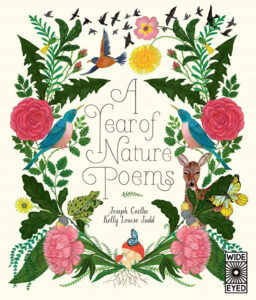
This beautiful poetry anthology that includes a new nature poem for every month of the year is perfectly pitched for young readers to explore the power of nature through Coelho’s highly accessible verses.
The collection of 12 poems contains a mix of types of poetry, each one exploring the poet’s own experiences and interactions with a different aspect of nature associated with its linked month. February’s poem, for example, explores the simple joys of spotting frogspawn in a pond tempered with concerns about their decline (“We’d watch the full stop grow/on an unwritten sentence,/ would our hopes hop?”). March’s list poem celebrates the diversity of daffodil types while August’s poem explores the memorable experiences of scrumping for fruit with friends. December’s poem, meanwhile, reflects on the way in which unique snowflakes come together to form an all-consuming blanket of snow.
The book is structured into monthly sections and the poems accompanied by beautiful illustrations that celebrate the beauty of the natural world and changing seasons.
The poems are beautifully illustrated by Kelly Louise Judd, with colours and patterns drawn out to reflect each poem’s seasonal imagery. For teachers, finding a place for this book on your desk will provide a quick and easy way of inspiring pupils with a taste of poetry each month as well as an opportunity to grapple with the rich vocabulary and layers of meaning packed into each poem. I would recommend the collection across the whole primary age range.
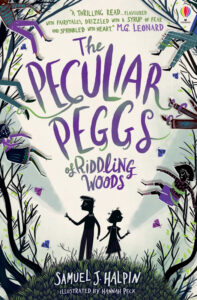
I always love a story with a twisted fairy tale element and Samuel J Halpin’s The Peculiar Peggs of Riddling Woods, with its intricately imaged magical realism, is 100% my kind of book. Atmospheric and wholly imaginative, Halpin’s superb storytelling had me charmed from start to finish.
When Poppy visits her grandmother in the town of Suds, she quickly realises that something peculiar is going on – from stories of disappearing children, to old wives’ tales about never dusting the window sills, to the dark and spooky Riddling Woods on the edge of the town.
Together with her new friend Erasmus, Poppy sets about to get to the heart to the town’s secrets. Along the way, the pair (whose friendship is charming and brings a real warmth to the story) have to navigate gritty real-life issues such as Grandmother’s poor health, Poppy’s own grief at the death of her mother and an unpleasant experience of school bullying. On top of everything else, Poppy can’t seem to shake from her mind the old local legends about the witch-like Peculiar Peggs that reside in an old mill near the town, preying on unsuspecting children.
Brilliantly told, this is an enjoyable story with the perfect balance of darkness and light to make it thrilling without being too scary for children in KS2. In a setting where nothing is at it seems, readers will relish the intrigue and find themselves deeply immersed in this world of dark magic and mystery.
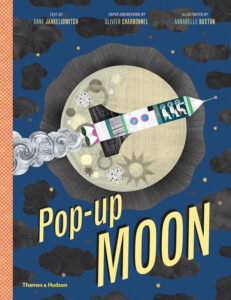
Here at Booksfortopics HQ there were “oohs” and “aahs” aplenty as we pored over this delightful pop-up information book. Packed with impressive pop-ups constructed from intricate paper-engineering, this is a book that brings to life the topic of the solar system and makes it appear to jump off the page.
Through the small chunks of text, well-placed captions, stunning illustrations by Annabelle Buxton and delightful pop-ups by paper engineer Olivier Charbonnel, this book explains how the moon is formed and what the different phases are. Other topics include eclipses, tides, gravity and the moon’s mysterious effects on creatures on Earth. Our favourite page of all covers the first moon landing, including a brilliant pop-up television that makes you feel like you are watching through a real screen.
Impressive and delightful but also informative, this is the kind of non-fiction book that adults and children alike will savour and enjoy. It would make a very popular addition to KS2 classroom libraries or to book collections for the Earth & Space topic.
review
Year group(s) the book is most suitable for:
Does the book contain anything that teachers would wish to know about before recommending in class (strong language, sensitive topics etc.)?
Would you recommend the book for use in primary schools?
yes
Curriculum links (if relevant)
Any other comments
Any other comments