Recommended children's booklists sorted by age or topic

Publisher: Michael O'Mara Books Ltd

This Book is Full of Brains is an amazing resource to understand more about our amazing brains. It is full of exercises and experiments that children can undertake to understand the brain and how it works.

The book is broken down into a set of logical chapters that cover how the brain works, different parts of the brain, how our brains compare to animal brains and about the ‘brains’ of robots and computers.

Each chapter is full of fun facts, interesting science knowledge made accessible to children and a range of illustrations to support the information being shared.

The book does not shy away from specific scientific language, including the different parts of the brain, but it explains it all in a way that children can understand. The ‘try it at home’ sections are a key feature of the book, giving practical activities for children to try to test out their brain or to apply the knowledge acquired within each chapter. There are lots of real-life examples and comparisons so that children can gain a deeper understanding of some trickier concepts.

This book is ideal for any science fan.

Reviewer: Kathryn Gilbert

Often young children find it difficult to put big emotions into words and even more difficult to know what to do to help themselves. Little Unicorn is Angry is part of a new series that explores emotional literacy through the character of a unicorn with a mane that changes colour with his different feelings. The illustrated stories are appealing, colourful and well-pitched for children in early years classrooms.

Little Unicorn loves playing with his toys but sometimes things make him bubble up with anger, like when it is time to stop playing and get in (or out of) the bath or when Daddy refuses to carry him all the way to school and expects him to walk. Little Unicorn feels like a big, black stormcloud has landed inside him. In response, Little Unicorn learns to try a calming breathing exercise and encourages young readers to join in too.

My own young children found Little Unicorn very easy to identify with (the bathtime scene is all too familiar) and loved listening to his stories. The calming breathing exercises are a great tool to learn but even more powerful is the way different emotions are named and defined using a combination of story context, different colours and weather clouds.

This is a promising new series and an excellent tool for developing emotional literacy. Also currently available in the series is Little Unicorn is Sad.

If you’ve ever wanted to know what a panda does all day long, how your heart manages to shift all that blood around your body or what makes a rainbow shine, you’ve come to the right book.

A Day in the Life of a Poo, a Gnu and You features the answers to all of these questions and many more, all told in a super-fun comic book format in three awesome sections: Human Body, Animal Kingdom and Earth and Science. A Day in the Life… is packed with facts, laughs and amazing illustrations you can dive into all day long.

Meet your grumpy liver that has to do practically EVERYTHING; your trusty hands that are very, well, handy; the spiky porcupines ready to charge; lonely Mars rovers abandoned on the Red Planet; raging tornadoes ready to rip through the pages of the book and bubbly volcanoes ready to blow.

All entries are told in the fun, friendly and informative style of Mike Barfield, and are brought to life by the colour-explosion of Jess Bradley’s awesome illustrations.

This colourful, cartoon-style reference book brings history to life with humour and fun. Following on from the enormous success of its award-winning predecessor ‘A Day in the Life of a Poo, a Gnu and You‘, this book is packed full of information and facts, presented in an entertaining comic style that is a joy to read.

The book is divided into three main sections – Ancient History, The Middle Ages, and The Modern Age. Within each section, relevant ‘day in the life’ comics describes certain aspects of history. We learn about the typical day of a Neanderthal, an Inca Farmer, and a Gladiator, as well as the more unexpected daily routines of a wheel, a Samurai sword, and a stick of chalk!

Additional ‘bigger picture’ pages give extra details and more in-depth information – for example on Civil Rights, the Terracotta Army, and the world map. ‘Secret Diaries’ provides a wider viewpoint over a larger timescale – we find out from Isaac Newton’s cat that he got stuck in an apple tree, dislodging one of the fruits; The diary of a wooden board from Leonardo da Vinci’s studio stretches over four hundred years and sees the board end up in an art gallery in Paris. ‘Newsflashes’ are interspersed throughout the book and give more context to the ‘days in the life’ and ‘secret diaries’ by filling you in on what else was happening in the world at the time, and there is also a world map and a glossary for easy reference.

Readers will enjoy the variety of historical information, which feels like a balanced view of different areas of the globe. This is a great book to sit and read individually, or to dip into when exploring related topics.

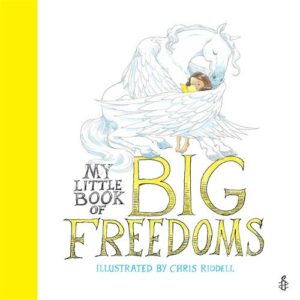
This is an inspiring picture book by Chris Riddell, former Children’s Laureate. It contains drawings that encapsulate the freedoms and liberties people enjoy every day in Britain, but often take for granted. Each freedom is taken from the Human Rights Act and simplified as: life, protection, freedom, safety, fairness, justice, family, belief, thought, togetherness, love, solidarity, ownership, knowledge, hope and mercy. My Little Book of Big Freedoms is an excellent stimulus for the whole primary age range to reflect on the everyday liberties and protections that we often take for granted.

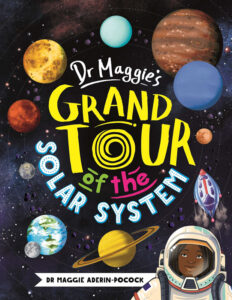
This mind-blowing book invites readers to join BBC presenter and renowned space scientist Dr Maggie Aderin-Pocock (MBE) on an epic journey through the Solar System – visiting planets, moons, asteroids and satellites, and travelling to places where no human has been before.

Along the way, kids can discover how we could live on Mars, learn about the hunt for a mysterious super-Earth, have a snowball fight on Mercury, climb the tallest mountain in the Solar System and much, much more. From spotting solar flares on the Sun to exploring objects at the edge of the icy Oort Cloud, this fun, action-packed title leaves no question unanswered and no meteorite unturned.

Subscribe to our newsletter

Your Review

Stone Girl Bone Girl

review

Year group(s) the book is most suitable for:

Year group(s) the book is most suitable for:

Does the book contain anything that teachers would wish to know about before recommending in class (strong language, sensitive topics etc.)?

Does the book contain anything that teachers would wish to know about before recommending in class (strong language, sensitive topics etc.)?

Would you recommend the book for use in primary schools?

yes

Curriculum links (if relevant)

Curriculum links (if relevant)

Any other comments

Any other comments