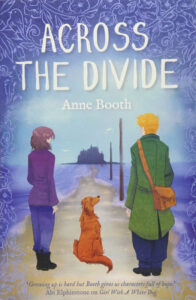
Across the Divide is a contemplative story about war and pacifism, about making a stand and about seeing different viewpoints. The story explores what happens when people with dissimilar experiences and viewpoints find a way to listen to each other’s voices and seeks ways to progress based on respectfully accepting difference and finding where commonality lies.
The main character, Olivia, finds herself in the centre of bitter arguments and feels caught between sides. Her mum is a peace activist and her grandfather is a vicar who used to serve in the army. When the opening of an army cadet unit is proposed at Olivia’s school, everyone seems to have strong opinions and tension quickly mounts. Olivia feels like she is able to see different sides of the argument and can sympathise with those making a stand for either cause. Before she knows it, things have spiralled out of control and Olivia’s Mum is arrested for leading a pacifist protest against the army base.
With her grandparents away on holiday and her mum in custody, Olivia has no choice but to go and stay with her estranged father on the island of Lindisfarne. There is an almost ethereal quality to the beautiful landscape on Lindisfarne and its timeless remoteness gives Olivia plenty of space to think about the different viewpoints dividing her community. Olivia meets William, an old-fashioned and mysterious-seeming boy who lives on the island. William can relate to the way Olivia is wrestling with different ideas about war and pacifism and in talking together the pair help each other to find their own voices and look for a way forward.
In Across the Divide Anne Booth has masterfully crafted a narrative that is deeply contemplative and one that allows different viewpoints to be heard without directing what the reader should conclude. Through Olivia’s story and her interactions with friends and family, the narrative gently depicts how young people can be powerful in their capabilities to stand up for their beliefs and to be instrumental in bringing about positive change in society.
review
Year group(s) the book is most suitable for:
Does the book contain anything that teachers would wish to know about before recommending in class (strong language, sensitive topics etc.)?
Would you recommend the book for use in primary schools?
yes
Curriculum links (if relevant)
Any other comments
Any other comments