Recommended children's booklists sorted by age or topic

Topic: Teachers' Favourites (Winners)

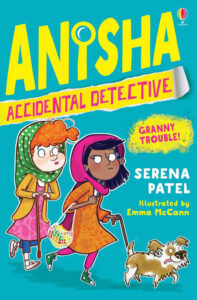
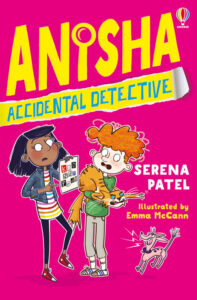
This is a delightful book celebrating family and friendships and is part of a very popular series. Anisha is a funny and resourceful character, whose love of STEM and eye for detail makes her the perfect detective in this humorous series of mysteries.  Anisha has an extended family that proves to be strong and supportive when things go wrong. There are authentic cultural references exploring Anisha’s Indian heritage, particularly around food and family.

The illustrations by Emma McCann help to reflect the humour in the story and the text is often broken up with lists and diagrams, making the book particularly appealing to children who may be daunted when faced with full pages of text. 

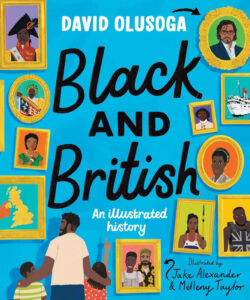
This new illustrated children’s edition of David Olusoga’s account of Black British history is an essential book for schools – not only as an accessible and informative non-fiction read for KS2, but also as a book that I would thoroughly recommend for improving primary teachers’ own historical subject knowledge and especially those with input into their school’s curriculum design. As expressed perfectly by Lavinya Stennett (CEO of the Black Curriculum) in the Afterword, ‘This book is a testimony to the rich experiences of Black people of Britain in different periods of our history, and a reminder of the dearth of Black history in our curriculums.’

In the book, Olusoga explains the overlooked history of Black people in Britain from Roman times to the present day. Readers may be surprised to imagine the multiculturally diverse make-up of Roman Britain – and indeed to question why sources of history in primary schools may paint a historically misrepresentative picture of Roman society. Equally interesting is the development of notions of race throughout the periods of history, as the book walks chronologically through key eras. Did you know that it was only during the time of James I that the term ‘white’ was used as a description of racial identity, or that long after the abolition of slavery, the Victorians were propagating their own racist theories to justify profiting from slave-powered commerce?

The new illustrated version adds an impressive visual element with full-colour illustrations, maps, portrait galleries, timelines, and photographs. This edition makes the history behind the book accessible to a younger audience still and makes for a highly recommendable and informative non-fiction read.

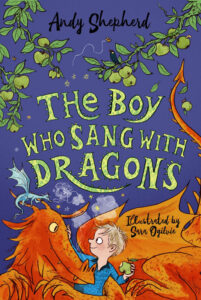
Here at BooksForTopics HQ, we’ve been fans of this super series since we were first charmed by Tomas and his dragon-tree in the first book. Now, in book 5, the series draws to a close, but we’re happy to say that this final instalment provides the perfect ending to Tomas’ adventures.

Five books into the series, Tomas is quite the expert when it comes to dealing with dragons. Having nursed the baby dragons in secret, learned to deal with exploding poo, figured out top tips to hide scorch marks and worked out what to do with friends that want their own dragons too, you’d think that Tomas has everything sussed by now. There’s just one last piece of the dragon-shaped puzzle to fall into place – this time involving a new friend with long-standing links to the dragons. As ever, Tomas’ beloved Grandad is never far away with some toffee, a listening ear and a few words of wisdom to steer Tomas on the right path.

There’s so much to love about this series. The stories are filled with humour and heart in equal measure, making for a warm and enjoyable read with plenty to think about but nothing to scare young readers. I’ve always enjoyed the pleasure that the relationship with the baby dragon brings to Tomas, and any reader who has ever nurtured a plant, pet or person will find Tomas’s sense of joy relatable and comforting. Also heart-warming are the family dynamics between Tomas and his younger sister Lolli as well as with his Grandad, who first inspires him to engage in gardening. Tomas is a great model for showing how young people can apply curiosity and creativity to the process of growing and nurturing plants and see ‘magic’ in the endeavour.

Coupled with charming illustrations by Sara Ogilvie, this early chapter book series makes a fantastic choice for newly confident readers just taking off with independent reading and it will also go down a storm as an entertaining read-aloud in Years 2-4.

2021 Teachers’ Favourite: KS1 Best Classroom Read-Aloud

There’s so much to love about this series. The stories are filled with humour and heart in equal measure, making for a warm and enjoyable read with plenty to think about but nothing to scare young readers. We’ve always enjoyed the warm relationship between the baby dragon and main character Tomas, and any reader who has ever nurtured a plant, pet or person will find Tomas’s sense of joy relatable and comforting. Tomas is a great model for showing how young people can apply curiosity and creativity to the process of growing and nurturing living things, while seeing ‘magic’ in the endeavour.

2021 Teachers’ Favourite: Upper KS2 Best Children’s Favourite

Our comments: “A love of science lies at the heart of this series and readers enjoy the authentic exploration of Anisha’s Indian heritage, particularly around food and fashion. The illustrations reflect the story’s humour and provide a high level of accessibility. Anisha is a superb STEM-loving role model who values truth, family and friendships, and readers across KS2 are quickly charmed by her detective adventures.”

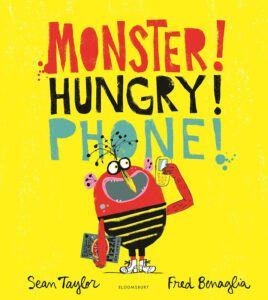
Monster is HUNGRY. He wants PIZZA. And he’s got a PHONE! But uh oh . . . who is he going to call?

Hold the line – Monster is in for a wild ride!

WARNING: This book may make you laugh your socks off!

A hilarious picture book that’s perfect for anyone who’s ever REALLY wanted PIZZA. With bold, bright illustrations by the talented Fred Benaglia, it’s an unmissable treat, and perfect for fans of Oi Frog!

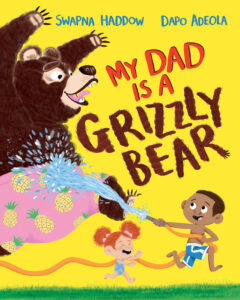
This is a sweet story about one imaginative boy’s special bond with his father, whom he images as a loveable grizzly bear. It’s full of humour, from the exaggerated facial expressions and bear-like attributes captured in Dapo Adeola’s vibrant illustrations, to the humorous asides in the text about Dad’s wild habits.

This is a playful and heartwarming picture book that perfectly captures the way in which young children observe familiar adults with curiosity, wonder and imagination – but also with pure adoration. Filled with giggles and with the theme of family bonds at its heart, this is a bear-illiant choice for storytime.

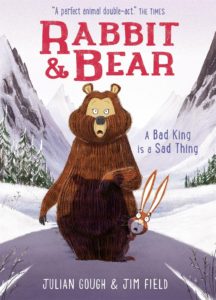
These books are real gems for children who are ready for a short chapter book but may still feel overwhelmed by too much text on a page. Centred around an unlikely friendship between two animals, the stories are laugh-out-loud adventures with appealing illustrations that perfectly break up the text to suit the reading stamina of this age range. This latest adventure continues to focus on small-scale conflict resolution with the perfect dose of silliness (and toilet humour) to keep young readers entertained throughout.

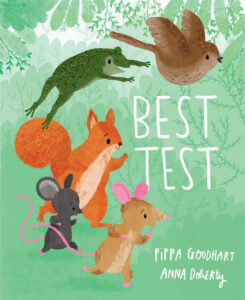
This is the kind of story that little ones ask for over and over again – and grown-up story readers don’t mind a jot because it’s a delight to read. With loveable characters and themes that really matter to young children, such as fairness, friendship and teamwork, Best Test wins children over on the very first pages and keeps them charmed every time.

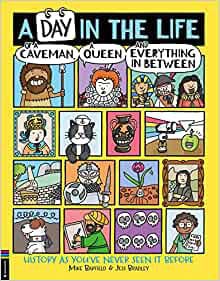
This colourful, cartoon-style reference book brings history to life with humour and fun. Following on from the enormous success of its award-winning predecessor ‘A Day in the Life of a Poo, a Gnu and You‘, this book is packed full of information and facts, presented in an entertaining comic style that is a joy to read.

The book is divided into three main sections – Ancient History, The Middle Ages, and The Modern Age. Within each section, relevant ‘day in the life’ comics describes certain aspects of history. We learn about the typical day of a Neanderthal, an Inca Farmer, and a Gladiator, as well as the more unexpected daily routines of a wheel, a Samurai sword, and a stick of chalk!

Additional ‘bigger picture’ pages give extra details and more in-depth information – for example on Civil Rights, the Terracotta Army, and the world map. ‘Secret Diaries’ provides a wider viewpoint over a larger timescale – we find out from Isaac Newton’s cat that he got stuck in an apple tree, dislodging one of the fruits; The diary of a wooden board from Leonardo da Vinci’s studio stretches over four hundred years and sees the board end up in an art gallery in Paris. ‘Newsflashes’ are interspersed throughout the book and give more context to the ‘days in the life’ and ‘secret diaries’ by filling you in on what else was happening in the world at the time, and there is also a world map and a glossary for easy reference.

Readers will enjoy the variety of historical information, which feels like a balanced view of different areas of the globe. This is a great book to sit and read individually, or to dip into when exploring related topics.

Subscribe to our newsletter

Your Review

Stone Girl Bone Girl

review

Year group(s) the book is most suitable for:

Year group(s) the book is most suitable for:

Does the book contain anything that teachers would wish to know about before recommending in class (strong language, sensitive topics etc.)?

Does the book contain anything that teachers would wish to know about before recommending in class (strong language, sensitive topics etc.)?

Would you recommend the book for use in primary schools?

yes

Curriculum links (if relevant)

Curriculum links (if relevant)

Any other comments

Any other comments