Recommended children's booklists sorted by age or topic

Topic: Picturebooks Lower KS2

Best Picturebooks for Years 1 and 2 

Vibrant illustrations, hilarious characters, thought-provoking narratives and classic stories make picturebooks a staple of KS1.

Fire up their imagination with beautiful stories like Grandad’s Secret Giant, or use texts like Leaf to start discussions on important topics. Fact-packed titles like Darwin’s Super-Pooping Worm Spectacular are great for introducing new concepts, while friendship and kindness are explored in The Kindest Red. In KS1, picturebooks are key to fostering a love of reading and many of the books in this list are best enjoyed together, including favourite classroom read-alouds The Rainbow Bear and Somebody Swallowed Stanley. For laugh-a-minute fun, try Amy Gets Eaten or the classic Funnybones!

This list features our top selection of recommended picturebooks that are most suitable for children aged 5-7….

Best Picturebooks for Years 3 and 4 

Picturebooks are wonderful for all ages in primary schools and are not to be limited to the younger classrooms alone. As children’s author Kate Cunningham says, “Telling a child that they are too old for a picture book is like telling them that they are too old for chocolate ice cream or computer games“.

In Lower KS2, picturebooks offer a unique opportunity to enjoy the interplay between images and words, as well as being brilliant for opening discussions on important issues like in The Emerald Forest. Others are perfect for exploring new ideas like If I Were Prime Minister, for boosting empathy like It’s a No Money Day and for developing critical thinking like Fearless. Sometimes they simply provide a fun reading experience that caters to a visual appetite that begins to be increasingly excluded from chapter books for the age group – like in Until I Met Dudley and Professional Crocodile.

This list features our top selection of recommended picturebooks that are most suitable for children aged 7-9….
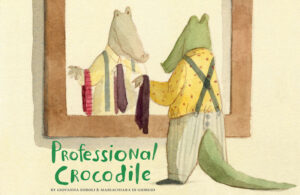
Mr. Crocodile loves his job. Every morning he gets up with an alarm. He brushes his teeth. He chooses the right tie to match his outfit, eats a quick slice of toast, and heads off to work on a crowded train. But what is his job? The answer may surprise you. Readers will want to pore over this witty, wordless book again and again, finding new details and new stories with every reading.

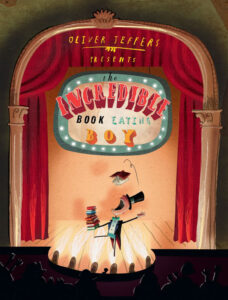
The mouth-watering new book from acclaimed author illustrator, Oliver Jeffers.

Henry loves books… but not like you and I. He loves to EAT books! This exciting story follows the trials and tribulations of a boy with a voracious appetite for books.

Henry discovers his unusual taste by mistake one day, and is soon swept up in his new-found passion – gorging on every delicious book in sight! And better still, he realises that the more books he eats, the smarter he gets. Henry dreams of becoming the Incredible Book Eating Boy; the smartest boy in the world!

But a book-eating diet isn’t the healthiest of habits, as Henry soon finds out…

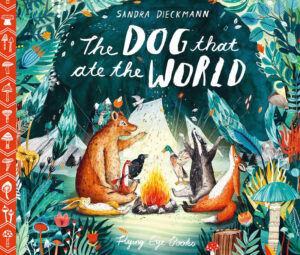
He came over the pastures like a mean thunderstorm… fast as lightening was the dirty dog. All of the animals of the valley lived in peace and harmony until the big greedy dog appeared. He was so greedy that he gobbled up everything he could see! Happily for our animal friends, there was plenty of room for them all to live and play in the dog’s big bad belly. Perhaps it’s not so great to be the biggest and baddest animal in the valley after all…

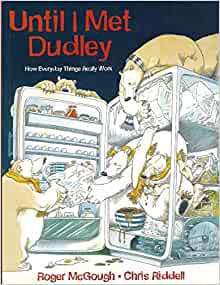
From the minds of the former Children’s Laureate Chris Ridell, and award-winning fellow of the Royal Society of Literature Roger McGough, comes a fun-filled book about how things work.

Have you ever wondered how a toaster works? Or a fridge-freezer, or a washing-up machine? In this fun-filled book of how things work, Dudley, the techno-wizard dog, provides the answers. Roger McGough’s delightfully ingenious text and Chris Riddell’s striking illustrations take children from the furthest realms of fantasy into the fascinating world of technology to discover the workings of familiar machines, making it an exciting book which will delight again and again.

At first, it describes how a child thinks things work… (gnomes in the toaster) and then Dudley tells you how the various household appliances really work. Includes all the appliances a curious child would be interested in: the dishwasher, the fridge-freezer and more.

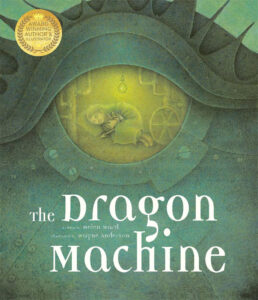
The perfect introduction to the legendary world of dragons, The Dragon Machine uses a clever mix of text and illustrations to describe how George, a young, overlooked boy, becomes aware of dragons hiding all around him.

But when it becomes apparent that they don’t belong in George’s ordinary world, he endeavours to do the best for his new friends and find them the home they deserve.

A heart-warming and magical tale from award-winning illustrator, Helen Ward.

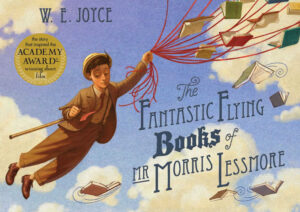
In a reversal of the typical order, the wonderful story of The Fantastic Flying Books of Mr. Morris Lessmore began life as a film, graced our iPad screens as an inspiring Book App, and then the book form emerged. Morris Lessmore is a character who “loved words”. However, when his orderly life is “scattered” by a terrible storm he finds himself wandering aimlessly. A lady “being pulled along by a festive squadron of flying books” marks the beginning of the magic of books being poured into this story. She sends Morris her favourite book, which in turn leads him to a magnificent old building filled with books yearning for attention… and so Morris’s journey and love of books begins. I adore how the books are treated as having true personalities, just like the books in Mabel’s bedroom! Does anyone else consider this when they are organising their shelves – that there are certain books that shouldn’t be shelved together? Urm, just me then?!?!

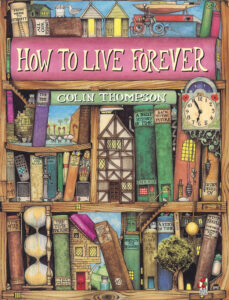
Colin Thompson’s books are mystical and complex, they will appeal to children and adults alike and demand to be returned to as there is always a new image to see . . . something more to catch the eye. Peter and his family live among the Quinces in the cookery section of a mystical library, and at night, when the library comes to life, Peter ventures out of his home to find a missing volume: How To Live Forever.

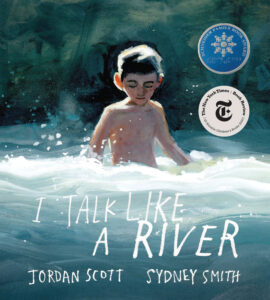
Based on the author’s own experiences of having a stutter,  this picturebook story captures the experience of coming to terms with speech disfluency and explores themes of self-acceptance, family support, nature and embracing difference.

It’s a beautiful and empathic book that charts a ‘difficult speech day’, when the narrator feels like his words are stuck. He describes hiding in class, hoping not to be asked a question. Sometimes he chooses not to talk. The boy’s father is beautifully supportive, helping him to find a quiet place and showing him that his speech is like the natural movements of a river – bubbling and churning – but that the river is nothing short of a beautiful display of nature’s power. In the author’s note at the end of the book, the author relates his own experience, writing that ”Stuttering is terrifyingly beautiful”.

The power of the father’s supportive words makes a fantastic impact on the boy, demonstrating the impact of positive support and encouragement for others.

The onomatopoeic free verse depicts the stuttering sensation while the lyrical river descriptions express the freedom of self-acceptance. Meanwhile, the stunning watercolour illustrations swirl with life – with patterns that reflect both the disjointed speech and the powerful, sparkling river.

Subscribe to our newsletter

Your Review

Stone Girl Bone Girl

review

Year group(s) the book is most suitable for:

Year group(s) the book is most suitable for:

Does the book contain anything that teachers would wish to know about before recommending in class (strong language, sensitive topics etc.)?

Does the book contain anything that teachers would wish to know about before recommending in class (strong language, sensitive topics etc.)?

Would you recommend the book for use in primary schools?

yes

Curriculum links (if relevant)

Curriculum links (if relevant)

Any other comments

Any other comments