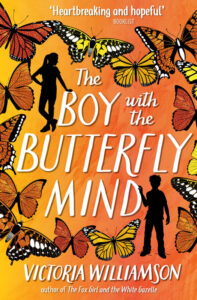
A moving and compassionately-told story from the author of the The Fox Girl and the White Gazelle. Also told through a dual narrative, this is a story with weighty themes including blended families, life with ADHD and the search for acceptance. Hugely relevant for today’s generation, Victoria Williamson writes with a galloping pace packaged at every turn with extraordinary compassion, delivering an enjoyable and empathy-building reading experience. The narrative offers powerful insights into life with ADHD…
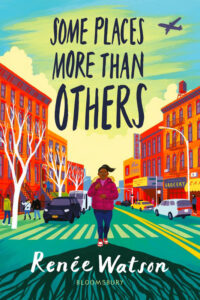
New York Times bestselling author Renée Watson brings a heart-warming story about discovering the places that make us who we are.
Amara is 12 and lives in Oregon. She longs to visit New York so that she can find out about her heritage and see where her Dad grew up. Her Mum doesn’t have any family left, her Dad doesn’t talk about his, and with a new sibling on the way Amara is feeling a bit lost. She eventually persuades her Mum and Dad to take her to New York for her birthday and she is incredibly excited to meet her Grandpa Earl and her two cousins.
However, New York is busier than she imagined, Dad and Grandpa Earl are not talking to each other, and one of her cousins is not particularly welcoming. Dad spends most of the time working which makes it hard for her to work on the secret mission her Mum has given her: to bring her Dad and Grandpa Earl back together.
Things start to look up when Grandpa Earl arranges for Amara’s cousins Nina and Ava to take her sightseeing. While Nina is happy to show her around, Ava can’t understand why she is so fascinated by New York and rushes her past everything. Can Amara discover more about her heritage and bring her family back together?
I absolutely loved reading this heart-warming book, with its fascinating themes of identity, belonging, black culture and family running through the plot. It would make a brilliant book to read in Y7 as it raises many discussion points throughout, such as how Amara’s family treat her, how Amara behaves when she is in New York, the value of cultural heritage and the importance of family.
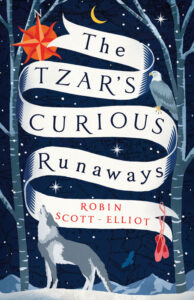
The Tzar’s Curious Runaways is the debut children’s novel by writer and sporting journalist Robin Scott-Elliot. Set in imperial Russia in 1725, this historical fantasy adventure takes a number of familiar middle-grade themes into a less familiar setting: vulnerable characters on a journey, friendships and acceptance, perseverance in the face of peril, the bid for freedom. It makes for an exciting and tension-filled read and is likely to hold a high appeal of young readers who enjoyed The Greatest Showman film.
The story centres around Kat, a hunchback who was sold by her parents to the Tzar for his Circus of Curiosities, at the age of six. Eight years later, she finds herself hiding in the Tzar’s palace following his death, frightened for her life because she knows that the Tzar’s successor does not have the same interest in her or her fellow performers. Through a series of flashbacks dotted among the action, the reader learns of the prejudice and ridicule that Kat experienced as a dancer, and from there the scene is set: can she escape and return home to freedom?
Teaming up with fellow curiosities, a giant and a dwarf, Kat finds practical help in the Palace’s employees, including the librarian, who equips her with a special map to help her find home in Yegoshikha (hurray for librarians and the magic they can put into people’s hands!). The trio set off on a journey, relying on their wit and small pool of resources as they overcome a host of challenges: a wolf attack, prejudiced villagers, corrupt monks, perilous terrain and worsening hunger leading to increased risk-taking.
Finally, Kat finds her home, but it is not the happy ending she expects – and the reader expects – and the dramatic action continues as they make a new escape from the dangerous persecution of those she thought would finally accept her.
Scott-Elliot’s writing is flowing, with beautiful descriptions and a brilliant gripping pace. Apart from the obvious theme of adventure, there are the underlying themes of friendship, love, deeply engrained prejudice and suffering, determination, trust and hope. This book would suit Upper Key Stage 2 classes and I can imagine them begging me to read on at class storytime.
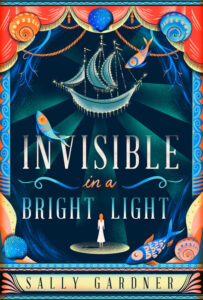
Phantom of the Opera meets Alice in Wonderland in prizewinning author Sally Gardner’s first middle grade novel in 14 years.
Celeste is the lowest of theatre workers in the Royal Opera House – a mere orphan whose job it is to run errands for everybody else. One day, Celeste wakes up in a costume basket to realise that everyone else in the opera house seems to think she is somebody else – a talented young dancer preparing for a stage performance. Utterly confused, Celeste also remembers fragments of a strange dream from the night before; a man in an emerald green suit, a devastating shipwreck and a dangerous game called the Reckoning, in which she is a player.
The same day, a crystal chandelier in the shape of a galleon comes crashing down from the ceiling in the opera house, causing Celeste to become too injured to dance on stage as expected. After the accident, a series of clues about Celeste’s true identity begins to emerge, including the appearance of a ghost-like girl who seems to know more about Celeste’s past and an increasing realisation that Celeste is part of a high-stakes game to which she does not know the rules. A labyrinthine mystery unfolds – with elements of the surreal giving the whole plot a dream-like quality that keeps readers on their toes the whole time.
I enjoyed the opera house setting, complete with its prima donnas, colourful costume and sham effects. I also enjoyed the unravelling of the plot, cleverly moving the reader from initial disorientation and confusion to piece together the answer to Celeste’s mystery step by tiny step . The story is quite dark in places and takes good reading stamina to move through the parts that feel surreal, making it most suitable for confident readers in upper KS2 or lower KS3 who can cope with feeling a little disorientated as a mystery unravels.
Intriguing, haunting and filled with suspense, this story will transport readers right to the gutter of time and back again and is one to recommend to those who love an other-worldly read or who are looking for something a little bit different to get stuck into.
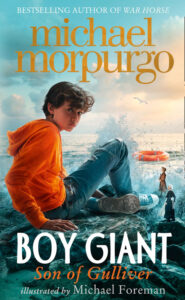
Award-winning storyteller Sir Michael Morpurgo brings his loyal readership a brand new novel this autumn, brought to life with line illustrations by Michael Foreman.
Boy Giant: Son of Gulliver is a heartwarming refugee story about hope and humanity in times of being without a place to call home. Omar is making the perilous journey across the sea to England after his home in Afghanistan has been devastated by war. After seeing his family torn apart, Omar and his mother walk for miles to reach the coastline in order to board a boat heading to a safer place to find refuge. Not having enough money to pay the fare for two, Mother persuades Omar to take the journey to England alone and wait for her there. Uncle Said owns a cafe on Fore Street, Mevagissey and Omar repeats the address over and over so that he doesn’t forget where to wait.
The sea journey is terrifyingly perilous and before long waves are crashing over the sides and Omar watches the boat fill with water as hope of being reunited with mother begins to fade. A powerful sea storm sees Omar losing consciousness and after a while he awakes on the shores of an island. Taking in the crowd of friendly and curious faces staring at him and hearing a few words that he recognises from his limited English, Omar dares to hope that he has reached England’s shores at last. There’s only one problem; the people here are small enough to fit in his hand and he is a mountainous giant by comparison. Omar soon realises much to his dismay that this is not England but the island of Lilliput, which keen-eyed readers may recognise from the story of Gulliver’s Travels set a few hundred years before. Now, the Lilliputians call Omar a ‘Son of Gulliver’ and welcome him with warmth and kindness. But Omar soon discovers that the island is under threat, and the peace-making legacy of Gulliver from the past needs his help to be restored.
This is a gripping story offering an original twist on a well-loved classic. The story of Gulliver is cleverly leaned upon in both structure and narrative and the revisiting of Lilliput is delightful to those familiar with the details and themes of Gulliver’s Travels. Importantly, it does not matter that the majority of young readers will be unfamiliar with the original, as Morpurgo explains all the necessary background through the story.
With important themes of reconciliation, kindness to strangers and the devastating effects of war, this is a thrilling read that raises questions about whether humanity will ever learn from its past as well as being an imaginatively-rendered encouragement to individuals to seek reconciliation over conflict in everyday situations.
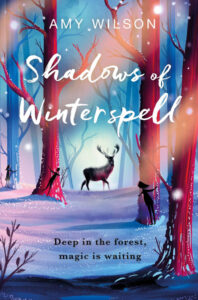
A coming-of-age adventure story rooted in fairy tale and magic. As usual, Amy Wilson’s world-building is second to none as she immerses the reader is a richly-imagined magical world that is at once convincing, delightful and darkly enticing.
Stella feels alone, living most of her life with her Nan in a cottage near the edge of a magical forest. The forest is filled with dangers and haunted by the dark shadows released by the King, who is in mourning after a family loss that occurred years before. Stella helps her Nan to guard the house boundary and stop the dark magic from expanding further. Armed with books, Stella has grown up learning charms, spells and the history of magic and has an imp called Peg for company, but feels a pull towards the unfamiliar worlds beyond the fence.
Tired of being isolated from the human world, Stella secretly signs up to go to school in a nearby town. While Nan disapproves of Stella keeping company with humans, Stella arrives at school and quickly realises that some of her new classmates are not quite what she expected. Before long, Stella finds herself caught up in a complex quest to save the forest from the King’s shadows and to uncover the secrets of her own past.
Wilson’s depiction of Stella as a young teen who struggles with isolation and identity will resonate with any readers who have known a longing to find their place in the world. Fairy tale imagery is peppered through the pages; grandmothers in forest cottages, shiny red apples, elves and fairies in underground homes, hidden-from-sight palaces and necklaces imbued with magic all seamlessly weave in and out of the book’s modern, relatable themes.
Suitable for upper KS2 and lower KS3, this is a refined piece of storytelling that encourages young readers to be brave and follow their own path.
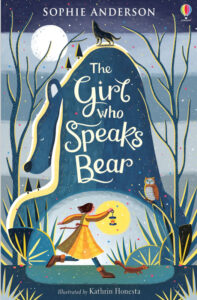
Fans of The House with Chicken Legs will be delighted to see a new middle-grade offering from Sophie Anderson and this new book is also a thoroughly modern story woven from a tapestry of traditional Russian folktales.
Yanka is a 12-year-old girl who has never found out where she really belongs. Standing out from the crowd by being much taller than the other children in her village and as strong as a bear, Yanka’s sense of displacement is deepened by the fact that she was abandoned in a bear cave as a baby and knows nothing about her real parents. She has always felt a strange pull towards the nearby forest and delights in hearing magical tales about the creatures within.
One day, Yanka wakes up to find that her legs have become bear legs. Horrified, she clumsily hot-foots into the forest and begins an epic quest to discover who she really is. The journey takes Yanka from ice-cold rivers to fiery volcanoes as she meets a mélange of magical characters along the way (including – much to my delight – the appearance of a house with chicken legs who helps out along the way…). As Yanka’s journey to discover more about her identity unfolds, the plot is interwoven with traditional folktales about bears, dragons and wish-granting trees, each one cleverly offering important clues to piece together about Yanka’s origins.
There is so much to love about Anderson’s storytelling. The stories-within-a-story feel like a beautifully crafted pass-the-parcel with delights to unwrap in each layer. The author’s appreciation of the natural world radiates through as the reader experiences the full sensory delights of the forest through Yanka, from the sensation of rolling in fresh pine needles to the realisation that every tree has its own unique scent. The familiar aspects of the forest seamlessly blend with the more fantastical ones, like the ancient tree that grants wishes or the fire-breathing dragon called Smey.
I highly recommend The Girl Who Speaks Bear to upper KS2 for its rich storytelling, its relatable themes and its wonderfully imaginative fantasy worlds.
review
Year group(s) the book is most suitable for:
Does the book contain anything that teachers would wish to know about before recommending in class (strong language, sensitive topics etc.)?
Would you recommend the book for use in primary schools?
yes
Curriculum links (if relevant)
Any other comments
Any other comments