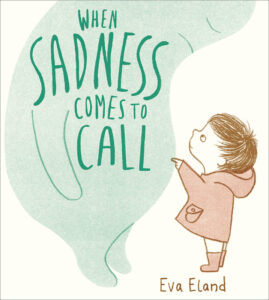
This book has very few words but it does such an incredible job of introducing the ideas of emotional literacy and mental well-being to very small children. Sadness turns up on the doorstep one day and follows our main character around. We don’t know why it came or when it will leave but it’s there. By embracing Sadness (taking it for a walk or drawing with it), the emotion becomes easier to live with until, one day, it completely disappears.
I’m a little bit biased with this one as I wrote it but I really wanted to include a picture book that gently introduces consent. I believe all children should have autonomy over their bodies and be encouraged to express it. If they don’t want to kiss someone goodbye, so be it; if they don’t want to be tickled then that’s OK.
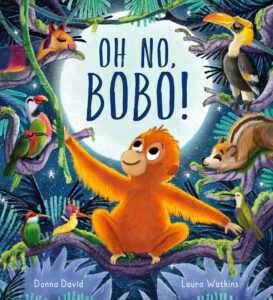
Bobo, an orangutan, romps through the jungle cuddling animals without asking. It’s not until the very end, when Elsie the elephant does the same to him, that he realises the errors of his ways.
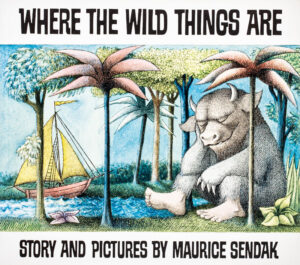
In this gorgeous picture book, first published in 1963, we go on a journey with Max, who’s been sent to his room for chasing the dog with a fork, and being an all-round wild thing. But somehow his room becomes a forest, and when he travels across the sea by boat he finds more Wild Things and becomes their king.
This book is such a classic and, as such, means so many different things to so many different people. At its heart, it teaches a young child that it’s OK to feel angry; it’s OK to take some time out. Your family will still love you. They’ll still be waiting for you when you come back. When Max stomps off to visit the wild things, he’s angry and frustrated. He’s so mad that he sails off “through night and day and in and out of weeks and almost over a year”. When he calms down, he realises he misses home and, to the disappointment of his new Kingdom, he heads back to his bedroom where his “still hot” supper is waiting for him.
This much-loved story is the embodiment of an emotion, and those powerful final lines – the release of them – are iconic in children’s literature.
review
Year group(s) the book is most suitable for:
Does the book contain anything that teachers would wish to know about before recommending in class (strong language, sensitive topics etc.)?
Would you recommend the book for use in primary schools?
yes
Curriculum links (if relevant)
Any other comments
Any other comments