
Recommended children's booklists sorted by age or topic

Topic: Class Transitions

Class Transitions Booklist

Moving up a class can be a big deal for many children and transition days are a wonderful opportunity for teachers to break the ice and get to know a new class.

With transition day just around the corner, we’ve handpicked a list of picture book recommendations to share with children to prepare for move up day or a class transition – grouped into themes of being yourself, starting a new class, community, togetherness and friendship as well as books that provide inspiration for transition day art projects and icebreakers.
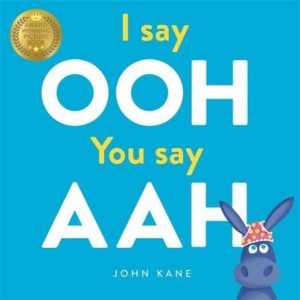
There’s something very important that I need you to remember. When I say Ooh, you say Aah. Let’s try it.’

Ooh the donkey has lost his pants. Readers must help him find them!

In this picture book, young readers help to sell the story by responding to simple verbal or visual cues. This hilarious book is perfect for reading aloud and is fun for the whole family.

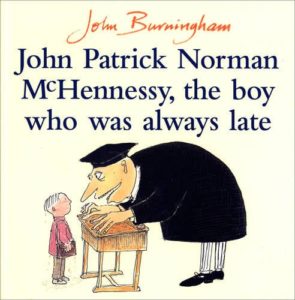
Every day, John Patrick sets off along the road to school, and although he hurries, strange and improbable happenings repeatedly make him late. To make things worse, his teacher never believes his story.

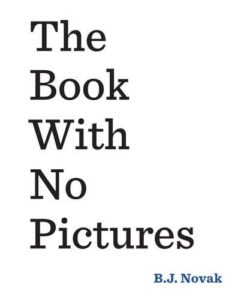
You might think a book with no pictures would be boring and serious.
Except . . . here’s how this book works:

Everything written on the page has to be said by the person reading it aloud. Even if the words say BLORK . Or BLUURF .

And even if they have to say things like BLAGGITY BLAGGITY and MY HEAD IS MADE OF BLUEBERRY PIZZA!

That’s the rule. That’s the deal.

US comic writer and actor, B. J. Novak’s brilliantly irreverent and very, very silly The Book With No Pictures will delight kids and grownups alike!

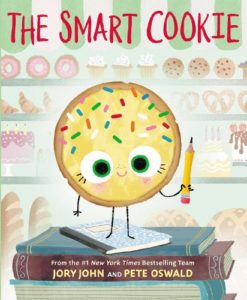
If you’ve ever felt like academic success is hard to reach, this sweet picture book about different types of intelligence will resonate with you.

The central character, Cookie, grapples with traditionally academic challenges within the classroom of Ms. Biscotti. However, a transformative moment occurs when an assignment requires a bit more creative originality, leading Cookie to uncover her hidden poetic talent. As her peers also showcase their distinct abilities, ranging from artistic endeavors to inventive creations, Cookie gains a profound understanding of the different types  of intelligence. Through sharing her poem, her self-assurance grows, igniting a belief in her potential to become the “Smart Cookie” she aspires to be.

This is a really funny book and is always a winner with children (we also love the other books in the series – check out The Couch Potato, The Good Egg and The Cool Bean). Enhanced by the vivid illustrations of Pete Oswald, the narrative seamlessly weaves clever wordplay with a universal message of self worth and being willing to grow. The story underscores the significance of valuing different kinds of strengths and fostering self-worth in a classroom, and provides an opportunity for adults and children to reflect on the classroom culture they want to create.

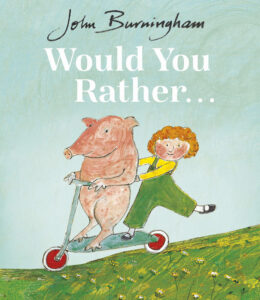
Would you rather drink snail squash or eat mashed worms? Help a witch make stew? Tickle a monkey? Or maybe – if you could really be anyone or do anything in the world – would you rather just be…you?

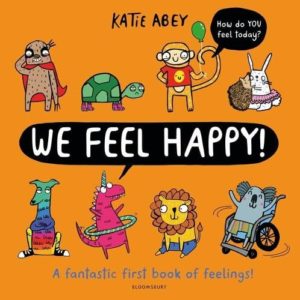
A fantastic first book of feelings that introduces little ones to a wide range of emotions. Why are the animals happy? What has made them feel sad? What do YOU feel excited about?

We feel happy when reading our favourite book. We feel calm when we have a bath. We feel excited when we go to a party! We Feel Happy is the perfect book for starting a conversation about feelings with children. The animals are experiencing lots of different emotions, from the hippos who are excited to visit their friends to the shark who is grumpy about brushing its teeth.

Includes learning hooks such as counting, first words and recognising animals, interactive speech bubbles, prompts and ideas on how to process and understand our emotions and lots of interesting things to spot on every page.

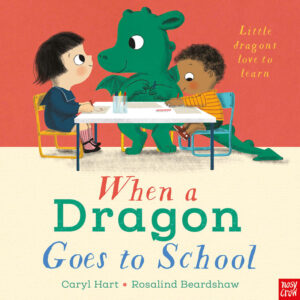
A fun and gentle introduction to expectations about what to do when you go to school. When a dragon goes to school, will she stamp her feet, hide from the teacher or throw crayons around? Or will she choose to put her belongings on her peg, enjoy the toys and books and eat her lunch politely with her friends? A lovely exploration of how to enjoy the routines, relationships and responsibilities that come with being big enough for school.

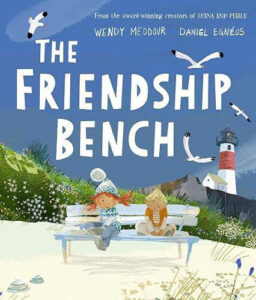
This is a beautiful picturebook that celebrates new beginnings and the power of human connection. Tilly moves to a new home by the sea. She’s sad to learn that her precious dog Shadow is not allowed to go into her new school on her first day. Tilly faces the challenge of a new start alone. At playtime, the teacher notices that Tilly is alone and suggests trying the Friendship Bench. A boy already occupies the bench and the pair form a bond as they work together to transform the old, broken bench into something beautiful.

This is a warm and gentle story. Most children can relate to the feeling of having nobody to play with or having to face a new challenge alone. The story gently encourages readers to seek human connection and reminds us all of the difference that reaching out and making friends can make. The story could be used to encourage children to reflect on how to make new or isolated members of the school community welcome. Could you work together this year to create spaces around the school where lonely children could go, where children can build connections through shared activity or where friendships can blossom?

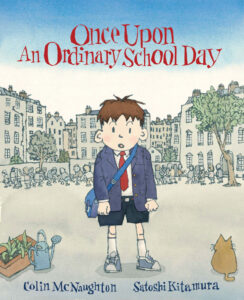
It was an ordinary morning when the ordinary boy woke up, and it was an ordinary journey to school – but then Mr Gee bounced into the classroom and everything changed. Mr Gee plays rousing music which thunders around the classroom, and asks what it makes them think of. The dull grey world has been transformed into one of colour and excitement. ‘Write a story about it!’ laughs Mr Gee. And the ordinary boy began to write: the words just tumbled out of him pell-mell. And the places he went to, and the things he saw were extraordinary!

Subscribe to our newsletter

Your Review

Stone Girl Bone Girl

review

Year group(s) the book is most suitable for:

Year group(s) the book is most suitable for:

Does the book contain anything that teachers would wish to know about before recommending in class (strong language, sensitive topics etc.)?

Does the book contain anything that teachers would wish to know about before recommending in class (strong language, sensitive topics etc.)?

Would you recommend the book for use in primary schools?

yes

Curriculum links (if relevant)

Curriculum links (if relevant)

Any other comments

Any other comments