Would you rather drink snail squash or eat mashed worms? Help a witch make stew? Tickle a monkey? Or maybe – if you could really be anyone or do anything in the world – would you rather just be…you?
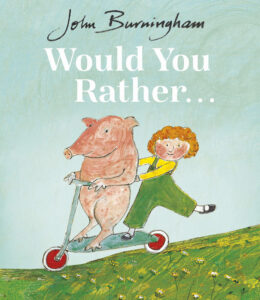
Would you rather drink snail squash or eat mashed worms? Help a witch make stew? Tickle a monkey? Or maybe – if you could really be anyone or do anything in the world – would you rather just be…you?
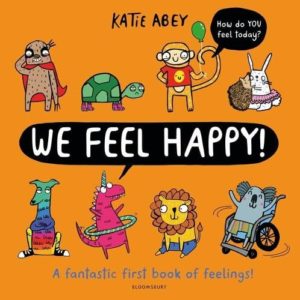
A fantastic first book of feelings that introduces little ones to a wide range of emotions. Why are the animals happy? What has made them feel sad? What do YOU feel excited about?
We feel happy when reading our favourite book. We feel calm when we have a bath. We feel excited when we go to a party! We Feel Happy is the perfect book for starting a conversation about feelings with children. The animals are experiencing lots of different emotions, from the hippos who are excited to visit their friends to the shark who is grumpy about brushing its teeth.
Includes learning hooks such as counting, first words and recognising animals, interactive speech bubbles, prompts and ideas on how to process and understand our emotions and lots of interesting things to spot on every page.
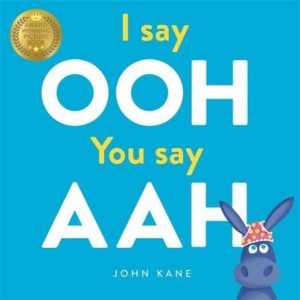
There’s something very important that I need you to remember. When I say Ooh, you say Aah. Let’s try it.’
Ooh the donkey has lost his pants. Readers must help him find them!
In this picture book, young readers help to sell the story by responding to simple verbal or visual cues. This hilarious book is perfect for reading aloud and is fun for the whole family.
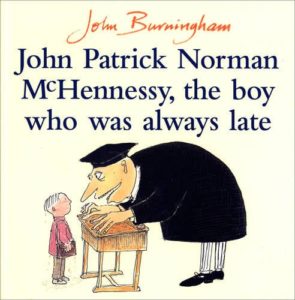
Every day, John Patrick sets off along the road to school, and although he hurries, strange and improbable happenings repeatedly make him late. To make things worse, his teacher never believes his story.
You might think a book with no pictures would be boring and serious.
Except . . . here’s how this book works:
Everything written on the page has to be said by the person reading it aloud. Even if the words say BLORK . Or BLUURF .
And even if they have to say things like BLAGGITY BLAGGITY and MY HEAD IS MADE OF BLUEBERRY PIZZA!
That’s the rule. That’s the deal.
US comic writer and actor, B. J. Novak’s brilliantly irreverent and very, very silly The Book With No Pictures will delight kids and grownups alike!
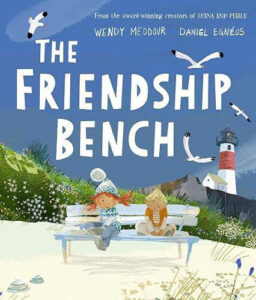
Tilly has just moved to a new house, by the splash and curl of the sea. She loves doing cartwheels in the sand and playing catch with Mummy and Shadow the dog. But when it is time to start her new school, Shadow and Mummy must stay outside. And inside is full of strangers. ‘Why don’t you try The Friendship Bench?’ says her teacher, when Tilly is playing alone. ‘It helps children find new friends to play with.’ But when Tilly gets there, somebody is already on it . . .
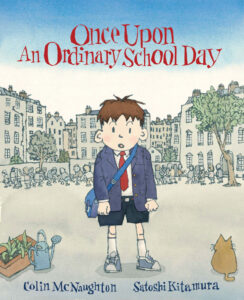
It was an ordinary morning when the ordinary boy woke up, and it was an ordinary journey to school – but then Mr Gee bounced into the classroom and everything changed. Mr Gee plays rousing music which thunders around the classroom, and asks what it makes them think of. The dull grey world has been transformed into one of colour and excitement. ‘Write a story about it!’ laughs Mr Gee. And the ordinary boy began to write: the words just tumbled out of him pell-mell. And the places he went to, and the things he saw were extraordinary!
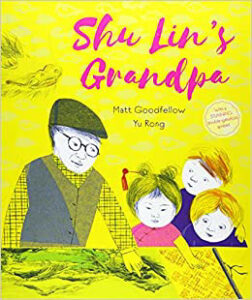
Shu Lin is starting at a new school. She stands alone in the playground and at lunchtime she eats by herself from little boxes of brightly coloured food. “What’s up with her?” says Barney.
But when Shu Lin’s grandpa comes to school and shows the class his amazing Chinese paintings, everything changes….
With a stunning double-gatefold spread revealing a beautiful Chinese picture, this uplifting story shows the transformative power of art and imagination in developing cultural understanding and empathy.
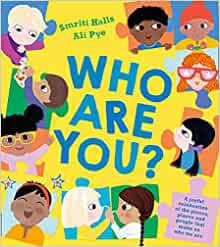
This is a joyful celebration of all the pieces, places and people that make us who we are. It is a wonderful way to get children thinking about and learning about their own families, and also opening up discussions about all of the other pieces that come together to make us all unique: from our friends and food we eat, to activities we get up to and the places we go.
Children will enjoy finding out more about themselves and their families, and thinking about other families and friends who are similar or different to their own.
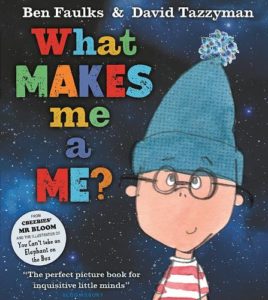
Who am I? I ask myself. What makes me a ME? I think hard with all my might, And look around to see.
What makes you a you? Are you like a sports car – lightning fast? Or maybe you’re like a tree … Do your arms stick out like branches? No? Then perhaps you’re like a snail – very slow (especially when it’s time for school!).
A funny and thought-provoking look at what makes us us, from Ben Faulks (known as Mr Bloom from CBeebies) and David Tazzyman (bestselling illustrator of You Can’t Take an Elephant on the Bus ). Guaranteed to feed the imagination, this celebration of being who we are is perfect for inquisitive (and inventive!) little minds.
© BooksForTopics 2015-2024
review
Year group(s) the book is most suitable for:
Year group(s) the book is most suitable for:
Does the book contain anything that teachers would wish to know about before recommending in class (strong language, sensitive topics etc.)?
Does the book contain anything that teachers would wish to know about before recommending in class (strong language, sensitive topics etc.)?
Would you recommend the book for use in primary schools?
yes
Curriculum links (if relevant)
Curriculum links (if relevant)
Any other comments
Any other comments