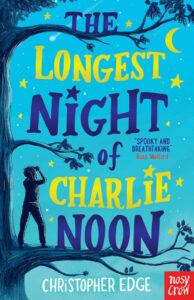
Atmospheric, intelligent and thought-provoking, this is the kind of story that loves to surprise you every time you feel sure you have a handle on it. At less than 200 pages, it is a quick but intriguing read in a similar format to Edge’s other recent science-themed books like The Infinite Lives of Maisie Day and The Jamie Drake Equation.
The initial premise of the plot is a basic one: three children get lost in the woods and desperately try to help each other to find their way home before the legendary Old Crony, whom they say eats children, makes an appearance.
Tapping into the natural world around them and putting their code-cracking know-how to good use, the children find clues in the rhythm of birdsong and shapes of the sticks on the floor. As the story unfolds, so do a series of surprises and layers of philosophical depth as metaphysics are questioned and explored in a child-friendly manner. Suspense builds with every page, and the usual rules of time seem to become increasingly distorted as the story progresses.
The Longest Night of Charlie Noon is highly recommendable to readers who like their stories served with plenty of intrigue, puzzles to solve and a good dose of metaphysics thrown in.
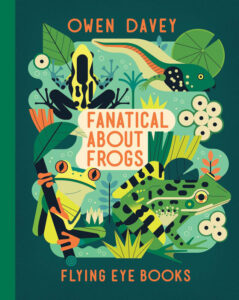
Can an information book solely about frogs really be that good? Yes. It can and it is.
Although ‘Fanatical about Frogs’ is not the only book by Owen Davey on one particular type of animal (there are more in his series on sharks, monkeys, cats and beetles), it is the first I have read and it certainly won’t be the last. This fascinating book provides an excellent overview into everything you’d ever want to know about frogs in a child-friendly yet technical way.
Upon opening the book, the beautiful endpapers are striking and confirm the book is not just informative but also very artistic in style. The stylised illustrations throughout encourage the reader to look for the details more than a photograph of a frog might. My eyes were drawn all over the pages and I enjoyed looking for the nuggets of information scattered across the page.
As I made my way through the book I found myself looking up the various frogs and realised what a brilliant book this is in inspiring readers to look deeper. The information included within each section is just enough that the reader builds an understanding, yet not so much that readers won’t be inspired to go and discover more on their own. The book is not overloaded with content; the balance between the information and images is a good one and it is therefore a book that a whole range of reading abilities could access and enjoy equally.
This is a book that any nature-lover would likely enjoy and also a good choice for more reluctant non-fiction readers. The mix of thoughtful design and informative facts could provide young readers with a new way of seeing non-fiction books altogether.
Review by: Nathan Wilcox , Primary School Teacher
The House of Light is a gorgeous book, which skilfully blends stirring descriptions of the natural world with the drama and excitement of a dystopian adventure and a deep emotional meditation on the value of those we love, those we lose and those we leave behind.
Bonnie lives with her Granda by the coast in a not-so-distant future Britain where freedoms have been curtailed and the right to travel has disappeared, along with much of the technology we currently enjoy. Despite the loss of her mother at a young age and a hankering for adventure, Bonnie is generally happy in her loving home with Granda; growing their vegetables, tending their hens and telling stories. Until the arrival of a boat and a boy widens her mind to the possibility of following her mother over the sea and escaping to a better life.
The relationship between the boy, Ish, and Bonnie develops beautifully from mistrust and fear between two damaged children to a deep empathy and indestructible bond. They are young, they are resilient, and they will risk anything to seek wider horizons. Granda, however, is at the opposite end of his journey, his physical horizons narrowing but his yearning for freedom as strong as ever. The final chapters of the book are heart-breaking and uplifting in equal measure.
The House of Light is a beautifully crafted work, one of Julia Green’s best yet, and my favourite book of 2019 so far. The accessible and well-paced writing, the poignant characters and storyline make it almost impossible to put down. I will be pressing it fervently into the hands of KS2 readers who need to believe in the ability of compassion and hope to overcome darkness and fear.
Reviewed by: Carol Carter, Librarian
review
Year group(s) the book is most suitable for:
Does the book contain anything that teachers would wish to know about before recommending in class (strong language, sensitive topics etc.)?
Would you recommend the book for use in primary schools?
yes
Curriculum links (if relevant)
Any other comments
Any other comments