Recommended children's booklists sorted by age or topic

Topic: Black British History

Recommended Children’s Books About The Slave Trade

Our list of the best children’s books about the slave trade is an essential guide to educating children about slavery in history in an age-appropriate way.

Children can discover stories of how Harriet Tubman helped to free hundreds of slaves in Trailblazers: Harriet Tubman, or how Mary Prince escaped slavery to become a key figure in the abolitionist movement in Mary Prince. Younger readers can join Paloma as she discovers her family’s history in Our Story Starts in Africa.

Rich with memoirs and tales of bravery and extraordinary journeys as well as exploring the wider themes of racism and exploitation, this varied selection of titles aims to illuminate the important topic of slavery in a way that children can engage and relate with.
 

Recommended Children’s Books about Black British History

In this booklist, we look at a selection of children’s books to use in the classroom for teaching elements of Black History that are unique to the UK.

With Black History Month gaining increasing interest each year, we often receive an influx of requests for books that celebrate Black lives and that explore Black history both in the UK and around the globe. These books can be used for Black History Month, when many schools and families dedicate time to research Britain’s Black history and to find out more about particular Black people from the past. We believe these books are just as important all year round, too – and you can see our full Black History booklist here.

But increasingly, schools are telling us that the books they have gathered for teaching Black History have an imbalance towards US Black history. While a global perspective is not only important but also thoroughly entwined with British history, where are the books that focus specifically on Black history in the UK?

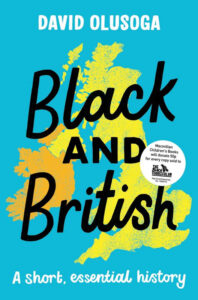
Author David Olusoga (whose book Black and British we recommend on this list) explains that one of the reasons for the apparent imbalance is that Black History Month is a US import – and when an American tradition is imported then so is much of its resource content. Another reason, Olusoga argues, is that it is uncomfortable to look at the more unsavoury parts of our own history, so we tend to focus the beam abroad. Olusoga explains that “The issue is that any proper debate about black history inevitably entails discussions of parts of the British past – slavery, imperialism, the development of racial thinking – that have long been brushed under the historical carpet. This means that once a year black Britons become the delivery system for parts of British history that many people are deeply uncomfortable discussing.”

There is a growing call from teachers to source children’s books that examine British Black History and – slowly, slowly – a response from publishers is beginning to emerge.

For balance and a widening of context, you may also like to explore books that celebrate black communities or the lives of key Black British figures. If the only historical studies of black history that pupils encounter relate to struggle or slavery, this will allow for only a narrow segment of Black history to be covered – potentially resulting in prejudicial misconceptions and occurring at the cost of opportunities to learn about the rich and diverse cultural fabric of the UK or the accomplishments of particular communities and individuals. For further ideas, you may wish to look at the Black Lives section of our Black History booklist to find individual figures to study.

Schools can purchase a full set of the books on this list from Peters.

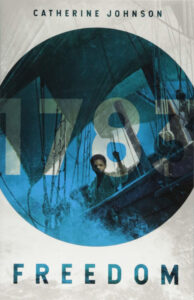
Catherine Johnson scooped the Little Rebels Award in 2019 with this short, middle-grade chapter book about the historical horrors of slavery.

The story follows a young boy called Nat, who is enslaved on a Jamaican plantation. When Nat is brought to England in the 1700s, he hopes to finally find freedom from bondage. Instead, Nat discovers the disappointing truth that slavery is still very much alive in England, and he witnesses the heavy role that Britain plays in operating the slave trade.

Little Rebels Judge Darren Chetty comments that the story “explores the humanity of those whose humanity was denied through chattel slavery. It subtly examines the similarities and the differences between class oppression and a system of slavery rooted in racism. It tells a story of Britain that continues to be neglected.”

While the main character is fictional, the details of the story are very much rooted in historical events and features real-life people and places. We recommend this book as a go-to for pupils learning about Britain’s role in the slave trade. Teachers are likely to find helpful the informative historical notes at the end of the book.

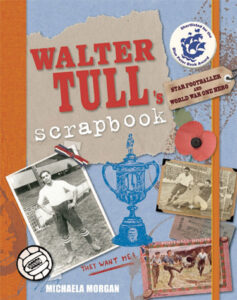
This scrapbook walks through the story of Walter Tull – famous Tottenham Hotspurs footballer and the first black officer in the British Army. Walter – or ‘Tully’ as he was known – was brought up in a children’s home before being scouted for his talent by Clapham FC, where he began his footballing career. As WW1 broke out, Tully joined the British army during a time when many people believed that only white men should become officers. His bravery and leadership in the battlefields of WW1 won him a recommendation for a Military Cross – but it is suggested that the award was never given because of the racial prejudice prevalent in the British army at the time.

Walter’s story is visually and informatively brought to life in this fictionalised scrapbook that is designed to appear as if put together by Walter himself. The scrapbook incorporates illustrations, letters, photographs, notes and newspaper cuttings.

By the same author there is also Respect: The Walter Tull Story, a short chapter book retelling of Walter Tull’s life and accomplishments, published by Barrington Stoke. For a more in-depth study of Walter Tull, we recommend the 6-lesson scheme of work from The Historial Association, which is available to download with a free account.

Subscribe to our newsletter

Your Review

Stone Girl Bone Girl

review

Year group(s) the book is most suitable for:

Year group(s) the book is most suitable for:

Does the book contain anything that teachers would wish to know about before recommending in class (strong language, sensitive topics etc.)?

Does the book contain anything that teachers would wish to know about before recommending in class (strong language, sensitive topics etc.)?

Would you recommend the book for use in primary schools?

yes

Curriculum links (if relevant)

Curriculum links (if relevant)

Any other comments

Any other comments