Recommended children's booklists sorted by age or topic

Publisher: Troika Books

In this debut collection for children Sarah takes the reader on a vibrant journey based on her acute observations of everyday life and language. Loosely arranged across a school year – September through Halloween, Christmas, Spring, Summer holidays, a new school year/just before secondary – Sarah’s witty observations, juxtapositions, and playful use of language pervade every poem and bring a vivid charm and freshness to every page.

This debut collection heralds the emergence of a strikingly new and inventive voice in children’s poetry.

Chapter book

Nadia Nadim was born in to a prosperous and well connected family in Afghanistan. She is one of five sisters who, with their Mother, had to leave their war torn country in fear of severe repression and even violence against them. Her story is one of an incredible and dangerous journey across continents to start a new life without fear of war and danger. It’s a story of starting again with nothing and with determination, courage, resilience, and talent, building a new life. Nadia’s story is a story of hope, arriving in a country where she did not understand the language to becoming a world famous football star, a doctor (and surgeon), a linguist, a broadcaster and a role model. In July 2019, Nadia was named UNESCO Champion for Girls and Women’s Education.

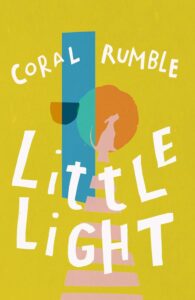
In her first work of fiction Coral tells the story of ten-year-old Jakub Polanski who cares for his single mum, Maria, who has multiple sclerosis. The weight of responsibility has made Jakub forget he is a child, and his life outside of school is full of adult concerns. Everyone is worried about Jakub’s mental health. To take the pressure off his mum and give Jakub a break, life-long family friends, the Koniks, take Jakub on holiday to Italy. While there Jakub learns about Marta’s passion for writing poetry and storytelling, and she shows him that freedom and adventure are there for the taking. He discovers he is funny and smart and is not only defined by being a carer. And, in Italy, Jakub finds hope as he listens to an old, wise woodsman, who teaches him about otters, especially one injured otter called Piccolo.

Chapter book

This is the follow-up story to Zinc about three Jewish siblings John, George and Eva who continue to play different roles to help the war effort in WW2.

George trains in Scotland for his SOE mission to Poland to help the fighters in the Secret Army.

After his work at Bletchley Park, John is now stationed in Cairo in Egypt working on plans to deceive Field Marshall Rommel about the location of the impending battle, while sister Eva in Hungary is finding life for anyone Jewish getting harder and harder as the Nazis harden their grip over the country. Will the siblings ever manage to get together? They share so many memories, but war keeps them apart.

Based on the extraordinary real-life experiences of Sue Klauber’s father (Coding at Bletchley Park), uncle (SOE in Europe) and aunt (Resistance), she wrote Zinc and now Cobalt to illustrate the courage of her Jewish family.

Cosmo is a young boy whose life has been changed forever, after falling out of the tree he loved to climb. Now, Cosmo is disabled and uses a wheelchair. Now, Cosmo wants to have a conversation with the tree.

In this outstanding debut collection for children, Stephen Lightbown draws on his own personal experiences as a wheelchair user, while creating a unique and utterly engaging character in Cosmo. Written in Cosmo’s voice and peppered with contributions from the boy’s family, these poems take the reader on a journey of challenges, questions, hurts, explorations and triumphs. Cosmo is endlessly open and curious, and his observations and reflections are at once perceptive, raw, hilarious, confronting and enchanting.

How can Cosmo come to terms with, and adapt to, this seismic change in his life? Is his life as he knew it gone? Could there be new possibilities ahead, and also new abilities that Cosmo doesn’t yet know he possesses? And will the tree ever reply to his number one question: why?

This beautiful verse novel follows a girl in the transition period from primary to secondary school. The individual poems that make up the story play wonderfully with shape, rhythm and language and deliver a range of styles mirroring the complex emotional themes.

The book includes topics of domestic violence, bullying and homelessness discussed from a child’s perspective. These are handled sensitively, and there is an overall sense of positivity and optimism.

It’s a powerful, empathetic book, particularly suited to year 6.

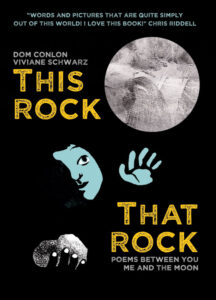
To celebrate 50 years since the first moon landing by Apollo 11 in 1969, here is an original collection of 50 poems. In his poems Dom tells us of two important things – the Moon is incredible: it controls our tides, to give us 24-hour days and it keeps our planet stable enough to have seasons. Dom reminds us that poetry too is incredible because it is the most flexible form of expressing ourselves and has been always how we used to tell stories, particularly about our ways of seeing this incredible Moon. The Moon is an inspiring rock of possibilities. Dom uses lots of poetry forms, short poems and long ones, silly ones and serious ones. There are haiku and sonnets, acrostics and shapes. He uses metaphors and kennings and slang. Dom says read the poems and fly to the moon!

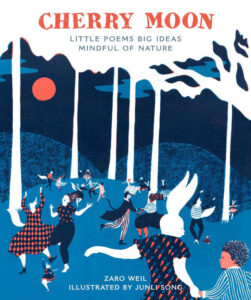
This wondrous new poetry collection captures eye-popping moments, tender observations and a thousand whimsical reflections on the sheer joy of the natural world. Thought-provoking, sensitive and delightfully original, Cherry Moon, poses big questions about life with poems and other small gatherings of words; encouraging children of every age to explore the power, enchantment and sheer wonderfulness of nature.

Subscribe to our newsletter

Your Review

Stone Girl Bone Girl

review

Year group(s) the book is most suitable for:

Year group(s) the book is most suitable for:

Does the book contain anything that teachers would wish to know about before recommending in class (strong language, sensitive topics etc.)?

Does the book contain anything that teachers would wish to know about before recommending in class (strong language, sensitive topics etc.)?

Would you recommend the book for use in primary schools?

yes

Curriculum links (if relevant)

Curriculum links (if relevant)

Any other comments

Any other comments